Haze worsens across Malaysia, with 38 areas recording unhealthy air quality
Serian in Sarawak recorded Malaysia’s highest Air Pollutant Index reading on Tuesday (Sep 15) morning, while Johor had the most areas with unhealthy air quality, according to data from the Malaysia’s Ministry of Natural Resources and Environmental Sustainability.
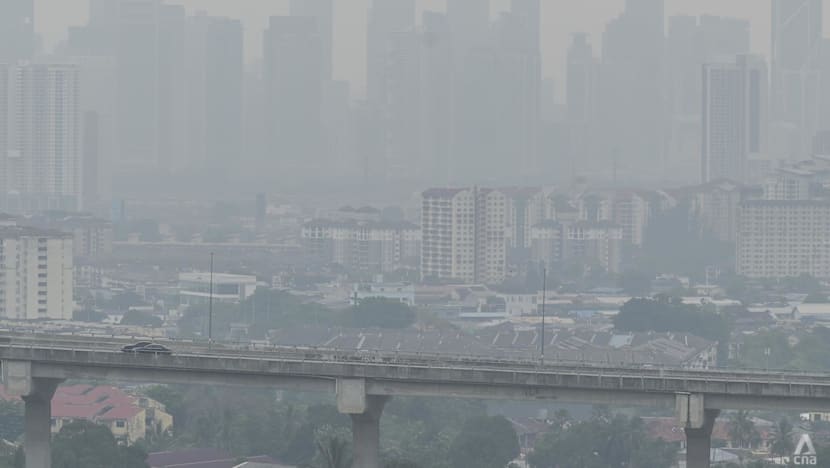
Singapore's air quality reached its worst level in five years on Tuesday, as smoke from Indonesian wildfires engulfed the city-state and surrounding regions, according to the National Environment Agency. All five regions of Singapore recorded unhealthy air quality, marking the first time such a situation has occurred since September 2019. This alarming trend has catapulted Singapore into the top 10 most polluted cities globally, with Malaysia and Indonesia also among the worst affected areas.
Indonesia's annual dry season typically sees a spike in wildfires, but this year, the number of hotspots has exceeded normal levels. In August alone, more than 9,000 fires were recorded - the highest for any month since 2015. As of September, this figure has surged to over 7,000. The situation is further exacerbated by the strengthening El Niño weather pattern, which brings drier conditions to the region.
While immediate relief is not expected, the Asean Specialised Meteorological Centre forecasts that the hotspot and haze situation will continue to escalate, posing a continued risk of transboundary smoke haze. Air quality in parts of Indonesia's Kalimantan and Sumatra regions, where the majority of fires are concentrated, reached dangerous or very unhealthy levels.
Malaysia has also suffered from the haze, with choking conditions prompting the government to move the annual National Day speech to an indoor venue. A state of emergency was declared in part of Sarawak state earlier this month. The source of the fires is primarily attributed to slash-and-burn farming methods, combined with human-caused ignition, according to Indonesia's forestry ministry.
The country has ramped up aerial firefighting operations, including with Japanese helicopters, and Malaysia has offered assistance in combating the blazes.
The El Niño weather pattern, which is forecasted to become a historic event, is expected to persist, potentially worsening the situation in the coming weeks. This climatic phenomenon has already led to a significant drop in global nickel production and is affecting the mining and agriculture industries in Indonesia. A nickel producer announced a halt to the ramp-up of one of its processing plants due to water shortages, while the country's largest nickel complex has warned of potential output cuts.
Additionally, palm oil production is anticipated to decline as plantations struggle to apply fertilizer under the adverse conditions.
Written by urgent.news from Free Malaysia Today's reporting — not their text. Machine-written — may contain errors; check the original before relying on it.
This story
This is one outlet's version. Read the fullest account.
- Singapore’s air worst since 2019 as haze blankets region freemalaysiatoday.com
- Haze pushes air quality across Singapore into unhealthy range for first time in 7 years channelnewsasia.com