Debatte um Entlastungen: Merz verspricht Entlastung bei Rekord-Spritpreisen
Tanken in Deutschland wird immer teurer. Die Debatte über staatliche Eingriffe nimmt Fahrt auf. Die Bundesregierung will handeln.
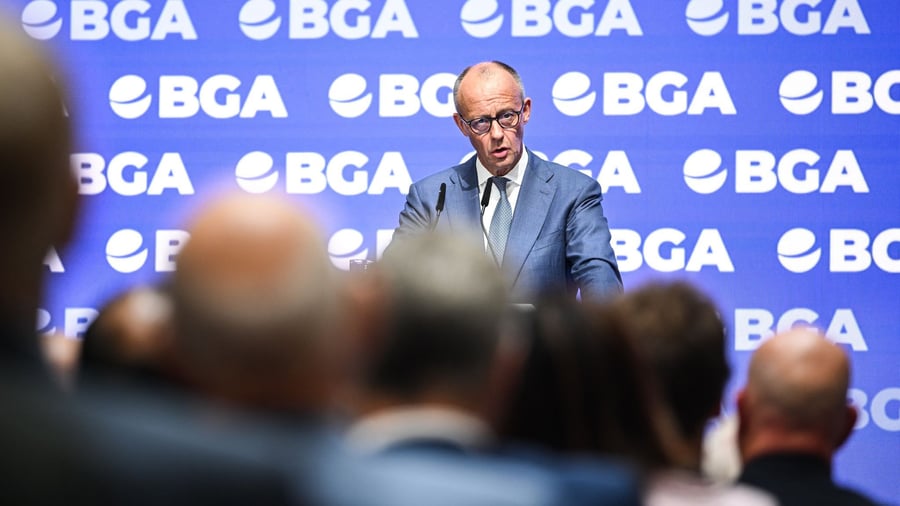
Bundeskanzler Friedrich Merz has pledged relief for motorists amid soaring fuel prices, announcing tax cuts for those who rely on their cars daily. At the BGA trade association's entrepreneur's day in Berlin, just before the Mecklenburg-Vorpommern and Berlin state elections on Sunday, Merz said that a limit on the burden has been reached for many people who need their vehicles.
"I believe we must act," he stated. The exact tools for this action have not yet been determined, but the government is in close communication with the states. Merz ruled out a surcharge tax, which the Social Democrats (SPD) have demanded. Finance Minister Lars Klingbeil (SPD) expressed gratitude for the renewed movement, but warned that quick action is required.
Fuel prices continue to rise, with the average price of a liter of E10 petrol reaching 2.286 euros on Monday, a cent higher than Sunday's figure. Diesel was priced at 2.412 euros per liter, still a few cents away from the record high. The increase in both types of fuel prices has slowed slightly compared to Sunday. Several proposals for relief measures are on the table, including a fuel price ceiling.
The SPD calls for a fuel price ceiling, with Armand Zorn, the deputy faction leader, proposing a maximum duty on diesel and petrol based on oil prices, processing and distribution costs, as well as margins and VAT. Belgian states have implemented a fuel price ceiling for decades, with the Ministry of Economic Affairs calculating the maximum allowed prices for fuels like petrol and diesel each working day, taking into account factors such as fuel price, transport, storage, insurance, and losses, as well as a certain profit margin and taxes.
Tank stations are allowed to sell fuel cheaper but cannot exceed the state-imposed maximum price. Belgium's system has been in place since the oil crisis of the 1970s, with the government setting a maximum price for fuels based on various factors, while also allowing companies a certain profit margin. Tank stations can also sell fuel cheaper.
A similar system exists in Luxembourg. The CDU wants a state-imposed maximum price for petrol and diesel, a demand repeatedly made by the SPD, which has yet to gain the support of its coalition partner. CDU Bundestag member Sepp Müller highlighted the potential consequences of Houthi attacks on the energy infrastructure in Saudi Arabia, stating that if the price burden continues, it must be determined which tools are suitable.
Merz dismissed the idea of a fuel price ceiling, emphasizing that quick reactions often prove ineffective in the long run. CDU Finance Minister Katherina Reiche (CDU) opposes a fuel price ceiling and favors targeted direct payments to specific income groups, but acknowledged that a direct payment mechanism would need to be expanded to reach all citizens.
Merz also suggested several options, including revisiting certain taxes and levies to help consumers.
Written by urgent.news from Handelsblatt's reporting — not their text. Machine-written — may contain errors; check the original before relying on it.