Chinese students ‘eating homework’ to relieve exam stress draws amused public reactions
Children in China are embracing the trend of consuming “homework” made from rice paper as a way to alleviate their heavy study burdens, raising concerns regarding food safety. Recently, a snack called “homework” has gained viral popularity among primary and secondary school students. These snacks resemble miniature versions of Chinese textbooks and workbooks, but they are marketed as entirely…
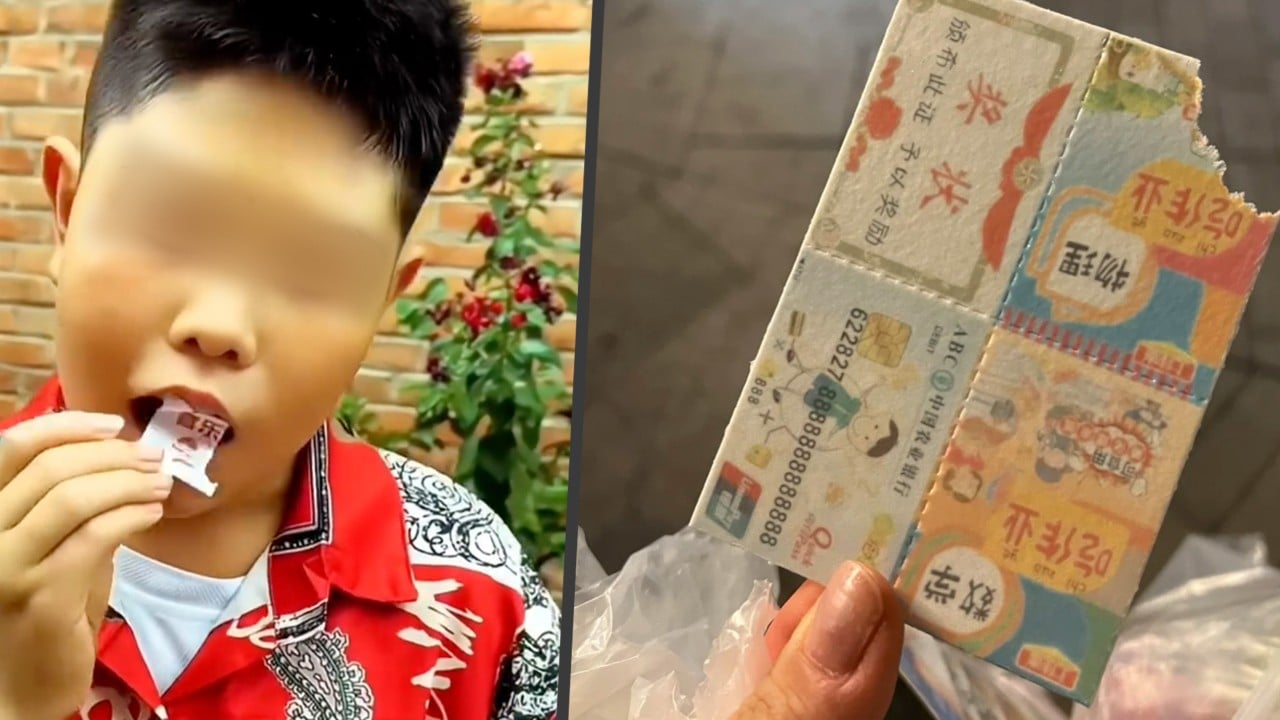
In a recent twist, Chinese students are treating their homework like a snack, consuming edible versions of their studies to cope with academic pressure. This trend, dubbed "eating homework," has become a viral sensation among primary and secondary school pupils. These snacks are crafted from rice paper, resembling miniature textbooks and workbooks, but marketed as entirely edible. Priced at under 0.50 yuan (7.5 US cents) each, they are sold on e-commerce platforms with phrases like "stress reducer" on their packaging.
Some online retailers even claim these snacks can boost academic performance. Inside each package lies a thin piece of rice paper adorned with textbook images, dictionaries, certificates, and occasionally, a bank card representing a scholarship. The design is reminiscent of Doraemon's Memory Bread or Copying Toast, a magical bread from a Japanese manga and anime series, which transfers text onto a textbook when pressed, allowing the consumer to instantly memorize the content.
Parents have been posting comments on product listings, claiming their children demand these snacks after seeing them on social media. Some assert that consuming the rice paper homework will make their child "smart," while others note that starch, the main ingredient, is "healthier than other snacks." Children have also reported feeling relieved from their heavy academic burden after eating these snacks.
However, state media outlet China National Radio has raised concerns over the food colouring used to print the textbooks, which may not meet national food safety standards. While the manufacturer claims they produced the snacks as candies, Dr He Sijun, affiliated with Mindong Hospital at Fujian Medical University, advises parents to limit their children's consumption of these snacks, citing potential risks to liver and kidney functions if industrial colouring is used.
As autumn school term begins in China, some market regulatory authorities have conducted inspections on convenience stores, snack shops, and stationery outlets near schools, urging merchants not to sell these snacks.
Written by urgent.news from South China Morning Post's reporting — not their text. Machine-written — may contain errors; check the original before relying on it.