Chinese plant extracts critical rare metals from lithium waste in world first
China has launched a 500-tonne production line to extract rubidium and caesium from lithium waste. A demonstration line in Jiangxi province – the world’s first with an annual capacity of 500 tonnes for continuous tower extraction and separation of low-grade rubidium and caesium – has achieved stable production, according to the Institute of Process Engineering under the Chinese Academy of…
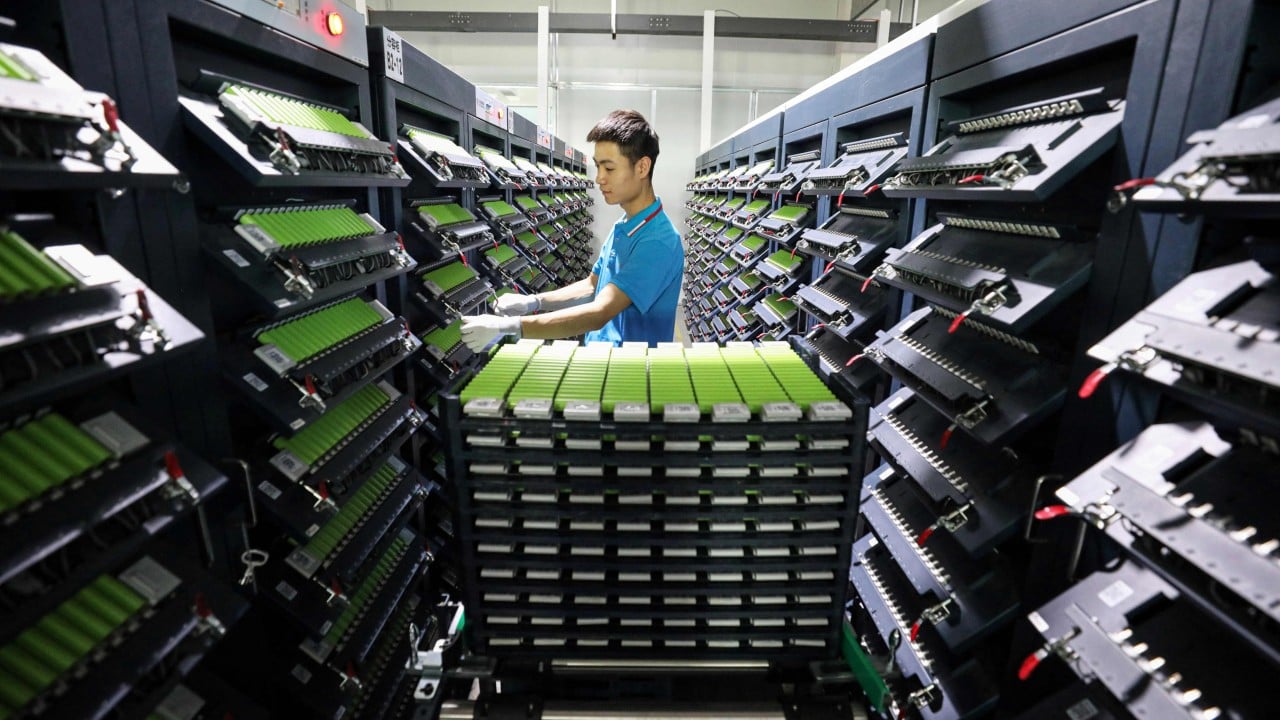
China has introduced a groundbreaking 500-tonne production line capable of extracting rubidium and caesium from lithium waste. This world-first demonstration line, located in Jiangxi province, has successfully achieved stable production, marking a significant advancement in securing the supply of these crucial rare metals. Rubidium and caesium are vital components in various advanced technologies, including aerospace, quantum computing, and new energy solutions.
However, they are not found in large concentrations as independent minerals in the Earth's crust. They are instead present as associated elements in lithium ores and salt-lake brines in low-grade, highly complex forms, making their extraction and recycling exceedingly challenging. By recovering these valuable metals from waste generated during lithium extraction, China has effectively extended its new energy industry production chain while enhancing the secure supply of rubidium, a critical strategic rare metal.
While China possesses substantial rubidium resources, estimated at approximately 1.16 million tonnes of rubidium oxide and 140,000 tonnes of caesium oxide in 2024, these resources are primarily associated with specialty lithium ores and salt-lake brines, creating difficulties in extraction and recycling. For instance, lithium-bearing lepidolite in Jiangxi province accounts for nearly 40% of China's rubidium reserves; however, traditional high-temperature sulphate roasting methods can reach temperatures between 800 to 1,000 degrees Celsius, leading to the trapping of rubidium and caesium within aluminosilicate waste, which is eventually discarded along with lithium slag.
Similarly, caesium is predominantly found alongside lepidolite and salt-lake brines, further complicating its extraction. The key to this innovative breakthrough lies in a high-efficiency tower extraction system developed by the Institute of Process Engineering under the Chinese Academy of Sciences (CAS). This system employs differential counter-current extraction and boasts several advantages, such as a reduced footprint, minimal extractant usage, and enhanced containment.
Notably, a single extraction tower can be up to 15 times more efficient than traditional extraction tanks, reducing extractant consumption by 40% and decreasing equipment footprint by over 50%. The system comprises 17 extraction towers, developed and implemented in collaboration with Jiangxi Ganfeng Lithium and other partners. Following its successful inaugural run, the production line has been operating continuously and steadily since its launch, yielding 500 tonnes annually of high-purity rubidium and caesium carbonates – exceeding 99.9% purity.
The recovered products, caesium carbonate and rubidium carbonate, have already begun commercial sales. This advanced system proves that the industrial separation of low-grade associated rubidium and caesium resources can be executed efficiently and sustainably, serving as a technical blueprint for the potential commercialization of similar processes on a larger scale.
The CAS report emphasizes the importance of this technology in ensuring the development and utilization of China's specialty lithium ores and guaranteeing a reliable supply of rubidium and caesium resources. Currently, China occupies a dominant position in the global rubidium resource landscape. As of December 2025, the country has constructed five core rubidium production lines, boasting world-leading technology and a total annual capacity of around 3,000 tonnes in rubidium salt equivalent.
Additionally, Sinomine Resource Group, controlled by China, holds the world's largest pollucite (caesium ore) mine, establishing a comprehensive supply chain of resources, technology, and production capacity, further solidifying China's leadership in the industry. In the foreseeable future, advancements in perovskite solar cells, solid-state batteries, quantum computing, and other critical technologies could expand the applications of rubidium salts, potentially elevating rubidium to the status of the next rare earth element.
Written by urgent.news from South China Morning Post's reporting — not their text. Machine-written — may contain errors; check the original before relying on it.
This story
This is one outlet's version. Read the fullest account.