China mulls building nuclear-powered tank with 450km-range railgun in 2 decades
Chinese military researchers have outlined an ambitious plan to develop a nuclear-powered main battle tank armed with an electromagnetic railgun capable of hitting targets up to 450km (280 miles) away, possibly debuting after 2045. Detailed in a peer-reviewed paper published in June in the Chinese journal Acta Armamentarii, the concept envisions a 60-tonne armoured vehicle driven by a…
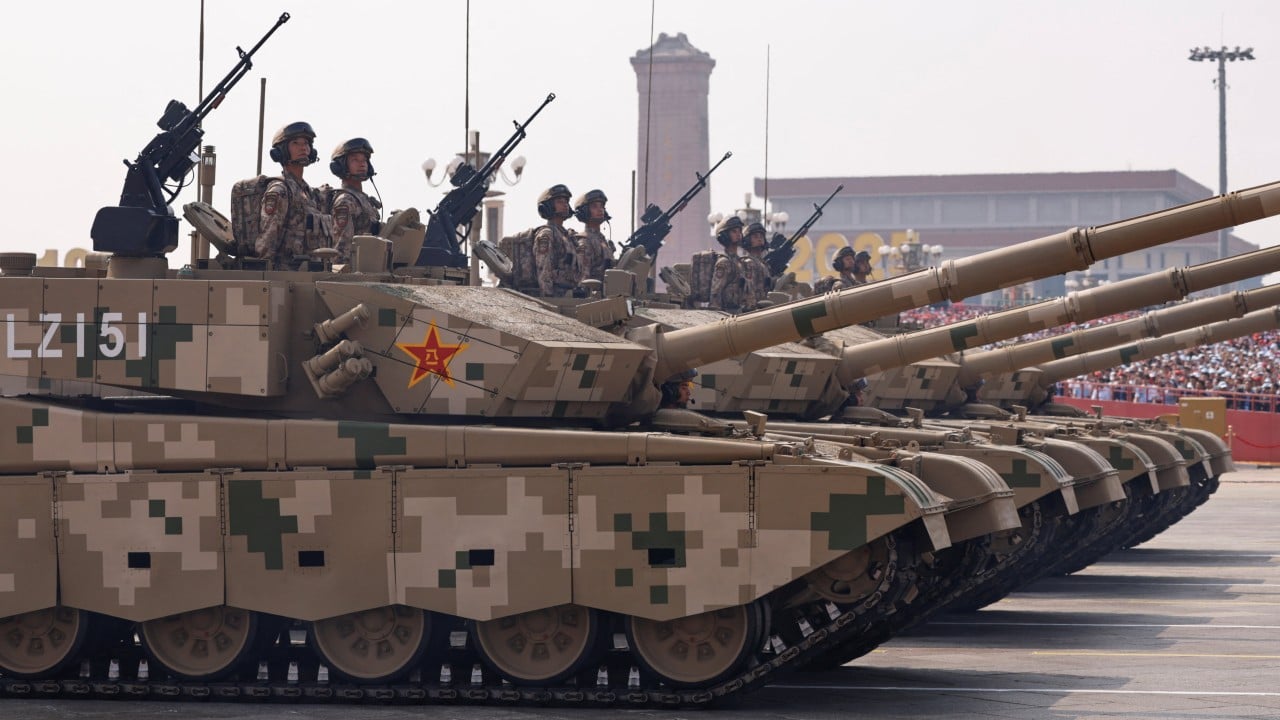
A daring plan to create an all-new kind of main battle tank has emerged from Chinese military researchers. The design envisions a massive armoured vehicle capable of striking targets from up to 280 miles away, using a powerful electromagnetic railgun. The vehicle would be powered by a compact 10-megawatt small modular reactor, enabling it to travel over 300 miles before needing a recharge.
The concept was detailed in a peer-reviewed paper published earlier this year. Researchers from Inner Mongolia First Machinery Group, a key player in China's defense industry, and the Beijing Institute of Technology collaborated on the study. The National Key Laboratory of Special Vehicle Design and Manufacturing Integration Technology also supported the research.
The development plan is broken into three stages. By 2035, the focus will be on adding electromagnetic weapons and high-energy storage to existing tank models. A 60-tonne main battle tank equipped with a 150km-range, 10MJ electromagnetic gun and a 1,500-horsepower diesel generator is envisioned. By 2045, the system will aim for a 300km-range and 20MJ electromagnetic gun, supported by advanced energy storage systems.
Finally, after 2045, researchers hope to create a fully nuclear-powered tank with a 50MJ railgun, capable of hitting targets up to 450km away. The reactor would need to fit inside a 2 cubic meter space, with radiation shielding weighing no more than 3 tonnes, and fuel replacement intervals extending to at least five years.
However, experts have raised doubts about the feasibility of such a tank. One military equipment expert questioned whether fission reactors could be successfully miniaturized for use in a tank, given the challenges posed by power conversion, radiation shielding, and heat dissipation. They also pointed out that the weight and volume of the nuclear power system could compromise the vehicle's overall effectiveness.
The expert suggested that a more practical approach might be to develop an unmanned tank equipped with high-energy lasers or microwave weapons, instead of relying on a traditional, heavily protected crewed platform. This alternative concept could leverage the advantages of "unlimited electricity" by incorporating high-powered radars and electronic warfare equipment, potentially forming a network of autonomous, networked vehicles for reconnaissance, strike, and defense.
Written by urgent.news from South China Morning Post's reporting — not their text. Machine-written — may contain errors; check the original before relying on it.
This story
This is one outlet's version. Read the fullest account.