China has too much green energy. Experts think AI can fix that
Production in China's clean energy sector has grown so much that there’s more energy infrastructure than the market needs.
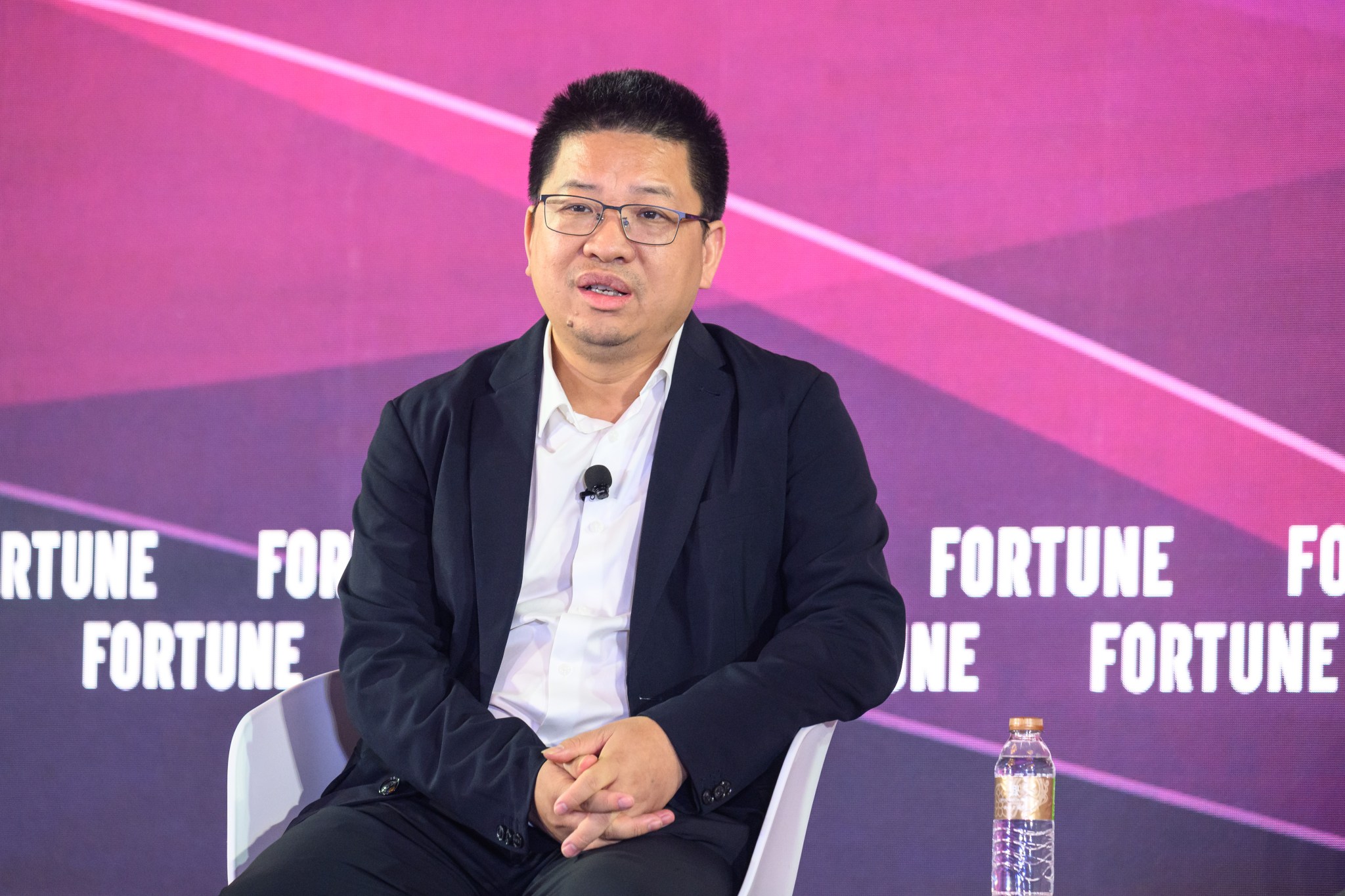
As the U.S.-Iran war disrupted the Strait of Hormuz, Asian nations sought alternative energy sources to maintain power. However, China's energy sector now faces an unexpected challenge: they have an excess of green energy. According to Youyuan Huang, executive vice chairman of BTR New Material Group, the world's leading maker of battery anode materials, China is installing too much renewable energy.
In fact, China will account for 60% of all installed renewable capacity by 2030, according to the International Energy Agency. Solar power has even surpassed coal as the largest source of installed power capacity in the country.
Daniel Liu, vice president of Jinko Solar, a solar module giant, explained that renewables effectively met all of China's electricity demand growth last year. Yet, the country's clean energy sector has expanded so rapidly that it now produces more energy infrastructure than the market demands. To address this issue, panelists at the Fortune Leaders Forum suggested that artificial intelligence (AI) could be the solution.
AI requires a consistent and reliable power supply. Huang noted that AI guarantees the safety and stability of computing power. With the development of graphics processing units (GPUs), the power of a single chip has significantly increased. If the power drops, valuable data being computed could be lost. Jiangxing Intelligence, a physical AI firm, has developed an AI 'brain' that monitors environmental conditions around renewable energy infrastructure to ensure electricity is collected and stored efficiently.
This 'brain' also controls autonomous robots that assist in inspecting and maintaining solar panels and wind turbines.
Haitian Pang, the founder and CEO of Jiangxing Intelligence, explained that the supply of wind and solar energy is highly unpredictable. At night, there is no sunlight, but during the day, sunlight is abundant. By utilizing an intelligent brain that understands the region's physical and meteorological conditions, it is possible to forecast wind and solar conditions, thereby determining the necessary energy storage options.
This infrastructure can also help reduce reliance on manual labor, particularly in remote areas. For instance, drones can automatically clean solar panels when sand and wind accumulate on them. This approach ensures the energy system runs more stably and efficiently.
While green energy adoption varies across Asia, panelists expressed optimism about the region's energy transition. Liu highlighted that India has made substantial progress towards adopting renewable energy, despite its ongoing reliance on coal. Pang emphasized that a clean energy transition, including a lower-cost energy transition, will remain a continuous pursuit for all Asian nations.
The narrative of energy transition differs among countries, with some prioritizing security and others focusing on the future. However, they are all actively embracing renewables.
Written by urgent.news from Fortune's reporting — not their text. Machine-written — may contain errors; check the original before relying on it.