C Raja Mohan writes: India may want a multipolar world, but we might be moving away from it
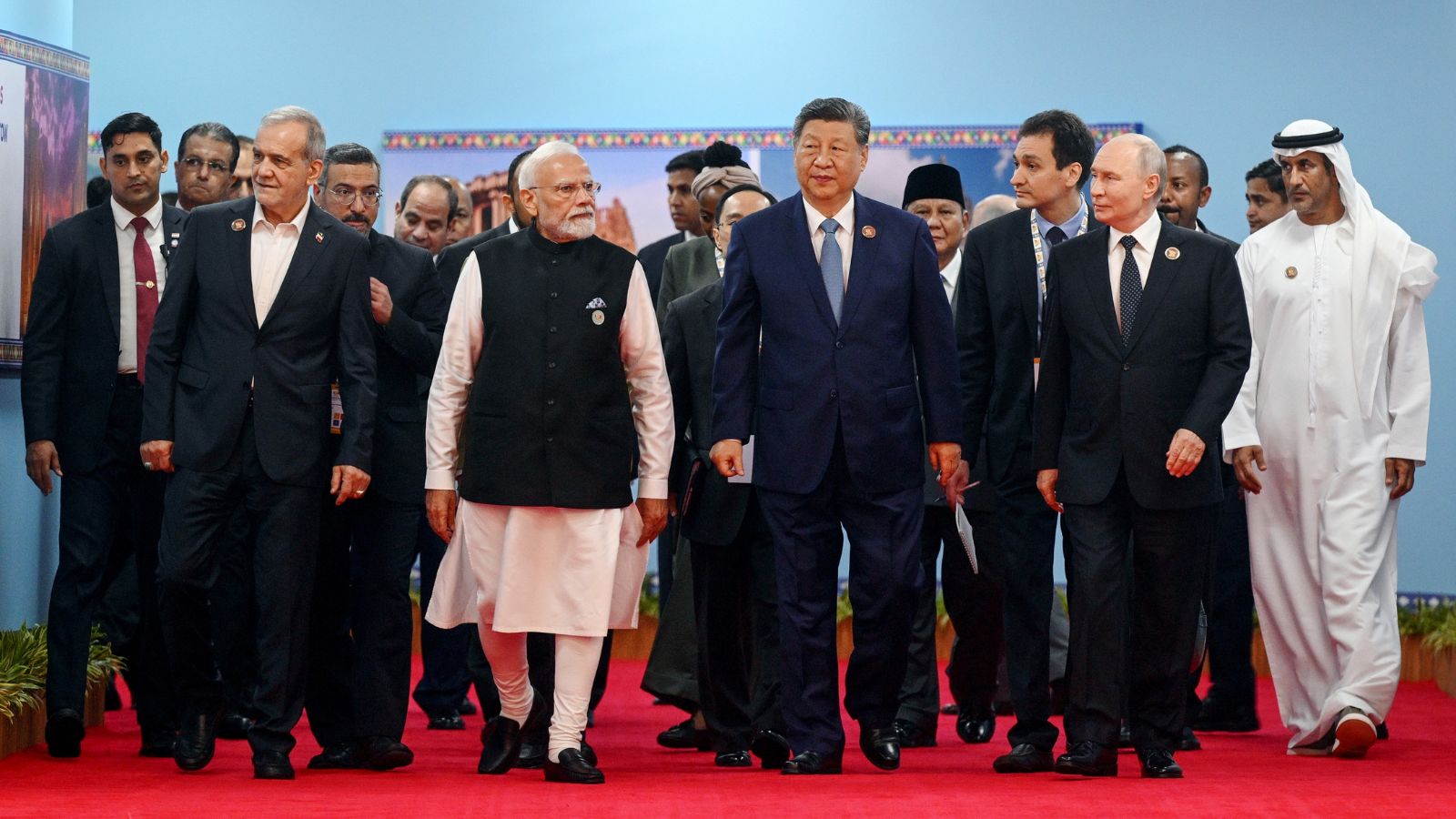
After the BRICS summit in New Delhi, global geopolitical focus turns to Washington, where Chinese President Xi Jinping is set to visit next week. If "multipolarity" was the theme in Delhi, "bipolarity" will be the anthem in Washington. President Donald Trump and Xi Jinping are scheduled for their second meeting this year, followed by a potential meeting in Shenzhen, China, during the APEC summit.
If this trilateral summit materializes, Russian President Vladimir Putin may join them, potentially marking the shift from a G2 to a G3 world order. Other opportunities for great-power diplomacy could arise at the G20 summit, hosted by the United States in December.
While these multilateral gatherings, such as BRICS, APEC, and G20, are routine annual events, they provide crucial platforms for significant bilateral meetings. The Delhi BRICS summit, for instance, saw an attempt to mend India-China relations by Prime Minister Narendra Modi and President Xi. The heightened multilateral summits this year are largely due to the shifts in great-power politics caused by Trump's disruption of US foreign policy, alliances, and approach to global order.
The underlying structural change is the increasing economic and geopolitical dominance of China and America. BRICS and the G7 are now heavily influenced by China's and the United States' significant economic weights, respectively. China now contributes roughly three-fifths of BRICS' combined GDP, up from less than half when the original BRIC forum was formed in 2006.
Similarly, America now accounts for nearly three-fifths of the G7's nominal output, compared to less than two-fifths three decades ago.
Despite these trends, a G2 world dominated by the United States and China is not certain. However, it is clear that the global economy is developing a G2 structure, with America and China shaping global economic order, technology standards, and supply chains. Both nations are deeply interdependent, seeking to minimize vulnerability to each other while relying on each other's markets, technology, capital, and industrial capacity.
The Trump-Xi meetings this year are unlikely to herald a US-China condominium due to deep-seated disputes over trade, technology, and Taiwan. Nevertheless, they reflect a recognition that Washington and Beijing must manage their rivalry through sustained high-level contact. The nature of this management has implications for the rest of the world, as Russia's closer ties with China under President Putin and America's overtures to Russia create a more complex strategic landscape.
While Russia may have lost economic weight, it retains enough military power, geographical reach, and diplomatic influence to impact the balance between the two superpowers in Eurasia. Moscow has drawn Beijing closer, while Washington has extended an American overture to Russia. This does not mean that the US can easily detach Russia from China, as Trump's Russian strategy is complicated by the conflict between Moscow and Europe over Ukraine.
However, progress in Trump's peace initiative in Ukraine could pave the way for a US-Russian rapprochement and even a G3 summit, with Putin's presence at the G20 meeting. The G20, unlike the G7, includes China, Russia, India, Brazil, Indonesia, Saudi Arabia, South Africa, and other significant non-Western powers. The G20 also encompasses the US, Europe, and Japan, highlighting the changing distribution of power in the global economic order.
While the US and China loom larger than ever in the G20, bilateral deal-making between Washington and Beijing could undermine collective action on economic issues at the forum. Nonetheless, India may desire a multipolar world, but it seems we are moving away from this aspiration, instead navigating the intensifying great power game between America, China, and Russia.
Written by urgent.news from The Indian Express's reporting — not their text. Machine-written — may contain errors; check the original before relying on it.