Building brain-computer interfaces at a neurotech company
At Blackrock Neurotech, Spencer Kellis develops implantable devices that help people with brain and spinal cord conditions communicate, move and more.
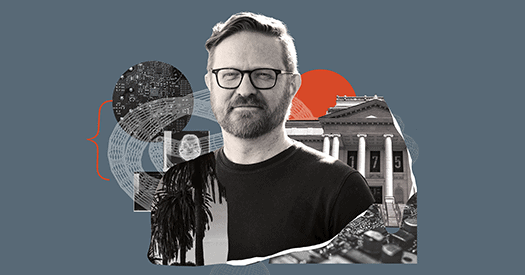
At Blackrock Neurotech, Spencer Kellis directs a team developing implantable devices aimed at improving communication, mobility and more for individuals with brain and spinal cord conditions. Kellis began his Ph.D. designing microprocessors for everyday electronics before joining Blackrock, where he leads the applications group within the BCI department.
This team includes software, clinical neuroscience and data science specialists, collaborating on research, software development and algorithm creation for brain-computer systems.
Kellis' day typically begins with brief team check-ins and weekly one-on-one sessions to discuss progress and career development. He also engages with leadership teams across various BCI projects. The intricate nature of BCI systems—comprising electrodes, algorithms, user interfaces and software—demands close cooperation among multiple teams.
Kellis' role involves translating users' intentions into actions using electrode arrays implanted in the brain's cortex to capture neural activity and decode signals. This enables control of devices like robotic arms or cursors and even the stimulation of brain regions to generate sensations.
Blackrock's technology has been instrumental in restoring communication for ALS patients, like Casey Harrell, and aiding spinal cord injury recovery. One participant has used the technology for over a decade. Kellis' path to neuroscience was unconventional, having never formally studied the field. His Ph.D. focused on integrated circuits, but an internship at Blackrock sparked his interest in brain implants.
Despite lacking formal neuroscience training, Kellis quickly adapted during his postdoctoral research at Caltech, eventually securing an FDA exemption to conduct clinical studies on electrode arrays for quadriplegic individuals. His journey has been profoundly influenced by working with a spinal cord-injured patient who tragically passed away, deepening his understanding of the real-world impact of BCI technology.
Written by urgent.news from The Transmitter's reporting — not their text. Machine-written — may contain errors; check the original before relying on it.