Beyond the drug mule: Experts warn of growing criminal networks and local production
Major cocaine and khat seizures at OR Tambo International Airport are exposing a deeper problem than the flow of narcotics. Experts warn that fragmented intelligence, weak co-ordination and limited border-control capacity are allowing organised crime networks to exploit South Africa’s air, sea and land routes.
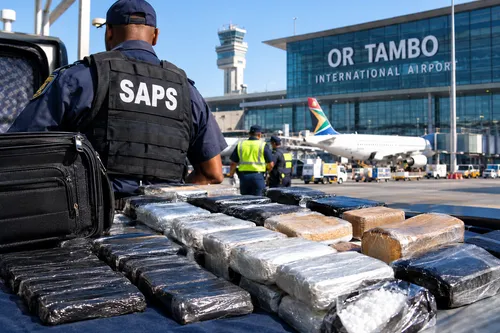
Experts have warned that South Africa's drug trafficking issue is growing, with international criminal networks taking advantage of poor enforcement, fragmented intelligence, and gaps in border control. OR Tambo International Airport, the country's main gateway for narcotics, has become the primary battleground against drug trafficking. From January to September 2026, OR Tambo recorded the majority of major drug seizures and arrests, with more than 563kg of narcotics seized, valued at over R236.8 million.
On September 7, a 45-year-old alleged drug trafficker was intercepted at OR Tambo and arrested, with approximately 2kg of cocaine (worth over R800,000) seized. The man was traveling to Hong Kong and China. On August 25, over 333kg of cocaine was intercepted, concealed in passenger luggage and unmanifested cargo, valued at over R167 million. In July, 95kg of cocaine worth about R28 million was seized in cargo from Brazil.
SARS Customs works with law enforcement and border-management partners to detect and prevent the cross-border movement of illicit goods. However, they do not disclose intelligence on criminal networks, manufacturing equipment, or precursor chemicals used in clandestine laboratories. SARS remains committed to cooperation with domestic and international enforcement partners through intelligence-led interventions and modernization initiatives.
South Africa's geography and infrastructure make it attractive to trafficking syndicates. OR Tambo International Airport, the biggest in Africa, facilitates more air traffic and cargo movements than any other in the continent. Weak enforcement at ports and borders is a major vulnerability, with insufficient law enforcement capacity and delayed intelligence.
Criminal networks exploit multiple routes through air, sea, and land. The discovery of clandestine laboratories could indicate a shift towards local production and vertical integration.
Written by urgent.news from IOL's reporting — not their text. Machine-written — may contain errors; check the original before relying on it.