Asian stocks steady as AI rebound offsets oil, rate and bond-market pressure
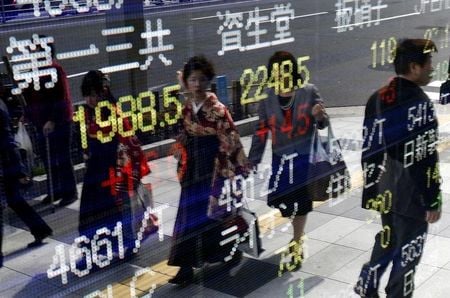
Asian markets found stability on Tuesday, buoyed by a resurgence in artificial intelligence (AI) stocks following Monday's technology downturn. However, caution prevailed as oil prices surged past $107 per barrel and bond yields climbed ahead of a crucial Federal Reserve decision. The Nasdaq 100 Futures edged upward while the S&P 500 Futures slipped to 7,691.50.
The tech sector's recent sell-off prompted leading AI developers to advocate for safeguards and a more measured pace of development, prompting investors to weigh the possible repercussions on corporate spending and earnings. Treasuries declined as the U.S. government purchased fewer 10- to 20-year securities than anticipated. Global bond yields remained elevated due to mounting fiscal deficits, significant debt issuance, and AI investment financing requirements, which heighten the demand for higher compensation on long-term debt.
This inflationary pressure could negatively influence equity valuations. South Korea's KOSPI climbed 0.19% and Japan's Nikkei 225 surged 0.8%, whereas Hong Kong's Hang Seng tumbled 0.5% to 24,791. The MSCI Asia Pacific index stayed relatively unchanged. AI pioneers, including Anthropic CEO Dario Amodei, OpenAI CEO Sam Altman, and Elon Musk, have urged a more cautious approach to AI development, citing potential risks of losing human control and catastrophic harm.
Conversely, President Donald Trump criticized these concerns, as companies, especially Chinese counterparts, pursue aggressive growth. The AI sector rebound was evident in the semiconductor industry, with SK Hynix up 1.62%, Samsung Electronics gaining 0.9%, and Kioxia rising 2.73%. OCBC Wealth Advisory Head Chez Anbu stated that the bank's overall stance on equities remains moderately positive, with the AI-driven bull market intact.
OCBC is leaning overweight on the U.S., neutral on Japan, underweight on Asia excluding Japan, and slightly underweight on Europe. Mainland China's CSI 300 and Shanghai Composite indexes both marginally increased. Despite resilient industrial activity, consumer spending and investment lagged, signaling an uneven economic recovery.
Hong Kong's technology shares were uneven, with Alibaba climbing 2.1%, Tencent rising 2.9%, Baidu up 1.06%, and JD.com increasing 0.8%. Australian and Singapore markets declined, while India's Nifty 50 edge upward. The probability of a Federal Reserve rate hike on Wednesday stood at over 90%, driven by persistent inflation concerns, with three dissenting Fed officials at the July meeting.
With oil prices above $100 and tensions in the Middle East escalating, policymakers face slim prospects of immediate relief from global price pressures. The Fed's decision will be followed by policy announcements from the Bank of England and Bank of Japan later in the week.
Written by urgent.news from Investing.com's reporting — not their text. Machine-written — may contain errors; check the original before relying on it.