A Process Made for Mars is Now Uncovering Ancient Art on Earth
And you can even run it on your own phone The post A Process Made for Mars is Now Uncovering Ancient Art on Earth appeared first on Nautilus .
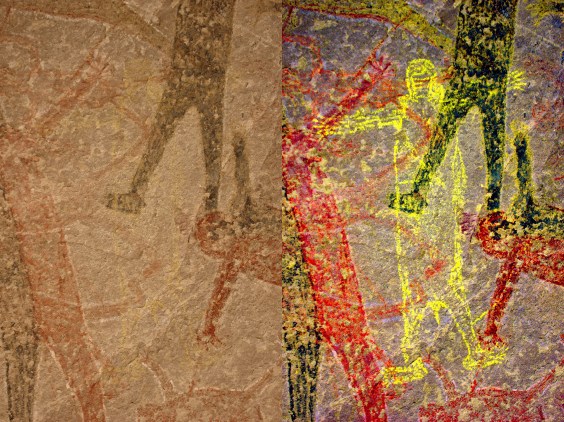
Cavemen and NASA researchers share a common tool: the decorrelation stretch technique, initially created for NASA to enhance satellite images, including those of Mars. This innovative image processing method now uncovers hidden cave art on our planet. It works by remapping colors across a wider range of shades, transforming subtle variations into striking contrasts.
Jon Harman, a rock art enthusiast with a medical imaging background, discovered this technique at a 2005 conference where NASA's Mars Exploration Rover images were displayed. Inspired by this, Harman applied the algorithm to rock art, revealing details previously invisible to the naked eye. Harman's technique, initially a DStretch plug-in for ImageJ and later as mobile apps, has enhanced cave art in Mexico, Norway, Egypt, and Canada.
Its most remarkable use was at Angkor Wat temple in Cambodia, where it revealed over 200 paintings previously hidden on temple walls.
Written by urgent.news from Nautilus's reporting — not their text. Machine-written — may contain errors; check the original before relying on it.