US-led Luzon corridor in Philippines faces growing scrutiny over real local benefits
While Philippine President Ferdinand Marcos Jnr was pitching the Luzon Economic Corridor to a 600-strong delegation of foreign investors and officials last week, protesters outside were clashing with police, accusing the US-backed initiative of exploiting the country’s resources. The backlash mirrored opposition against the Pax Silica AI supply chain drive – a separate proposal but again,…
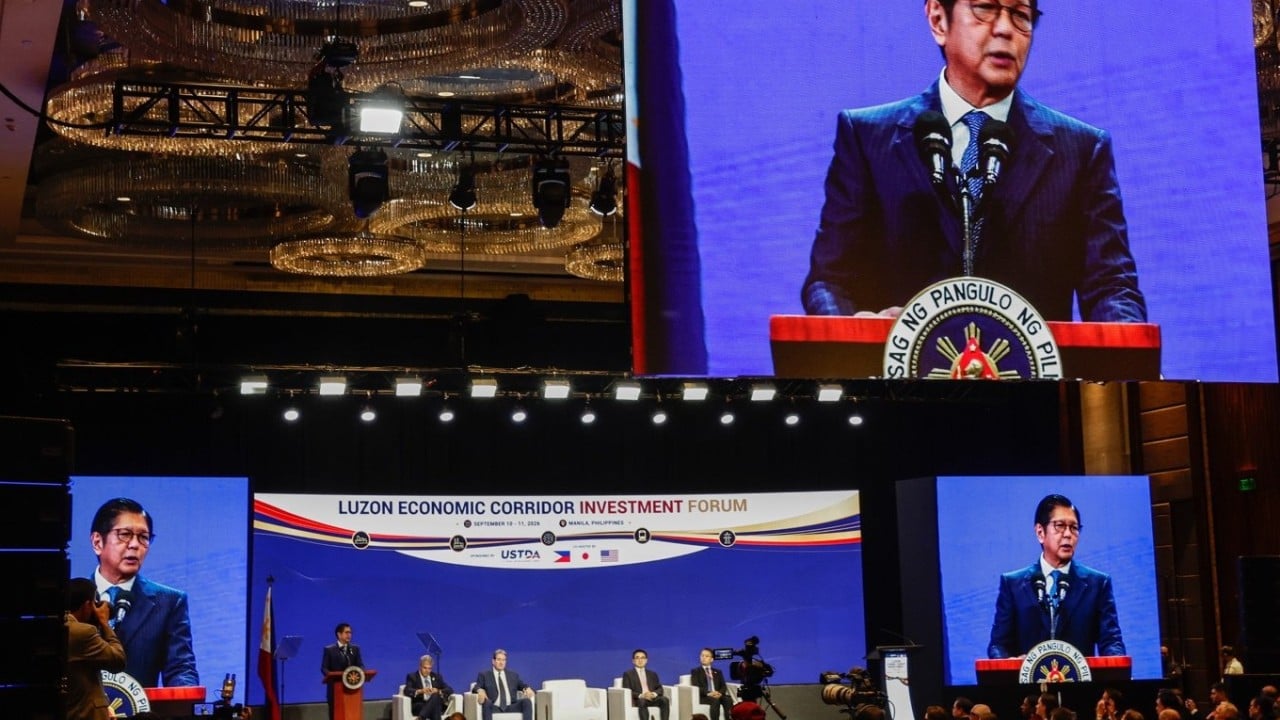
Last week, Philippine President Ferdinand Marcos Jr unveiled the Luzon Economic Corridor to a crowd of 600 foreign investors and officials. Protests surrounding the US-backed initiative erupted outside, as demonstrators accused the project of exploiting the country's resources. This opposition mirrors concerns over the Pax Silica AI supply chain drive, another US-led proposal.
The growing tensions highlighted doubts about the project's local benefits, despite the corridor's expansion to include energy, digital infrastructure, critical minerals, and advanced manufacturing. Analysts suggest the backlash doesn't necessarily signal a broader rejection of the US in a nation where public trust remains relatively strong.
However, the recent unrest suggests skepticism over the potential advantages for local communities from such foreign investments.
The inaugural Luzon Economic Corridor Investment Forum, co-hosted by the Philippines, the US, and Japan, took place at the Grand Hyatt Hotel in Bonifacio Global City. The forum, sponsored by the US Trade and Development Authority, aimed to bolster confidence in the Philippines as a reliable investment partner. Over 30 countries, including Canada, Australia, Denmark, France, Italy, South Korea, Sweden, and the UK, pledged support for the project.
Marcos claimed the initiative had garnered "wider support" from like-minded nations, emphasizing that the goal was to attract investment that would strengthen the economy and enhance Filipino capability.
Protesters also targeted the proposed Pax Silica hub, a 1,620-hectare industrial zone in New Clark City, a part of the Luzon Economic Corridor. The US-led coalition, aimed at countering Chinese dominance in critical supply chains like AI and semiconductors, has faced criticism due to concerns over resource extraction and the displacement of farmers and indigenous communities.
A June survey by Pollster Social Weather Stations found that 60% of Filipinos still view the US positively, compared to 18% who distrust the country. Experts believe the dissent among younger generations, particularly Gen Z, stems from their skepticism towards US-led projects. Sonny Africa, executive director of IBON Foundation, called the backlash "politically significant," noting that positive views of the US do not always translate into public acceptance of every US economic or military initiative.
He added that understanding these projects beyond the "glowing US and Philippine government hype" is crucial. Experts warn that the potential ill-effects of the initiatives, including environmental degradation and displacement of farming and indigenous communities, should be clearly addressed, as Filipinos face ongoing issues accessing clean water.
Written by urgent.news from South China Morning Post's reporting — not their text. Machine-written — may contain errors; check the original before relying on it.