UK’s unity threatened by pact between Wales, Scotland and Northern Ireland
The leaders of Wales, Scotland and Northern Ireland signed a pact on Monday that threatens to lead to the break-up of the United Kingdom. The first ministers of the three semi-autonomous regions of the UK told Prime Minister Andy Burnham and his government to prepare for constitutional change and that their future lies with the European Union. “For people watching across these islands – for…
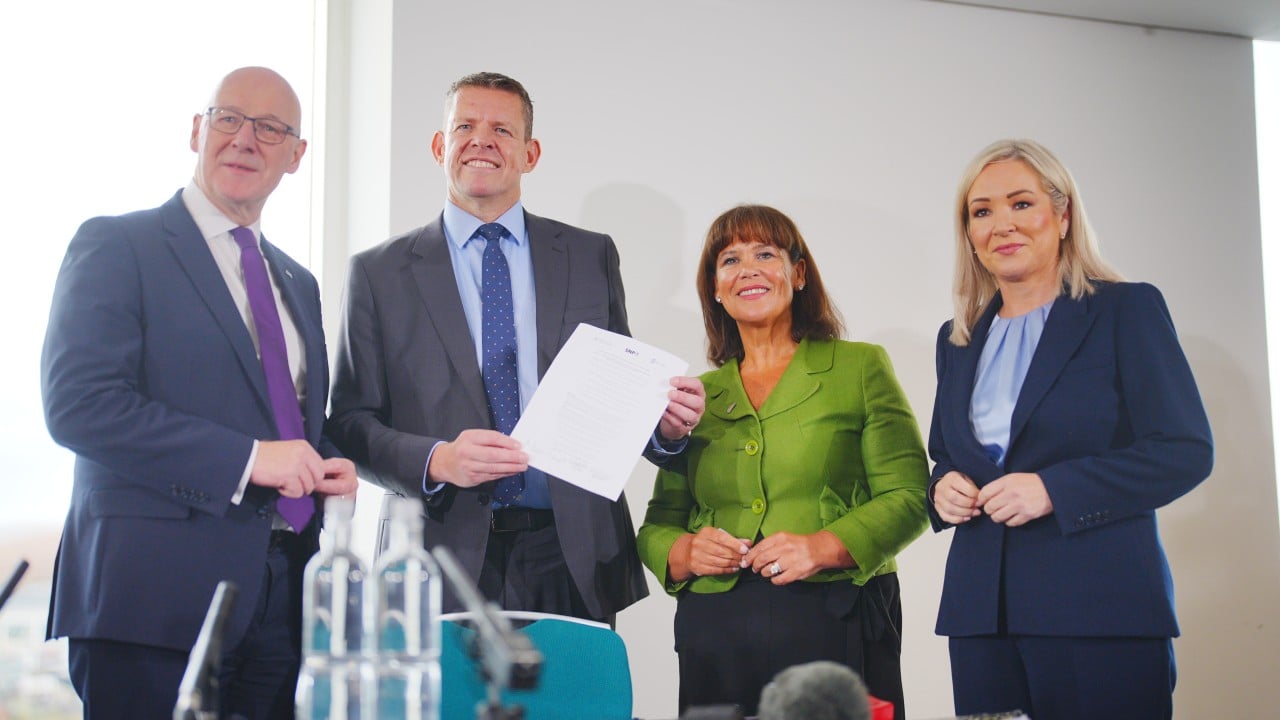
Wales, Scotland, and Northern Ireland leaders signed a pact on Monday that risks causing the dissolution of the United Kingdom. The semi-autonomous regions' first ministers urged Prime Minister Andy Burnham and his government to prepare for constitutional changes, stating their future lies within the European Union. The announcement came just 48 hours after US President Donald Trump suggested he would "love to see" a reunified Ireland during his visit to his golf course.
This is the first time that the leaders of all three countries were either from pro-independence parties or pro-unification, with Northern Ireland being partitioned and remaining part of the UK when Ireland gained independence over a century ago. Burnham's spokesman dismissed the threat and emphasized the prime minister's belief in the union, focusing on lowering the cost of living rather than constitutional debates.
Nicola McEwen, director of the University of Glasgow Centre for Public Policy, considered the summit symbolically significant but without legal importance.
The UK passed devolution laws in the late 1990s, granting each country some level of policy independence and self-governance. However, tensions remain between the UK-wide government in London and the three countries, which retain control over national issues and those concerning England. Scotland's John Swinney and Northern Ireland's Michelle O'Neill called for independence referendums, while Rhun ap Iorwerth from Wales did not provide a timetable.
The three leaders appeared in their political capacity, not their official one, possibly because O'Neill is part of a power-sharing government with the Democratic Unionist party. Northern Ireland's Deputy First Minister Emma Little-Pengelly, from the DUP, accused O'Neill of "weaponising" her role by signing the agreement. O'Neill countered that it was about "historic change happening all around us."
Scotland attempted to secede in 2014, and despite a 55% to 45% rejection, McEwen noted growing support for Scottish independence since Brexit, following the UK's exit from the European Union in January 2020. Swinney, leader of the Scottish National Party, believed voters would vote for independence if the UK government approved a referendum. Burnham stated he would allow such a vote if there was a "clear consensus" in Scotland, but later sent Swinney a letter stating a vote was "off limits."
The 1998 Good Friday peace accord requires a vote on unification if polls indicate it would likely pass, a threshold the UK government says has not been met. Ireland must also approve the change in a referendum. Burnham has made devolution a major theme since taking office, but his focus has been more on regional governments across England, reflecting his past experience as mayor of Greater Manchester.
Swinney tried to leverage Burnham's ideology to his advantage, arguing that his frequent talk of devolution "leads you to the logic of recognizing the right of the people of Scotland to decide their own future." The three leaders' cooperation could have a significant impact, potentially exerting more influence on the UK government. McEwen said this could remind the UK that consent for the union might not exist, sparking a discussion on the pathway if such consent is no longer there.
Written by urgent.news from South China Morning Post's reporting — not their text. Machine-written — may contain errors; check the original before relying on it.
Also reported by 1 other outlet
- Scotland, Wales, Northern Ireland sign MOU demanding UK break-up premiumtimesng.com