Toyota calls for hybrid incentives in Vietnam s green vehicle policy
Toyota is pushing to deepen hybrid manufacturing in Vietnam intensifying competition among carmakers as the race shifts from imported models to local production and supply chain control
At the Vietnam-Japan Local Cooperation Forum in Hue on September 6, Toyota Vietnam's general director Hirata Osamu called for hybrid electric vehicles (HEVs) to be treated similarly to battery electric vehicles (BEVs) when it comes to preferential circulation in Ho Chi Minh City's upcoming low-emission zones. Hirata also suggested that the special consumption tax (SCT) regime be gradually shifted from engine capacity to CO2 emissions-based.
The prime minister instructed the Ministry of Finance to investigate the SCT proposal for HEVs and report back to the government in October. Hirata explained that HEVs could significantly decrease fuel consumption and CO2 emissions without needing charging infrastructure or altering motorists' habits. He argued that emissions should be evaluated due to the impact of the energy mix on overall vehicle technology emissions.
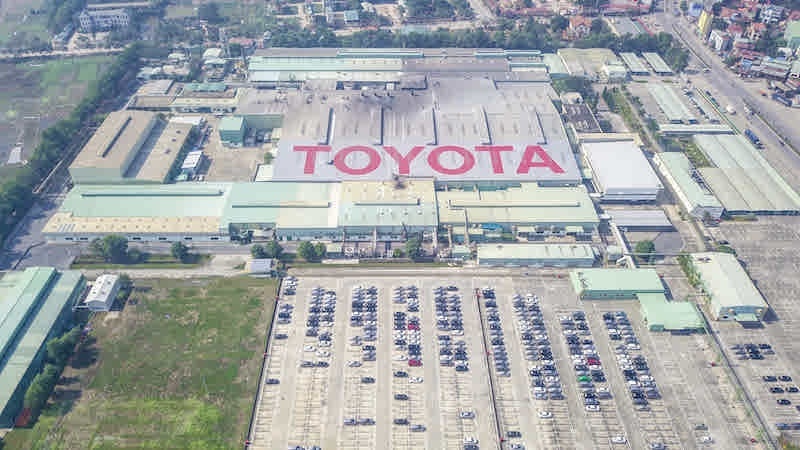
Hirata emphasized that supporting both HEVs and BEVs would provide Vietnam with a practical path to reducing transport emissions while bolstering its automotive manufacturing and supporting industries. This policy push comes as Toyota is increasing its capital investment in the local production project in Phu Tho province. On August 28, Toyota received an amended investment policy decision and its 12th revised investment registration certificate, adding the production and assembly of hybrid electric models to the project's objectives.
Toyota added $283.7 million in capital, covering a 28.6-hectare site with an annual production capacity of around 52,000 vehicles.
Toyota plans to begin constructing new stamping and painting workshops in May 2027, with operations set to commence in 2029, creating the manufacturing infrastructure for new CKD models in Vietnam. This investment aligns with Toyota's commitment to Vietnam's carbon neutrality goals. The shift towards local assembly represents a significant change in Toyota's hybrid strategy, as many popular hybrid models sold in Vietnam are currently imported.
Establishing local assembly facilities would give Toyota greater control over supply and costs while allowing for the development of a domestic component ecosystem.
This transition is occurring amidst a rapidly evolving market landscape. Vietnam's shift towards electrified transport has accelerated, particularly in BEVs, creating a growing demand for charging infrastructure and forcing traditional automakers to decide the pace at which they should transition their green models from imports to domestic production.
According to the Ministry of Industry and Trade, over 17,500 BEVs were sold in Vietnam during the first six months of the year, surpassing the 15,670 units sold in all of 2023. The charging market is also expanding, with estimates projecting Vietnam's EV market to reach $3.71 billion in 2026 and up to $8.84 billion by 2031, while the domestic EV charging-station market could grow from $81.7 million in 2025 to $459.5 million by 2034.
Written by urgent.news from Vietnam Investment Review's reporting — not their text. Machine-written — may contain errors; check the original before relying on it.