Through The Economic Lens: Inflation, The Silent Thief Stealing From Every Wallet
Mumbai: “Inflation is always and everywhere a monetary phenomenon.” — Milton Friedman (1912–2006), Nobel laureate economist Money can grow poorer without losing a single rupee. The ₹100 note in your pocket remains ₹100. Your bank balance may look familiar, yet the shopping bag grows lighter, the household budget tighter and yesterday’s comforts become today’s calculations. Inflation is the silent…
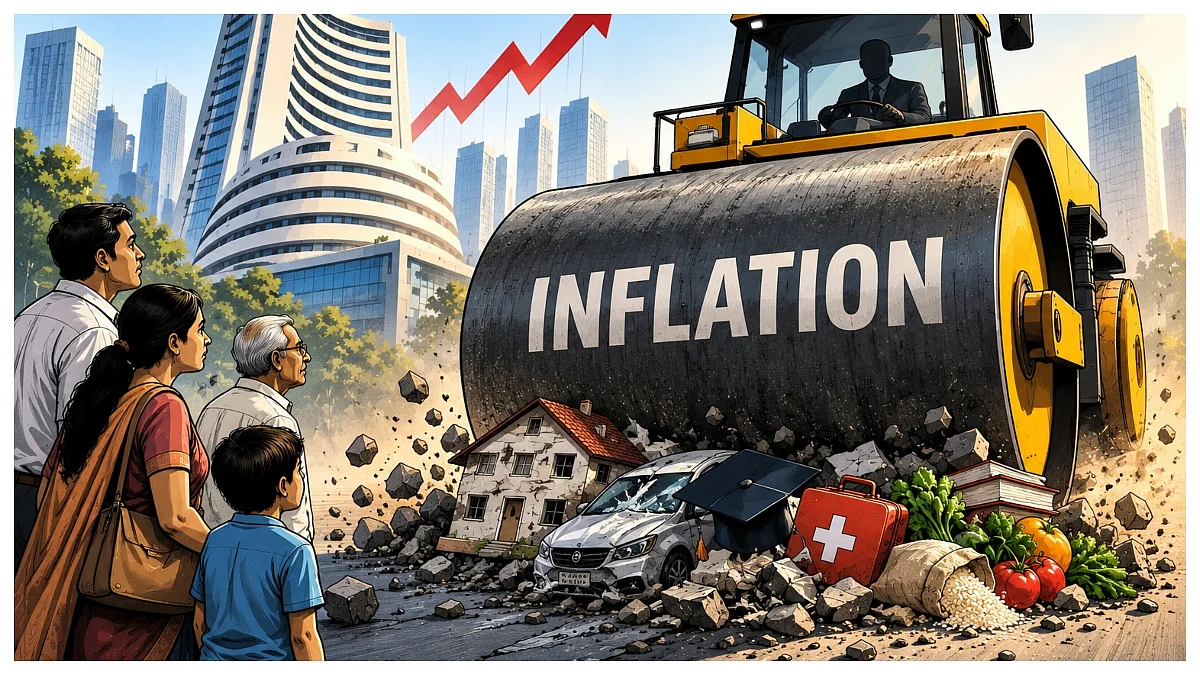
Inflation is a monetary phenomenon, according to Nobel laureate economist Milton Friedman. It is a sustained rise in the general level of prices across an economy, which reduces the purchasing power of money. A ₹100 note retains its face value, but the shopping bag may become lighter and household budgets tighter. India’s August consumer and wholesale inflation readings are due on Monday, September 14.
Inflation has existed before economics and central banks. British economist Joseph Lowe developed a representative-basket approach in 1823, while Étienne Laspeyres created his celebrated price-index formula in 1871. Inflation is measured by the Consumer Price Index (CPI), constructed from a basket of goods and services reflecting household expenditure. Weights are assigned to each item based on its economic importance.
The all-India basket contains 358 weighted items, with India's CPI using 2024=100 as its base, derived from the 2023-24 Household Consumption Expenditure Survey. Inflation is reported as the year-on-year change in CPI: [(Current CPI − CPI 12 months earlier) ÷ CPI 12 months earlier] × 100.
Simultaneously, the Wholesale Price Index (WPI) measures price movements in goods at the wholesale or producer-facing stage. The two indices can present conflicting readings, as WPI reflects upstream price pipeline movements while CPI measures goods and services encountered by households.
Inflation influences behaviour by restricting household income for non-essential goods and services. It also impacts businesses, raw materials, energy, wages, transport, borrowing, and corporate profits. Unexpectedly high or persistent inflation can lead to higher interest rates and bond yields, affecting stock market performance.
Understanding inflation's cause is crucial as much as measuring its percentage. While central banks strive to control inflation, their monetary policy tools may not be sufficient to address underlying economic factors. Remember, inflation is watched anxiously by central bankers, who aim to strike a delicate balance between controlling inflation and supporting economic growth.
Written by urgent.news from Free Press Journal's reporting — not their text. Machine-written — may contain errors; check the original before relying on it.