The small lessons changing how Ghana’s restoration champions plant trees
A seedling that looks strong and well developed may not necessarily be the best one to put in the ground. That was one of the lessons Dr Eva Agana took away from a recent gathering of restoration practitioners in Sunyani in the Bono East Region of Ghana. At Talmond Limited, where she is Sustainability Manager, […]
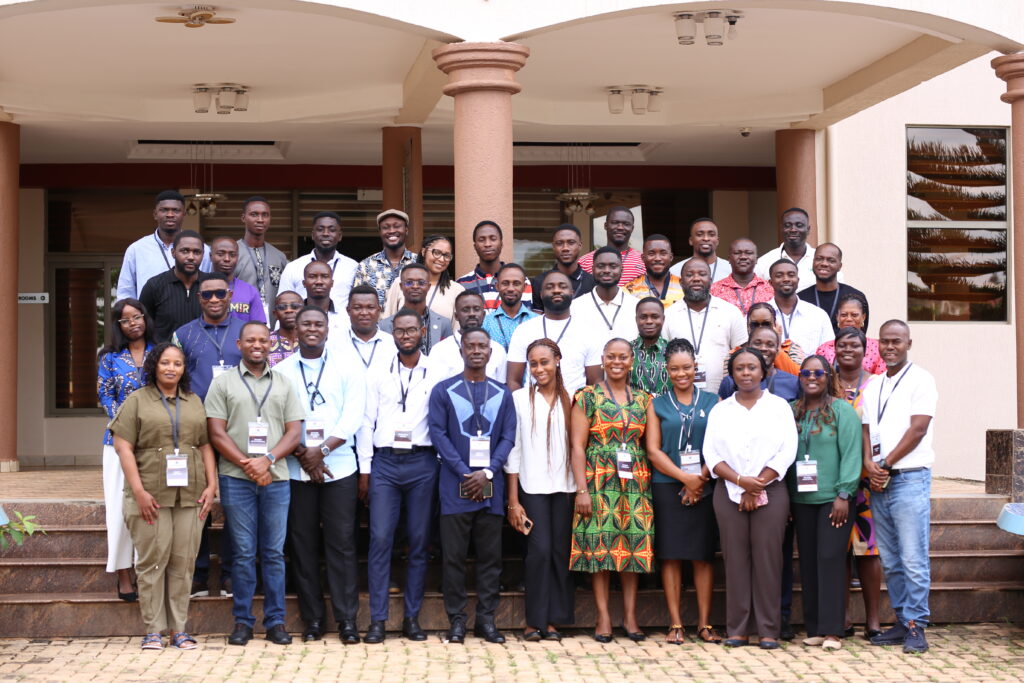
Dr Eva Agana, Sustainability Manager at Talmond Limited in Ghana, learned some valuable lessons at a recent restoration practitioners' gathering in Sunyani. One key takeaway was that larger seedlings may not always be the best choice for planting. Despite the belief that bigger, more developed seedlings have a higher survival rate, Dr Agana discovered that allowing them to grow too large in nurseries can actually decrease their adaptability to natural conditions.
The lesson emerged from the second peer-to-peer learning exchange, which brought together winners of TerraFund and AFR100 programmes to share experiences and learn from one another. This opportunity exposed Agana to new practices and technologies that could enhance her organization's restoration efforts. Another crucial lesson came from Akosua Pokuaa Yeboah, a Field Assistant at Tropenbos Ghana in Kumasi.
She stressed the importance of proper planning before planting, including determining the optimal time for planting and considering the landscape's terrain. For instance, planting in low-lying valleys can lead to flooding, so creating small mounds can protect seedlings from water damage. Yeboah also highlighted the need for monitoring seedlings after planting to ensure their survival.
If a seedling dies, identifying the cause—whether it's a pest infestation or transplanting shock—is essential for addressing the problem effectively. This process, known as "beating up," involves replacing dead seedlings while understanding the underlying issues. The exchange provided Yeboah with practical insights to apply immediately in her planting projects.
Okyere-Boateng Yaw Junior, from Obaathanpa Nyame Nti Ltd, emphasized the connection between restoration and community livelihoods. His organization focuses on plantation establishment and agroforestry, and the training helped them understand how these efforts can generate income for local communities while supporting forest conservation.
The exchange also showcased practical lessons on survival-rate assessments and beating up, strengthening their understanding of stakeholder engagement and the role of plantation establishment in supporting forest communities. Eric Lartey, Landscape Restoration Manager for the World Resources Institute's Ghana Cocoa Belts programme, addressed the challenge of securing funding for restoration efforts.
While philanthropic funding has been a significant source so far, Lartey believes it cannot be the sole solution. He argued that private-sector investment must play a more significant role in sustaining restoration initiatives. WRI is now exploring outcome-based finance, an innovative approach relatively new to restoration but common in sectors like health and education.
This shift in funding strategy aims to attract additional private-sector inflows to ensure the long-term success of restoration projects.
Written by urgent.news from Joy Business's reporting — not their text. Machine-written — may contain errors; check the original before relying on it.