The cosmic coincidences that made our universe – and us – possible
The sun and moon are positioned just right for us to see total solar eclipses, and the make-up of the universe is just right for life. Columnist Leah Crane wonders if it’s really all one big coincidence
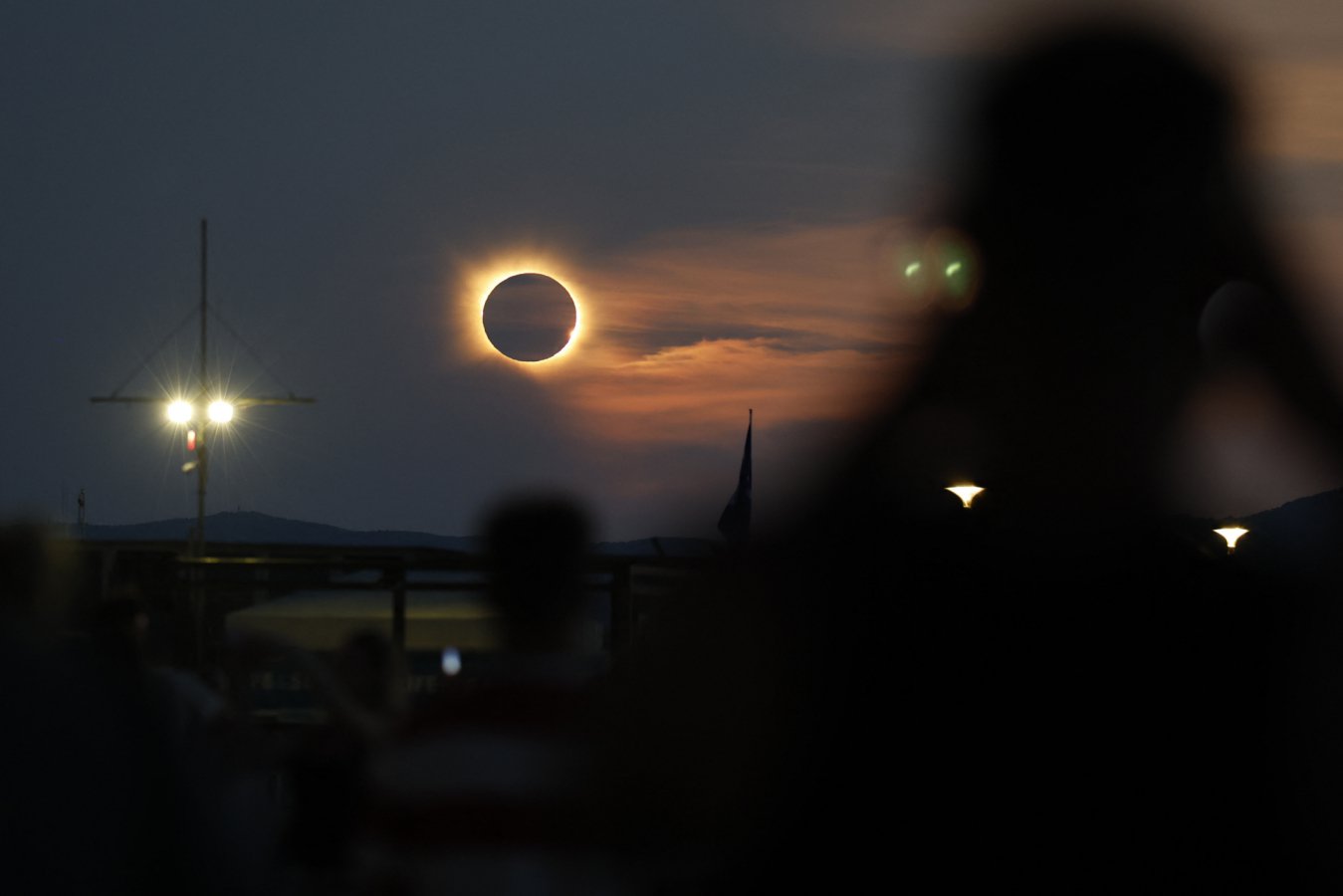
A total solar eclipse can be a breathtaking cosmic display, as seen from a ship off Greenland's east coast. The reason eclipses are possible is a truly astonishing coincidence: the sun is almost exactly 400 times larger than the moon, and it is also 400 times farther away. This makes them appear nearly the same size, allowing the moon to cover the sun's disc and plunge the area into darkness.
Cosmologists are still grappling with the fine-tuning problem. Dozens of fundamental constants, such as gravity's strength, particle masses, and the density of the universe, seem to be precisely calibrated to allow life to emerge. If even a slight change occurred, life as we know it would be impossible. This has led some scientists to propose the multiverse theory, where countless universes with varying constants exist, making the emergence of a life-permitting universe inevitable.
Others attribute the fine-tuning to a higher power or a technologically advanced civilization behind a simulation.
The author reflects on how extraordinary it is that we are here at all, emphasizing that the chances of our existence are 100 percent now. Yet, the universe at the Big Bang could have taken a different path, possibly leading to a universe composed entirely of radiation or one with a weaker gravitational force. While some aspects of the universe remain inexplicable, the author accepts that it's okay to view such phenomena as coincidences.
Written by urgent.news from New Scientist's reporting — not their text. Machine-written — may contain errors; check the original before relying on it.