Technical Architecture for AI-Ready Websites
A practical guide to building AI-ready websites with semantic HTML, structured data, clean URLs, canonicalization, sitemaps, and retrieval-friendly content.
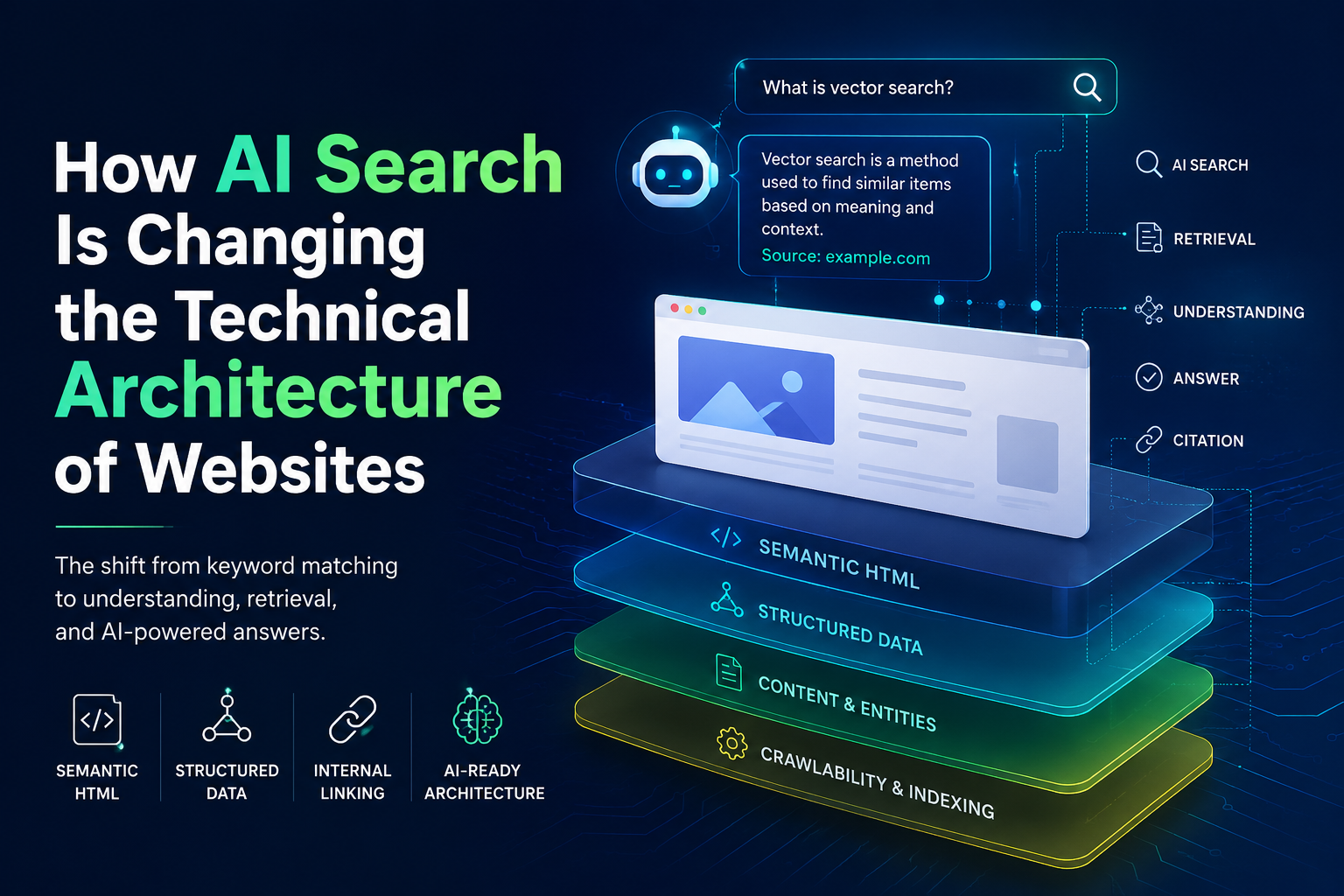
AI search technology is transforming not only how people find websites but also their underlying structure. Modern search systems require websites to handle entities, relationships, context, authorship, and individual claims - not just keyword matching. This means developers must rethink website architecture, focusing on areas such as HTML structure, internal linking, structured data, rendering, content boundaries, and machine-readable information.
The key shift is that websites now must serve multiple purposes: providing a good experience for humans, being crawlable by search engines, and being understandable by AI-powered interfaces. Essentially, websites are becoming data layers that must be discoverable, extractable, understandable, and attributable.
Semantic HTML becomes increasingly important in this new landscape. Traditional websites often use generic elements, providing machines with few clues about the content's meaning. Clear semantic boundaries in HTML, such as using appropriate headings, lists, and sections, benefit content extraction systems used by AI search engines.
Content boundaries are another crucial aspect. Modern websites contain a mix of navigation, cookies, advertisements, recommended articles, and more. To make this easier for both humans and automated systems, developers should emphasize clear separation of content. This ensures that when unnecessary interface elements are removed, the remaining document should still make sense.
Structured data, such as JSON-LD, plays a significant role in enhancing semantic representation of the page. While not an "AI ranking factor," structured data provides additional information about the content, making it easier for AI systems to process and understand.
Internal linking also evolves in the AI search era. Instead of merely distributing authority, internal links define relationships between pieces of information. A technology website could structure content as a knowledge graph, with main topics branching into concepts, technical guides, implementation examples, and case studies. This organized approach is more valuable than simply publishing numerous pages with varying keyword variations.
Finally, URLs should represent stable concepts for AI visibility. While readable URLs remain essential, they are not enough for AI systems to fully comprehend the content. Canonical URLs help clarify which version of a document is the primary one, especially when multiple URLs generate the same content through parameters, filters, or sorting.
Written by urgent.news from HackerNoon's reporting — not their text. Machine-written — may contain errors; check the original before relying on it.