‘Needle in a haystack’: The race to detect danger across the Himalayas
The deadly Aug 26 disaster in Nepal shows how a warming Hindu Kush Himalaya is creating complex, cascading hazards that scientists are racing to understand and monitor.
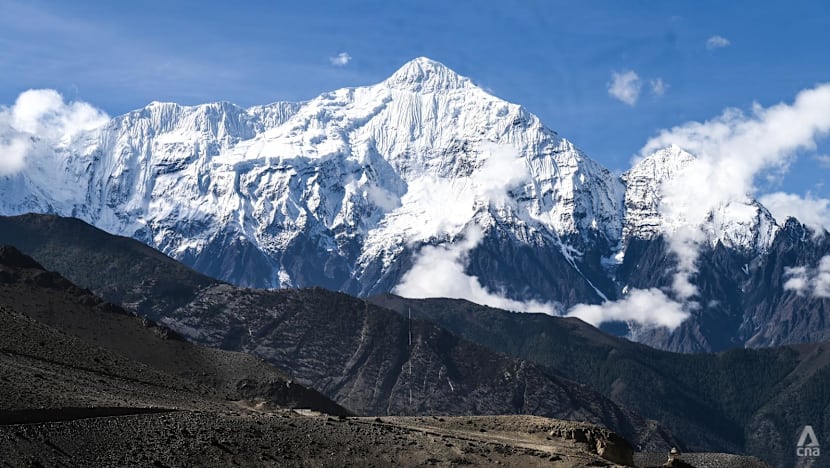
The devastating Aug 26 disaster in Nepal highlights how a warming Hindu Kush Himalaya is producing complex, cascading hazards that scientists are struggling to comprehend and monitor. At a regional scientific network meeting in Sichuan province, some of the world's leading glaciologists expressed shock at the scale of the devastation witnessed on Aug 26.
Assistant Professor Dibas Shrestha from Tribhuvan University noted that no one had anticipated such a catastrophic event. Miriam Jackson, a veteran glaciologist with the Norwegian Water Resources and Energy Directorate, described the event as both shocking and not entirely surprising due to the long-standing concerns about Himalayan hazards.
The disaster unfolded when a bedrock failure high in the mountains released a massive flow of rock and ice, traveling over 100 km downstream, causing widespread destruction. This multi-hazard cascade has been described as a "needle in a haystack" situation, given the vast and complex region of the Hindu Kush Himalaya, spanning eight countries and all of Nepal and Bhutan.
As global warming accelerates, the dynamics of this region are rapidly changing, with profound implications for the 1,386 people who perished and the 5,130 who remain missing. The Third Pole, a vast expanse of snow and ice outside the Arctic and Antarctic, is experiencing unprecedented warming, twice the global average. This rapid climate change is affecting glaciers, snow, permafrost, and exposed slopes simultaneously, creating a perfect storm of hazards that are difficult to predict, monitor, and respond to.
Benjamin Horton, dean of City University of Hong Kong's School of Energy and Environment, warns that the transformation of the Third Pole could lead to increasingly unstable water systems, threatening the livelihoods of nearly two billion people who depend on the region's rivers. As snow and glaciers melt, more rock is exposed to heat, and warming can degrade permafrost, further destabilizing mountain slopes.
Glaciologist Tobias Bolch has observed that retreating glaciers are pulling back from valley floors and moving onto steeper slopes, potentially creating new hazards as permafrost thaws. Experts agree that the consequences of this transformation are far-reaching and far from remote, affecting people, supply chains, and infrastructure across Asia.
Written by urgent.news from Channel News Asia's reporting — not their text. Machine-written — may contain errors; check the original before relying on it.