Les lois physiques du réseau électrique ignorent la politique
La transition énergétique ne peut reposer sur les seuls décideurs politiques. La gestion des systèmes électriques requiert une ingénierie solide, des réseaux unifiés et une véritable accessibilité financière.
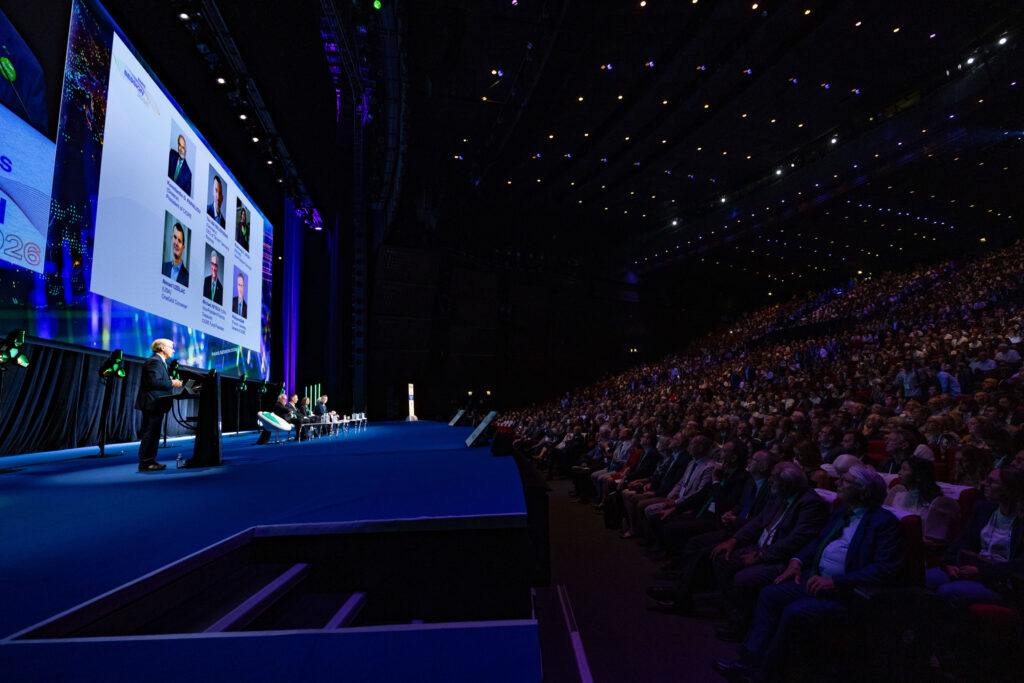
In the early days of the CIGRE engineering profession, a half-century ago, our work was straightforward. We operated large power plants, had predictable electricity demand, and used iron and copper. Our "digital intelligence" amounted to a skilled engineer with a well-sharpened pencil and a filing cabinet. Wireless communication was simply a colleague shouting through a booth.
Today, we lead the most complex technological transformation in human history: the energy transition. Our role is clear — we cannot simply be spectators; we must actively steer this change. If we fail to manage it with solid technical expertise, the physical laws of the network will control us, and they care little for political mandates or social media trends.
Every day, we balance a system under tension. Electricity demand surges as we electrify transportation, heating, and heavy industry, while enormous data centers dedicated to AI consume megawatts. At the same time, the inertia of traditional systems disappears. We replace heavy, steel rotating turbines with renewable energy inverters operating at microsecond speeds, leaving no error margin.
Physical boundaries have vanished completely. What happens at a single EV charging station or rooftop solar panel now impacts high-voltage transmission networks hundreds of kilometers away.
To succeed in this complex transition, the global energy community must align around three indispensable pillars. The first pillar: transmission and distribution can no longer exist in separate worlds. Historically, transmission and distribution operated like a long-married couple that stopped speaking. Transmission managers thought distribution managers only cared about light bulbs and streetlights.
Distributors saw the transmitters as an enormous secret electric train somewhere in the clouds. That era is gone. Today, distribution is an active, dynamic ecosystem rich in solar energy, storage, and flexible demand. What happens at the periphery of the network directly determines stability at the heart of the system. Transmission and distribution can no longer live in separate worlds.
A neighborhood that injects massive amounts of solar power at noon, a battery park that switches to charging mode, a fleet of electric vehicles recharging in the evening — every local decision has global repercussions. Ignoring this reality risks instability, congestion, and even blackouts. Regulators, states, and investors must treat the network as a whole, from the plant to the meter, not as a collection of regulatory and operational silos.
The second pillar: we cannot ignore the crucial importance of financial accessibility. In my view, every design bureau should ask itself: "In our rush to build the network of the future, are we forgetting those who will pay the bill?" An energy transition that widens inequalities or increases energy precarity is not a successful transition.
As investment expenses explode at all levels, we cannot rely solely on public subsidies to succeed. We must directly integrate financial accessibility into our engineering equations. This means eliminating unnecessary conversion losses at complex inverter interfaces and optimizing solutions with a circular economy mindset, rather than chasing after brand-new equipment.
If our solutions are not affordable for all, we have failed in our mission. An energy transition that widens inequalities or increases energy precarity is not a successful transition.
The third pillar: qualified engineers everywhere, at all levels, for true global equity. This requires massive training of a new generation of engineers capable of simultaneously thinking about the network's physical side, data, electricity markets, and societal challenges. It also requires accelerated knowledge transfer between mature and developing electrical systems to avoid countries reproducing obsolete architectures or remaining dependent on imported technologies without local mastery.
There is no Plan B, for there is no Planet B. The CIGRE, an independent non-profit organization with 25,000 members in 140 countries, contributes to meeting this challenge. Through its working groups, which bring together researchers, engineers, industry professionals, suppliers, regulators, and decision-makers, it transforms collective expertise into recommendations, training, and concrete solutions.
By empowering young engineers, we ensure that sustainable and affordable energy is accessible to all humanity. There is no Plan B, for there is no Planet B. The energy transition is not an option; it is an absolute necessity. We cannot leave this task to future generations. As Barack Obama so aptly stated, "We are the first generation to feel the effects of climate change, and the last one that can do something about it."
We cannot leave this transformation to political decision-makers alone. We must assume this responsibility together: for our families, our communities, and the world that depends on us.
Written by urgent.news from Politico EU's reporting — not their text. Machine-written — may contain errors; check the original before relying on it.