Late B2B Payments Tax 4.1% of Corporate Revenue
A well-prepared finance department typically implies a well-prepared business. And that’s supported by new PYMNTS Intelligence research in the June 2026 edition of the Growth Corporates Working Capital Index,which revealed that today’s strongest finance organizations are treating liquidity as something to position in advance, not something to source after a problem emerges. These leading firms…
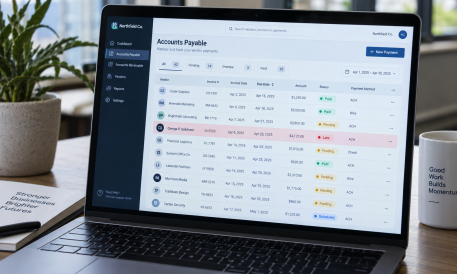
A new study by PYMNTS Intelligence shows that late B2B payments can equate to a loss of 4.1% of corporate revenue. The research, featured in the June 2026 edition of the Growth Corporates Working Capital Index, reveals that top-performing finance departments are strategically managing liquidity before financial challenges arise.
These firms consider financing, supplier structures, and payment choices as components of a unified operating system to provide management with more options. The study emphasizes that a company reacting to cash shortages operates differently from one that proactively secures liquidity to fund expansion, inventory, or better supplier terms.
Working capital is increasingly being positioned as corporate capacity, with 80% of top performers primarily using it for planned growth, while only 67% of bottom performers utilize it for emergencies. Supplier complexity is also becoming a balance sheet issue, with companies having fewer than 50 active suppliers having a 24-day cash conversion cycle compared to 49 days for firms managing more than 100 suppliers.
The study highlights that payments are gradually becoming financing products, with top firms more likely to view virtual cards as working capital tools. Artificial intelligence is no longer a differentiator but a crucial element, used by 70% of Growth Corporates to improve working capital efficiency. Late payments are now seen as revenue leakage, and top performers lose roughly 4.1% of revenue chasing overdue B2B payments.
The report suggests that investments in collections, reconciliation, and payment automation should be evaluated based on revenue preserved and working-capital value created, rather than merely the reduction in headcount costs.
Written by urgent.news from PYMNTS's reporting — not their text. Machine-written — may contain errors; check the original before relying on it.