Korea's aquaculture takes full blow of climate change
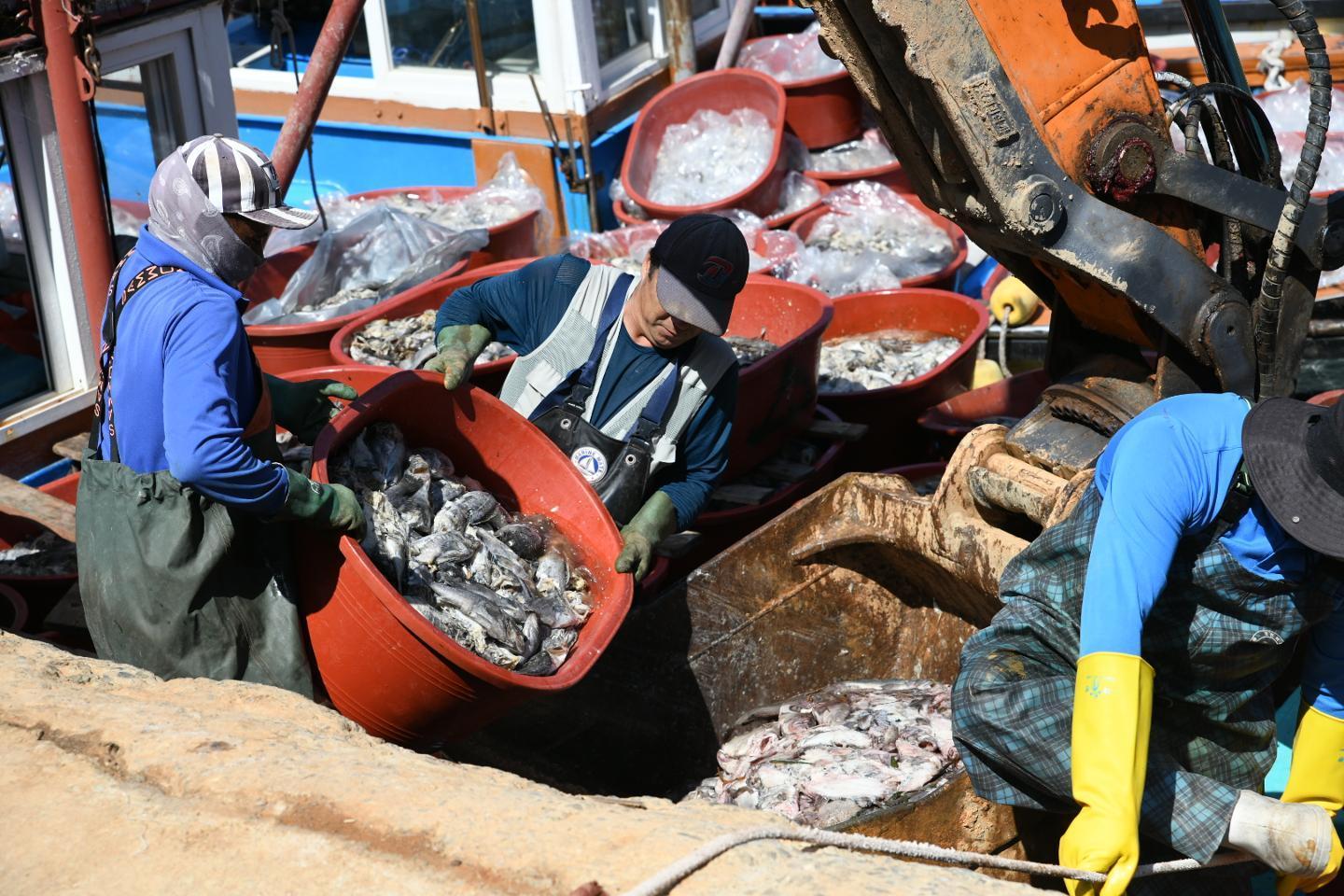
A putrid stench blanketed the area as about a dozen fishing boats docked one by one at Dara Port in Sanyang-eup, Tongyeong, South Gyeongsang Province. Every deck was piled high with dead fish. Most were cold-water species, such as Korean rockfish and grey mullet, but there were also considerable numbers of warm-water fish, including filefish. Groups of three or four men boarded the boats and…
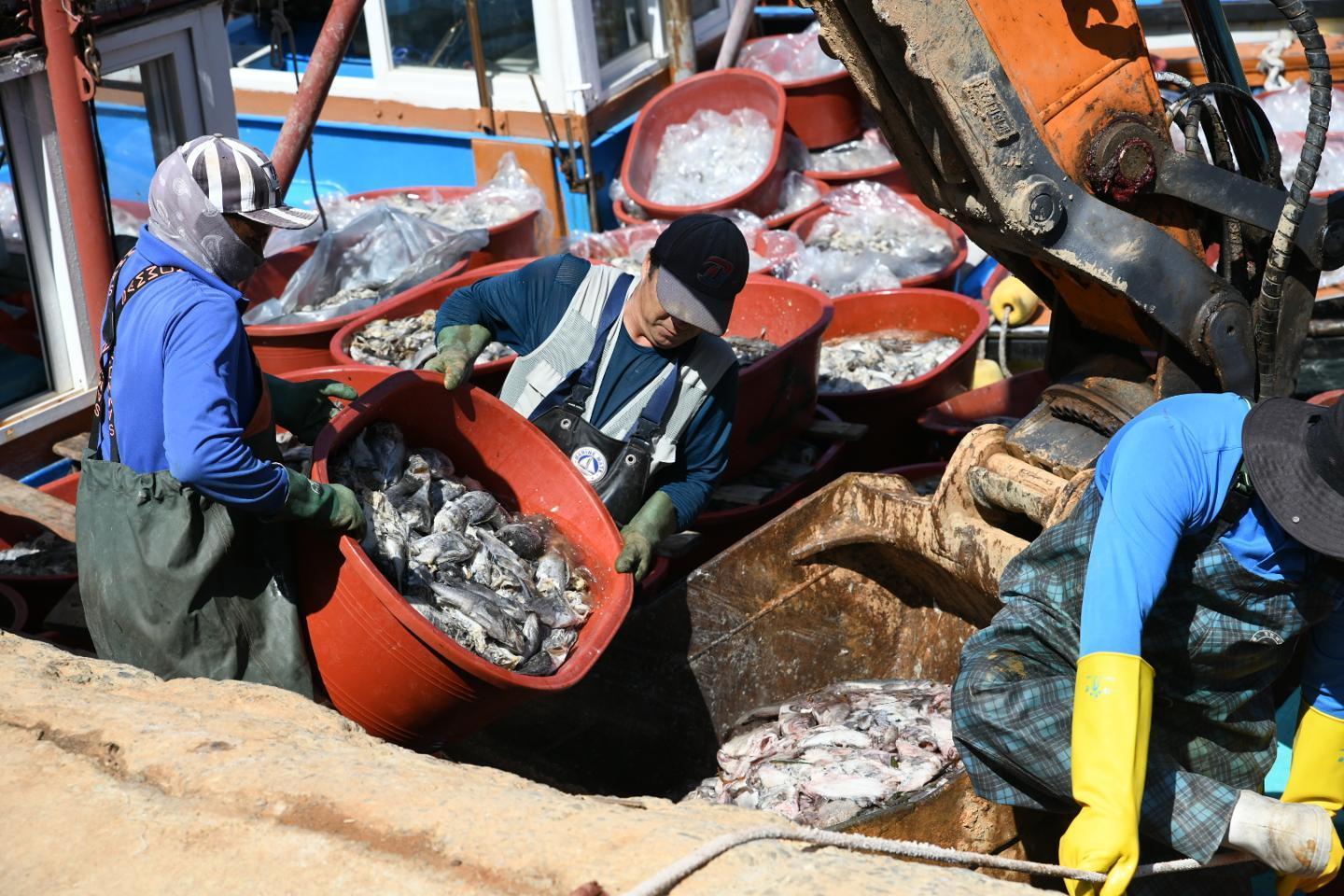
A thick, putrid odor hung in the air as roughly a dozen fishing vessels pulled up one after another at Dara Port, located in Sanyang-eup, Tongyeong, South Gyeongsang Province. Decks of the boats were laden with corpses, predominantly cold-water fish like Korean rockfish and grey mullet, but also a significant number of warm-water fish such as filefish.
Groups of three or four men disembarked the boats, loading the dead fish into an excavator bucket to be carried onto land. Despite working tirelessly, it took longer than half an hour to unload a single boat.
The fish farmer in charge expressed his despair, recounting that the sixth boatload of dead fish originated solely from his farm today. Over 30 percent of the fish in his one-hectare cage farm had succumbed to death, resulting in losses exceeding 500 million won (approximately $371,500). With a resigned tone, he questioned the sustainability of his 38-year-long fish farming career, citing the rising sea temperatures and the escalating losses as factors that leave him uncertain about the future.
Written by urgent.news from The Korea Times's reporting — not their text. Machine-written — may contain errors; check the original before relying on it.
This story
This is one outlet's version. Read the fullest account.
- Korea's aquaculture takes full blow of climate change koreatimes.co.kr