Faulty tool costs fortune
When pedicab drivers are labeled wealthy while a millionaire lawmaker qualifies for state aid, Indonesia’s high-stakes welfare registry proves that confusing data shortcuts with genuine reform costs real lives.
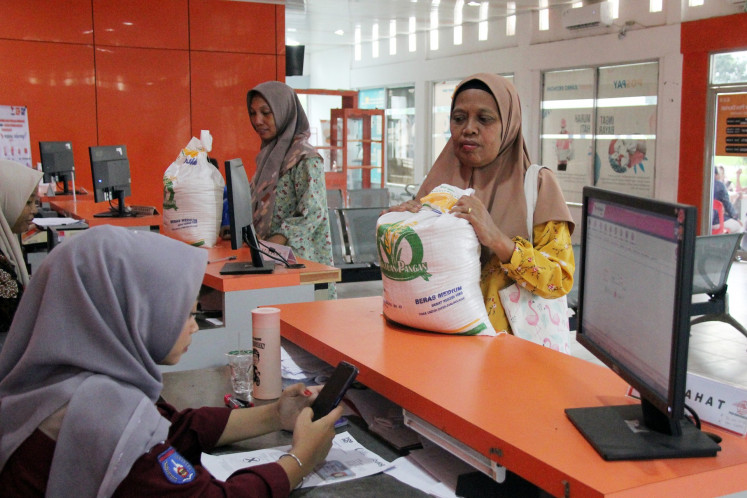
Indonesia's newly established National Socioeconomic Single Data (DTSEN) registry has gained public attention as it determines eligibility for social assistance, subsidized fuel, and liquefied petroleum gas (LPG). Once viewed merely as administrative data, the registry has now proven to be of immense significance. However, the system, responsible for distributing Rp 508.2 trillion (US$28.8 billion) in state social protection funds, is far from flawless and plagued with flaws.
Recently, significant discrepancies have emerged. Pedicab drivers have been mistakenly placed in wealthier deciles 9 and 10, while a member of the House of Representatives with substantial personal assets was incorrectly categorized in decile 4, qualifying her for state-funded social welfare benefits. These errors highlight a long-standing institutional issue in accurately targeting Indonesia's massive welfare expenditures.
The consequences of these systemic failures are profound. More than a third of households in the country's highest expenditure bracket continue to buy subsidized cooking gas for the poor, while numerous destitute families received no social assistance throughout 2025. Consequently, the push for a unified data source like DTSEN is commendable, but it must be paired with efforts to minimize significant misclassification.
Statistics Indonesia (BPS) surveys can provide regional, provincial, or national aggregates but fall short in accurately capturing individual conditions. The Jakarta Post invites readers to share their experiences, suggestions, and encountered issues regarding the DTSEN registry, emphasizing their openness to feedback.
Written by urgent.news from The Jakarta Post's reporting — not their text. Machine-written — may contain errors; check the original before relying on it.