Donald Trump’s AI Bet: Win First, Regulate Later
For Donald Trump, the race for artificial intelligence seems to begin with a simple premise: the United States cannot afford to come in second. In that logic, speed is not merely a technological issue, but a tool of economic, military, and geopolitical power against China. The problem is that while Washington seeks to preserve its […]
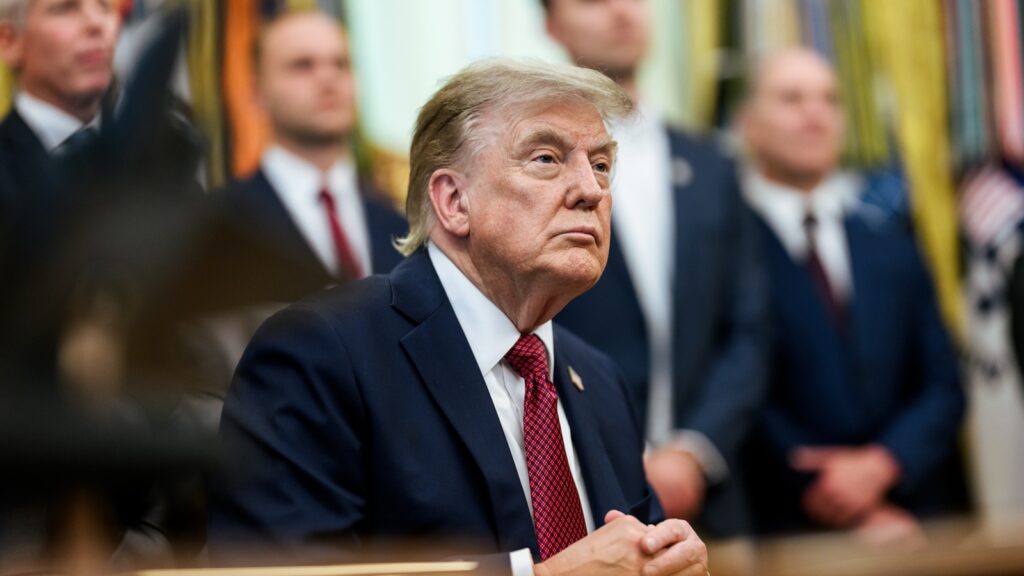
For Donald Trump, the pursuit of artificial intelligence (AI) supremacy hinges on a single principle: the United States cannot afford to lag behind China. In this view, speed is not merely a technical pursuit but a critical tool for maintaining economic, military, and geopolitical dominance. The looming question is what happens if, in the rush to win, the U.S. forgoes adequate safeguards, potentially giving rise to capabilities that could become uncontrollable in the future.
Trump has made his priority clear. "Whoever wins AI wins," he stated while defending the need to maintain the U.S. advantage over China. He echoed this sentiment, comparing AI to the internet and even more consequential than the Industrial Revolution. However, some prominent scientists and technology executives argue for stronger safeguards and suggest slowing certain developments to prevent the most advanced models from becoming too powerful.
On September 14, Trump dismissed these concerns, labeling them as part of a "sick conspiracy." He insisted that the U.S. already has tools to address companies when necessary and claimed that hindering the industry's growth would ultimately benefit China. This debate transcends the mere issue of regulation; it reflects fundamentally different perspectives on risk.
For Trump, the primary danger lies in China gaining ground. Opponents of accelerated AI development, on the other hand, fear that allowing geopolitical competition to dictate the pace of technology development, whose consequences are still unclear, could pose severe risks. The urgency of competition with China is intensifying the AI race.
While the United States once held a technological edge, that lead has rapidly diminished. Chinese companies like DeepSeek have shown that Chinese AI models can rival Western systems using fewer computational resources.
In response, the Trump administration has implemented policies aimed at maintaining the U.S. lead. An executive order signed in June reaffirmed the U.S. commitment to AI leadership, emphasizing the elimination of burdensome regulations and the acceleration of AI adoption across sectors. Additionally, the White House launched a national legislative framework centered on the objective of "winning the AI race," linking this goal to economic competitiveness and national security.
The military sector is also a priority. A presidential memorandum from June directed the acceleration of integrating advanced AI into defense and intelligence operations, emphasizing the need for a technological advantage over adversaries. Yet, this stance acknowledges the necessity for these systems to remain controllable, secure, and accountable—a requirement that introduces a contradiction.
The administration recognizes AI's potential security risks while arguing that excessive regulation could hinder U.S. competitiveness.
Prominent voices like Dario Amodei, CEO of Anthropic, echo concerns over safety measures. Anthropic supports export restrictions on advanced semiconductors to China and warns about the potential misuse of powerful AI systems for mass surveillance, military operations, or political repression. The core disagreement remains whether the risk of allowing China to lead is acceptable while the technology's full impact remains uncertain.
Trump advocates for rapid advancement, viewing speed as essential to winning, while Amodei cautions that unchecked speed could transform rapid progress into a peril.
Written by urgent.news from Colombia One's reporting — not their text. Machine-written — may contain errors; check the original before relying on it.