China’s self-powered neural device helps stroke survivors walk naturally
Scientists have developed a lightweight, battery-free device that could help improve the mobility of people with difficulty walking, such as stroke survivors. Developed by researchers in Hong Kong and mainland China, the neural prosthesis uses energy generated by the wearer’s own movements to electrically stimulate their muscles, helping to flex their ankle and restore their natural walking…
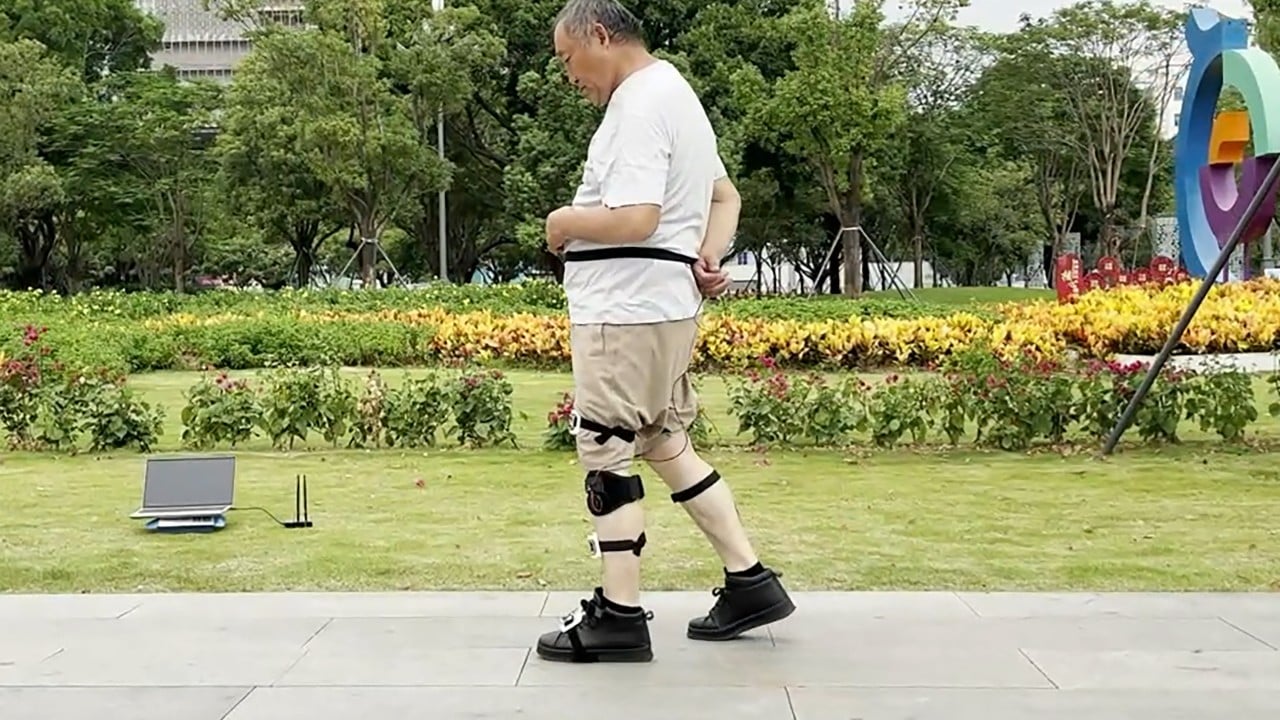
Scientists in Hong Kong and mainland China have created a lightweight, battery-free device that could enhance mobility for individuals struggling with walking, such as stroke survivors. This neural prosthesis harnesses the wearer's own movements to stimulate their muscles, assisting in ankle flexion and restoring their natural walking pattern.
This innovation may prevent falls among stroke survivors, elderly people, and others with mobility impairments. Additionally, the device could benefit athletes during training sessions.
The researchers published their findings in the journal Nature Communications on September 2. The device operates autonomously by generating energy through mechanically coupled energy harvesting and stimulation delivery during walking, eliminating the need for external sensors or battery-powered control. It only requires a few steps to power up and has shown promising results in both indoor treadmill trials and outdoor walking tests.
Stroke survivors experienced a 67.3% increase in walking distance and a 43.5% improvement in walking speed during outdoor tests after using the device. The system is designed to integrate into standard footwear and requires minimal setup time, making it suitable for practical use beyond the laboratory. Professor Yang Zhengbao from HKUST highlighted the device's advantages over existing therapies, as it leverages the "natural intelligence" of human walking patterns, unlike rigid braces used for post-stroke foot drop, which mainly constrain the ankle joint and can lead to muscle atrophy with prolonged use.
Inspired by natural gait patterns, where humans walk in an alternating stance and swing phase, the device harvests mechanical energy from the less affected limb using a component embedded in the wearer's shoe. This energy then powers a lightweight neurostimulator attached to the weaker limb, stimulating the muscles to facilitate movement. While foot drop was not entirely eliminated during outdoor trials, the device significantly improved gait patterns for the participants.
The researchers emphasized that their device could be low-cost, easy to use, and lightweight, which could be particularly beneficial for people in low-income countries. They also noted that the device's design could be adapted for other applications, such as knee and hip rehabilitation. The team is working on similar products for these areas and hopes to incorporate energy harvesting technologies to further enhance its design and benefits.
Written by urgent.news from South China Morning Post's reporting — not their text. Machine-written — may contain errors; check the original before relying on it.
This story
This is one outlet's version. Read the fullest account.