China’s intelligence chief warns of risks from AI as ‘new arena for strategic rivalry’
China’s top intelligence official has warned of rising national security risks posed by artificial intelligence (AI), calling for robust risk prevention frameworks and stronger global governance of the emerging technology. The call from Chen Yixin, China’s state security minister, comes as Beijing seeks to play a leading role in global AI governance while criticising US restrictions. At the Brics…
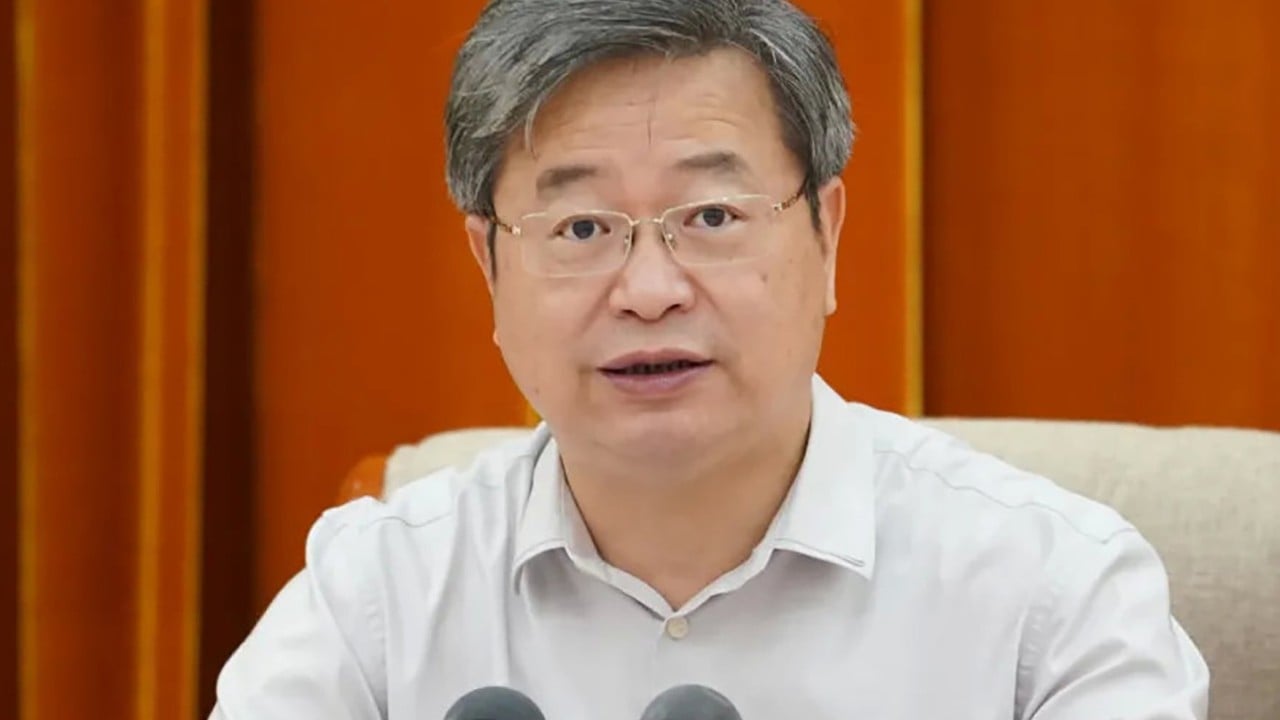
China's top intelligence official, Chen Yixin, has cautioned of escalating national security risks stemming from artificial intelligence (AI) technology, advocating for comprehensive risk mitigation frameworks and enhanced global regulations. This warning emerged as China endeavors to assume a leading role in worldwide AI governance, contrasting this stance with its criticism of US limitations on AI development.
During the recent Brics summit in India, Chinese President Xi Jinping advocated for an AI-driven initiative to spur industrialization and bolster supply chain cooperation among emerging economies. Chen emphasized AI as a crucial geopolitical arena where major powers are competing strategically. In an article published on the Cyberspace Administration of China's journal, Chen described AI as "a new arena for strategic rivalry among major powers."
He emphasized the need to balance security measures with the pursuit of new opportunities, warning of AI's potential systemic impact on ideological security, including its potential utilization by hostile entities to spread misinformation and create massive amounts of harmful content. Chen also highlighted the technology's threat to critical information infrastructure, stating that advancements in AI, exemplified by next-generation US-led models like Anthropic's Claude Mythos and OpenAI's GPT-5.5-Cyber, could significantly reduce the technical barriers and costs associated with executing sophisticated cyberattacks.
He cautioned about the risks of widespread domestic data breaches resulting from careless users sharing sensitive information through foreign AI applications. Moreover, Chen expressed concerns about the growing disparity in AI development caused by monopolistic practices by dominant tech powers, who are allegedly dismantling the global AI supply chain through various strategies such as entity bans, technology controls, monopolizing industry standards, and constructing closed-source ecosystems.
Although he did not explicitly name any nations, Chen's remarks implied tensions within the US-China power struggle, where Washington has publicly declared its unwillingness to be outpaced by China in AI advancement. US Treasury Secretary Scott Bessent recently warned that a loss of the AI race to China could render all other issues irrelevant.
This escalating tech conflict has prompted the US to impose restrictions on Chinese entities across various sectors, including chip supply, investment, market access, and talent exchange. Chen also urged the strengthening of early-warning systems and public advisories to expose foreign attempts at utilizing AI for espionage, state secrets theft, disinformation campaigns, and strategic containment against China.
He called for global cooperation to resist hegemonism, technological barriers, and exclusive blocs, and to establish a "fair and open international AI rules system." China is currently developing multilateral platforms for global AI governance, as evidenced by the signing of a landmark agreement in July by 29 countries, including Russia, Kazakhstan, Laos, Pakistan, and Indonesia, to establish the China-backed World AI Cooperation Organisation (Waico).
Waico aims to aid Global South nations in expanding technical capacity and create a worldwide AI governance framework that respects varying national policy perspectives.
Written by urgent.news from South China Morning Post's reporting — not their text. Machine-written — may contain errors; check the original before relying on it.