BRICS is not building a new order, but a hedge against the old one
By R Suryamurthy The 2026 New Delhi Declaration arrives at a revealing moment for BRICS: two decades after the grouping emerged as a shorthand for the rising economic weight of the Global South, it is no longer merely demanding a larger seat at the table of global governance, but is beginning to construct the institutional […] The article BRICS is not building a new order, but a hedge against the…
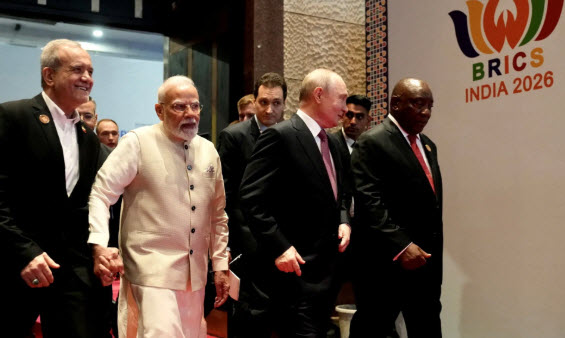
The 2026 New Delhi Declaration of BRICS arrives at a crucial juncture for the grouping. Once seen as a symbol of the rising economic weight of the Global South, BRICS is now constructing institutional infrastructure that could allow its members to operate with reduced dependence on systems they don't control. However, the declaration also reveals the central paradox of the BRICS project.
As the grouping becomes larger and more politically diverse, the plausibility of a unified alternative to the Western-led economic order diminishes, prompting a strategy of selective hedging.
This pragmatic approach is evident in the declaration's treatment of energy, trade, and currency, three areas where BRICS' strategic ambitions clash with internal economic differences. For industrialized nations, the transition away from fossil fuels is increasingly driven by regulation, investment, and trade policies. However, for developing countries, hydrocarbons remain indispensable to industrialization, transport, electricity generation, and economic growth.
By recognizing this, BRICS effectively rejects the notion that every economy can follow the same decarbonization timetable, regardless of its stage of development.
Moreover, BRICS' criticism of the European Union's Carbon Border Adjustment Mechanism (CBAM) highlights its concerns about climate policy potentially becoming a tool for richer economies to impose adjustment costs on poorer producers. Despite this, BRICS has no unified energy strategy. Russia and other hydrocarbon producers have a vested interest in preserving demand for fossil fuels, while China and India are major energy consumers expanding their renewable capacity.
The declaration's push towards clean-energy technologies like smart grids and hydrogen indicates a hedge against the uncertainties of tomorrow's energy system without abandoning current energy security concerns.
The trade agenda of BRICS also reflects this strategy. The grouping reaffirms the importance of the World Trade Organization (WTO) in maintaining a rules-based, non-discriminatory trading system. Simultaneously, it seeks to strengthen intra-BRICS trade mechanisms, commodity platforms, and financial institutions to safeguard its members against potential disruptions in global trade and finance.
This apparent contradiction is integral to the strategy, creating institutional redundancy that protects BRICS members against fragmentation of the existing trading system.
Written by urgent.news from Arabian Post's reporting — not their text. Machine-written — may contain errors; check the original before relying on it.