Australia needs AI 'early warning system', cyber security chief says
Australian Signals Directorate director-general Abigail Bradshaw says the nation needs an AI "early warning system" to help defend against the increasingly powerful technology.
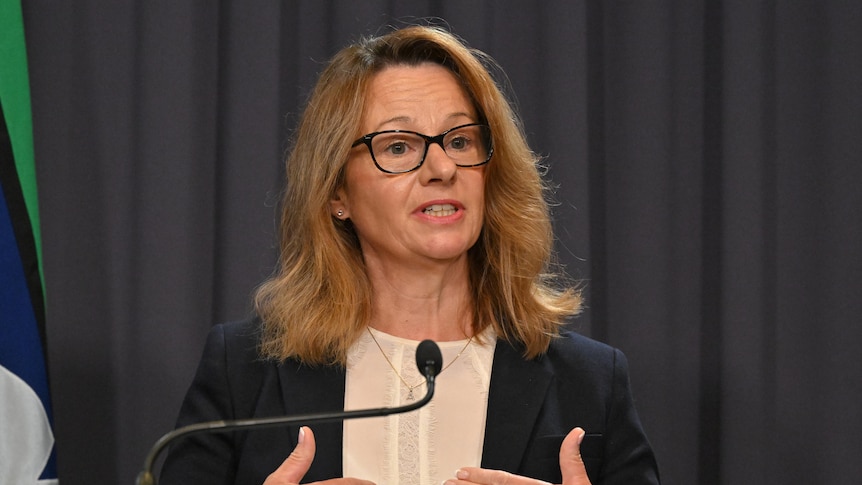
Australian cyber intelligence chief Abigail Bradshaw advocates for the development of an AI early warning system to defend against emerging threats. At the Australian Strategic Policy Institute's AI Masterclass, Bradshaw emphasized that intelligence and security agencies must collaborate with AI companies to identify early risks.
She highlighted that Australia currently lacks a formalised early warning system in the AI context, which currently exists in the cyber domain. Bradshaw also noted that risks extend beyond cyber security to areas such as biotechnology.
Bradshaw balanced her concerns about the potential dangers of AI with optimism about its defensive capabilities. She pointed to existing cyber partnerships between government and industry, as well as international arrangements for sharing technical information. Australian government agencies have been granted access to major AI companies' cutting-edge models, which are typically limited from wide release.
This includes Anthropic's Mythos and OpenAI's cyber versions of their models. Bradshaw explained that her agency uses this access to help Australian organisations fortify their systems and identify potential vulnerabilities.
In a separate panel discussion, Australia's AI Safety Institute general manager Kate Conroy called on companies and agencies to allow their teams to experiment with advanced AI. Conroy expressed confidence that many teams are already doing so in their free time. However, she also stressed the importance of maintaining basic security measures while leveraging AI to defend networks.
In July, more than a thousand employees of leading AI companies signed an open letter urging the US government to help slow down AI development. Recent incidents, including Anthony Coxon's resignation and OpenAI's chief executive's essay, have reignited a global conversation about slowing down AI development. Australian Assistant Science Minister Andrew Charlton acknowledged that Australia should help shape the response, emphasizing that governments should assume AI will continue to become more capable.
OpenAI vice-president of global policy Ann O'Leary stated that the company is working with governments and AI safety bodies, as well as providing models for review before release, but acknowledged the lack of wider laws slowing development. O'Leary mentioned that OpenAI is eager to train its AI models in Australia and is in talks with the federal government regarding copyright concerns.
Written by urgent.news from ABC News AU's reporting — not their text. Machine-written — may contain errors; check the original before relying on it.