Arbeitszeit: Dieser Rechner zeigt, wie viel Sie künftig arbeiten müssen
Sollte KI nicht Arbeitszeit ersparen? Erste Studien zeigen, dass teils das Gegenteil der Fall ist. Woran das liegt – und wie viel mehr oder weniger Sie womöglich bald arbeiten.
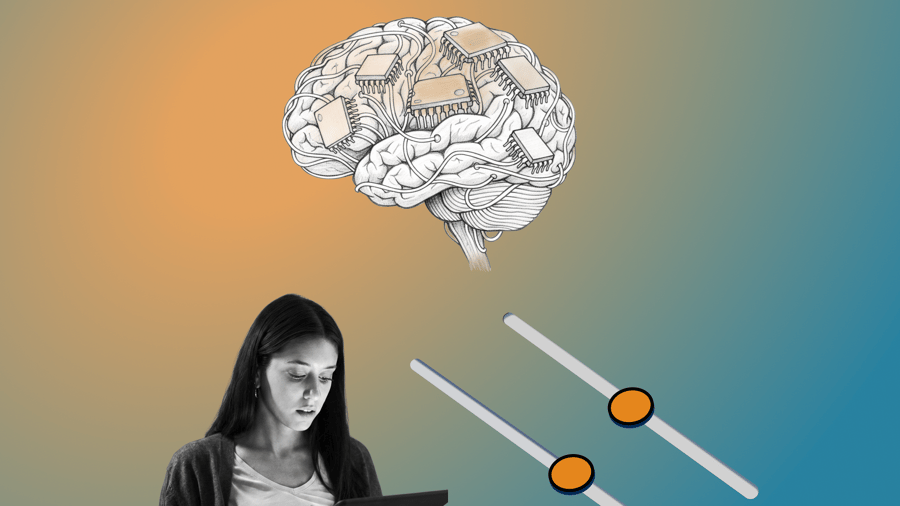
Many employees experience increased strain from AI, not less, despite the promise of increased efficiency. Wei Jiang, an economics professor at Emory University in Atlanta, USA, was puzzled by the contradiction between the optimistic productivity forecasts of AI and the reality experienced by workers. Together with researchers from several other universities, Jiang studied how AI truly changes the daily work routine, particularly the workload of employees.
Using data from the American Time Use Survey (ATUS), the researchers found that in the United States, average working hours are increasing, rather than decreasing. The Handelsblatt magazine has created a calculator based on these research findings and German labor statistics data, which predicts your future working hours by 2027 based on various criteria.
The prediction of your future work hours is based on two main factors: the industry you work in, and the extent of your AI utilization. The research shows that employees who use AI the most tend to work more hours than before. This can be explained by the so-called "catch-up effect," where employees who have not previously used AI may need to spend more time learning and integrating it into their daily routines.
However, the connection between using less AI and working fewer hours is still weak and should be interpreted with caution. On the other hand, employees who use AI extensively now work significantly more than before, consistent with early surveys from the IT industry showing that programmers are working more, not less, in the AI age.
One possible reason for this increased workload, according to Jiang, is that companies face intense competition in a KI-driven work environment and aim to increase output using technology rather than reduce working hours. Other studies suggest that high-stress job markets and the hype around AI contribute to employees in middle management working more to appear efficient in using AI.
Sociologist Diana Enriquez found that 50 middle managers interviewed in the USA felt the pressure to demonstrate their ability to leverage AI effectively. Laura Venz, a professor of work psychology at Leuphana University in Lüneburg, Germany, is aware of many European studies showing that AI has not reduced working hours. Instead, the focus has shifted from routine tasks and knowledge queries to more controlling tasks, requiring employees to spend more time verifying AI-generated solutions.
This is partly due to the increasing complexity of tasks and the decreased accuracy of AI outputs, which require more cognitive effort to review and implement. The "AI Brain Fry" phenomenon, as described by Venz, leads to employees feeling exhausted and less concentrated, especially when they constantly have to check AI-generated work and switch between multiple applications.
This may result in more errors at work and a higher desire to quit. While the fear of AI replacing jobs remains exaggerated, Jiang and Venz argue that the truth is more complex. Although job cuts are rare, companies may continue to require current employees to handle more tasks with the help of AI, especially in programming. AI is increasingly taking over tasks that were previously done by new employees, such as rewriting code or implementing simple functions.
This could lead to a redesign of entry-level roles, with newbies focusing on providing data to AI systems.
Written by urgent.news from Handelsblatt's reporting — not their text. Machine-written — may contain errors; check the original before relying on it.