Why do cats lick each other?
Cats lick each other for multiple reasons, and some are more mysterious than others.
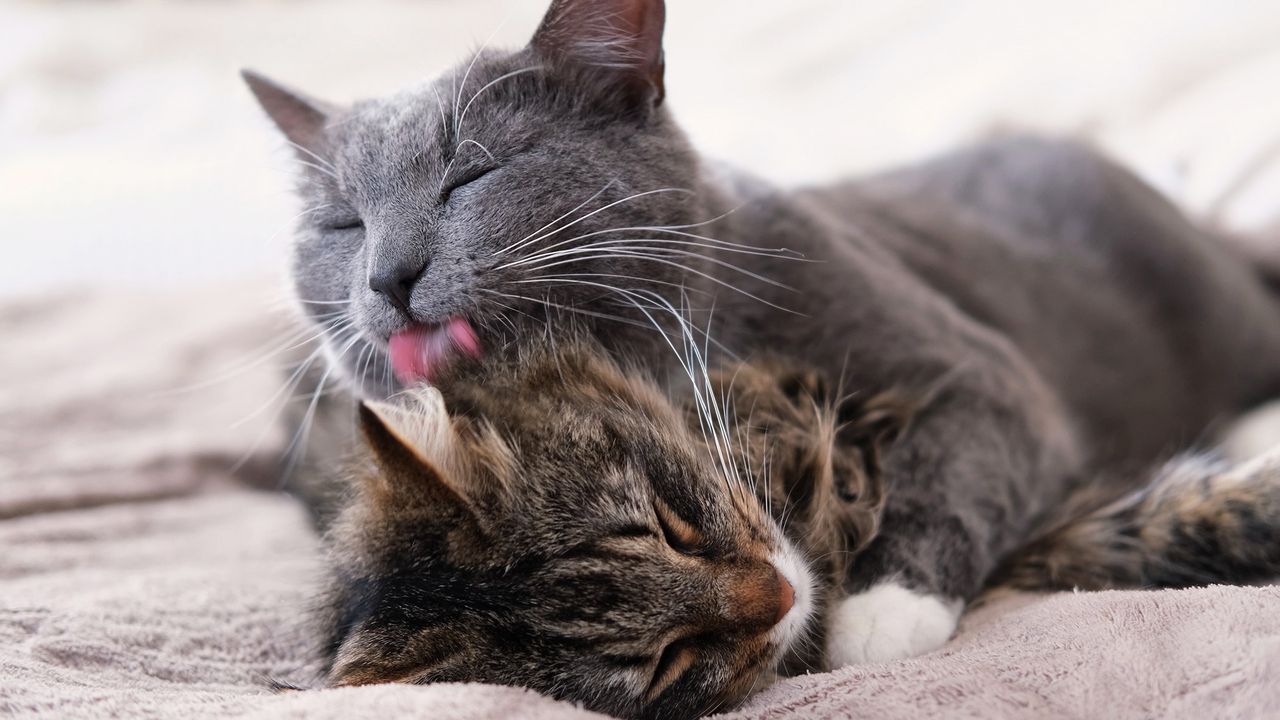
In households with multiple cats, it is not uncommon to observe one cat grooming another. This behavior, known as allogrooming, has led to various interpretations about its purpose. While some assume it signifies friendship, scientific research suggests there may be more complex reasons behind this behavior.
Researchers have proposed that allogrooming could serve as a means of social bonding or alleviate tense situations. A 1998 study of 25 cats living together indoors indicated that allogrooming might help defuse potential conflicts in confined spaces, where actual fights would be too risky. Another study of 53 two-cat homes found that allogrooming may have varying social functions depending on the situation.
During moments when cats huddle together, allogrooming could strengthen social bonds. However, most licking tends to focus on the ears, which may have a relaxing effect due to the high density of sensory nerve endings in that skin area. Allogrooming can also trigger friendly wrestling, suggesting it may serve as a signal to initiate play.
Conversely, allogrooming can precede behaviors associated with conflict, such as displaying defensive postures, pawing, or biting. The researchers suggest that allogrooming may function as an "appeasement signal" in tense moments that could lead to conflicts or injuries. One cat might stand or lean over the other, and both may exhibit subtle signs of stress, such as lip licking, head shaking, or self-scratching.
While the study did not investigate hygiene aspects, Van Belle and her colleagues believe that allogrooming could also have a hygienic function. Since cats often focus on grooming the head and neck, areas that are hardest for them to reach, allogrooming could help maintain cleanliness. However, further research is required to determine whether allogrooming reduces dirt or parasites.
Dr. Terry Curtis, a veterinary behaviorist, supports the idea that allogrooming might have a hygienic function but acknowledges that it is challenging to understand a cat's motivations fully. She speculates that feral cats, who may have more fleas than house cats, could exhibit different allogrooming patterns. The motivations behind allogrooming remain uncertain, leaving many aspects of this behavior open to further investigation.
Written by urgent.news from Live Science's reporting — not their text. Machine-written — may contain errors; check the original before relying on it.