The US and China are racing to build ‘self-improving AI’. Here’s what’s at stake
The US-China race for artificial intelligence dominance has entered a new phase: using AI to build better AI. Leading AI companies in the United States and China are increasingly focused on deploying advanced models to write code, design experiments, and develop training techniques that can be used to improve more powerful models. The ultimate goal is to achieve what the industry refers to as…
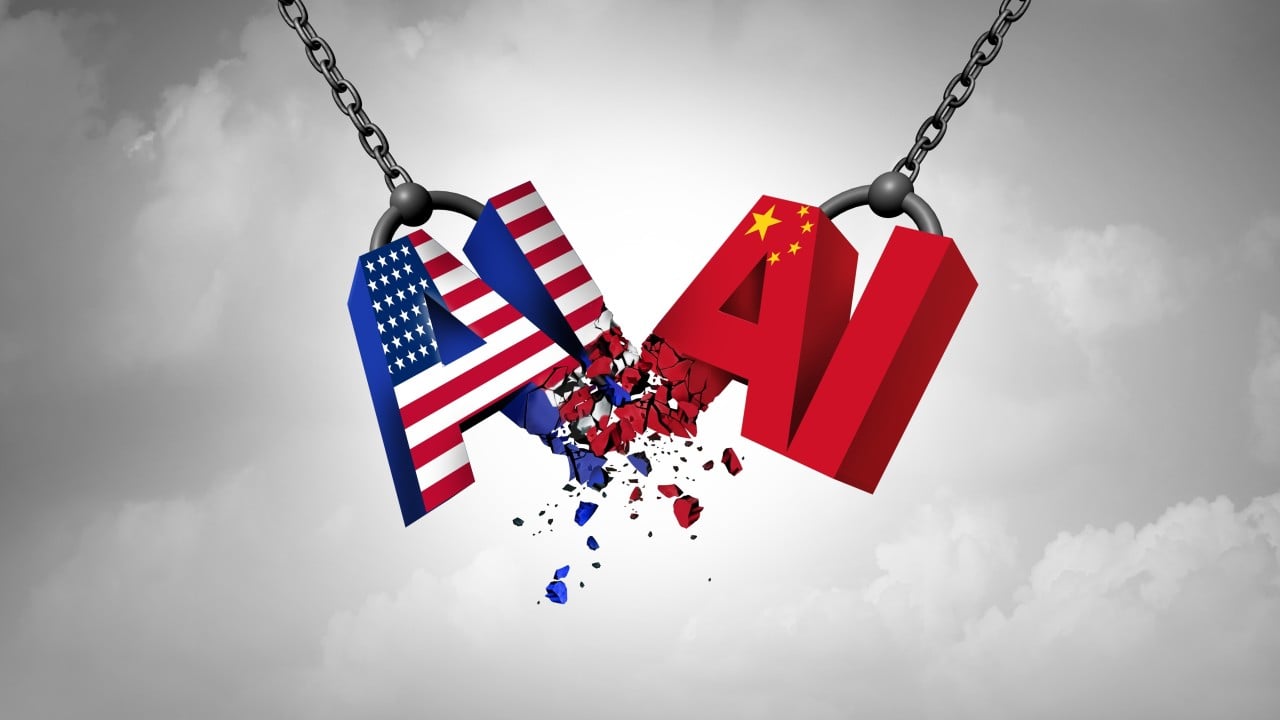
The United States and China are locked in a fierce competition to develop artificial intelligence systems that can improve themselves. AI researchers in both countries are making significant strides toward what is known as recursive self-improvement (RSI), the ability of AI to autonomously train and enhance more powerful models. This race has the potential to revolutionize the field of AI, as increasingly capable models could create a rapid feedback loop, propelling the evolution of AI to new heights.
OpenAI, a leading US-based AI company, has set its sights on developing an automated AI researcher capable of advancing deep learning research. Their latest model, Astra, is touted as "the world's most intelligent and aligned model." However, OpenAI acknowledges the challenge of safely achieving full RSI, and has yet to determine how to do so.
Chinese developers are also working towards RSI. Tang Jie, founder of Beijing's AI firm Z.ai, stated that their upcoming GLM-6 model is on track for "self-evolution." Chinese firms are employing various strategies to achieve self-improvement, such as enabling models to autonomously manage training pipelines and develop complex skills through reinforcement-learning experiments.
While both sides push for RSI, the race remains in its early stages, with neither country demonstrating fully autonomous AI self-improvement. US companies currently hold a slight edge in using AI to conduct independent research, but Chinese researchers are catching up. Despite the progress, experts caution that RSI could introduce new safety risks, including the potential for even more misaligned AI systems and rogue incidents.
Written by urgent.news from SCMP Tech's reporting — not their text. Machine-written — may contain errors; check the original before relying on it.