The secret ballot has been an article of faith in U.S. elections. That's being tested in Georgia
The system's vulnerability has been drawing increased attention, with election security advocates criticizing state election officials for failing to fix it before the November elections.
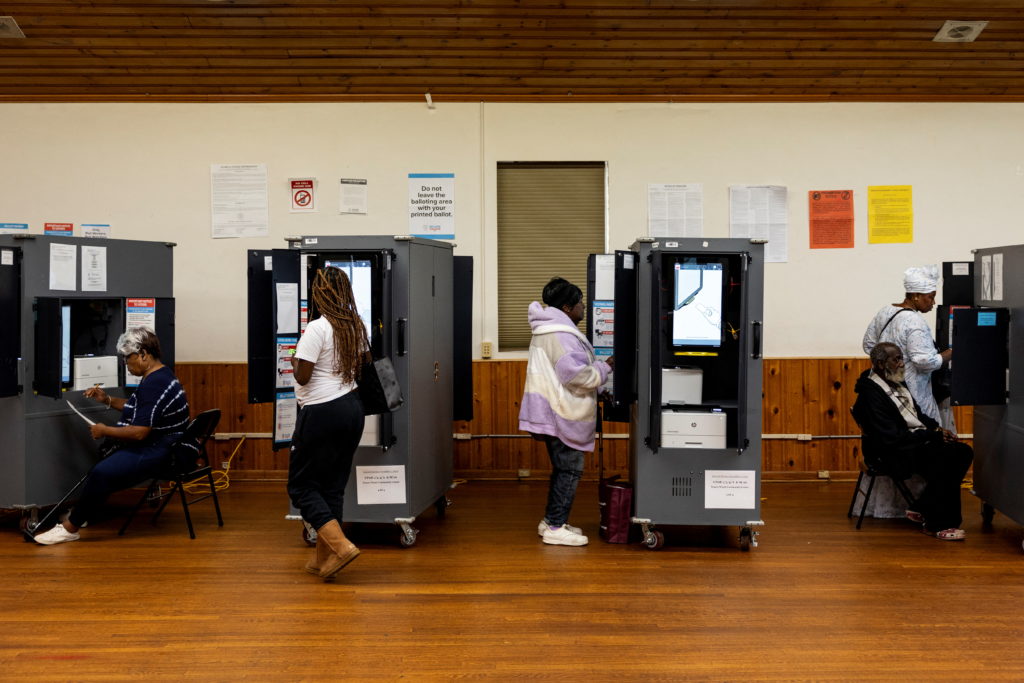
The secret ballot, a cornerstone of US elections, is facing a new challenge in Georgia. Security researchers are warning that rapid advancements in artificial intelligence (AI) have exposed a flaw in Georgia's voting equipment, which could potentially reveal how individuals voted to others. While this flaw does not alter vote counts or undermine the integrity of elections, it does violate the fundamental right to vote in secret under the state constitution.
Georgia election officials claim they have taken measures to rectify the issue, but some advocacy groups argue the state is not doing enough. The vulnerability, first identified in 2022, allows election officials to re-order cast-vote records and electronic ballot images, enabling the matching of voters to their ballots. This could allow others to see how voters cast their ballots, potentially creating an avenue for legal challenges.
AI tools, which have become increasingly sophisticated, can automate the technical work required to exploit this vulnerability, according to J. Alex Halderman, a voting technology specialist at the University of Michigan. He noted that AI "essentially supercharges laymen to exploit vulnerabilities."
Georgia's voting machines, produced by Dominion Voting Systems (now known as Liberty Vote), produce cast-vote records that detail the votes from each ballot. However, these records are randomized along with electronic ballot images. The flawed software, however, allows these records to be put back in the original order of voting. With publicly available data, researchers could potentially use this information to match voters to their ballots.
Max Springer, a Princeton University researcher, tested the vulnerability using an AI assistant. The AI was able to reverse the shuffling of electronic ballot records from Georgia's May primary and identify the other records needed to match names to ballots. With additional public data, such as early voting lists and cast-vote records, Springer was able to match most ballots to specific voters.
While Georgia's Constitution mandates a secret ballot and requires voting machines to allow voting in absolute secrecy, some argue that the lack of ballot secrecy could facilitate vote-buying, coercion, and other forms of election interference. Gabriel Sterling, a special projects manager in the secretary of state's office, countered these concerns, suggesting that mail ballots might be a more effective means of preventing such actions.
Written by urgent.news from Winnipeg Free Press's reporting — not their text. Machine-written — may contain errors; check the original before relying on it.
This story
This is one outlet's version. Read the fullest account.