The last witnesses: Remembering Malaya under Japanese occupation
FOR the audience gathered at the Peace Gallery in Ipoh on Aug 15, the war is not a chapter in a history book. It’s a memory.
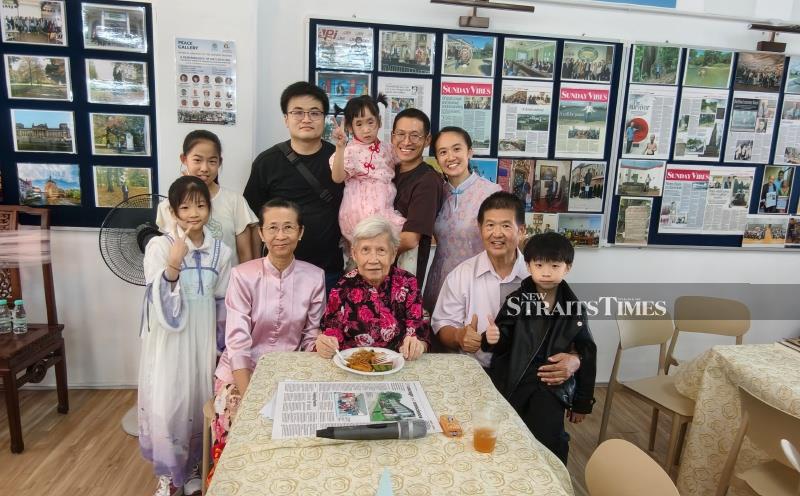
The audience gathered at the Peace Gallery in Ipoh on August 15 was not there to commemorate a historical event, but to remember. The war still lived on in the memories of elderly survivors, who were children when Japanese troops occupied Malaya. Stories of hunger, fear, loved ones disappearing, torture, and children forced to witness violence were told.
More than eight decades later, four survivors returned to those memories, not because the past had become easier to revisit, but because they believed it must not be forgotten. The seminar, held to mark the end of World War 2 and promote peace and anti-fascism, also opened the Chinese section of the Peace Gallery.
Vice-Consul General of China in Penang, Ding Qiao, the guest of honor, highlighted the devastation caused by war and the need to remain vigilant against militarism. He also emphasized the long-standing historical ties between China and Malaysia. Peace Gallery founder Professor Gary Lit spoke of preserving the memories of war survivors and honoring the countless victims of conflict.
As the survivors took their places, the room fell silent. Their bodies showed the signs of age, but when they began to speak, they relived the darkest moments of their childhoods.
One survivor, 93-year-old Madam Chong Su Ha, recounted confronting a Japanese soldier at the age of 7. She questioned why they were killing her people and causing suffering. The soldier, conscripted into the Japanese military, broke down in tears, explaining that if he deserted, his family in Taiwan would be killed. This encounter left a lasting impression on the young girl, teaching her about the cruelty of war and shaping her sense of courage and moral responsibility as an educator.
91-year-old Tham Yoong Yam spoke of the brutal executions, public displays of severed heads, and the rape of his sister and another woman during the war. His family lived in poverty, and survival was a daily struggle. Despite this, Tham excelled academically and became a senior education officer in Perak. His story showed that even when history takes away a person's childhood, it does not necessarily have to take away the future.
90-year-old retired rubber research worker Tan Aik Hong recalled being rounded up by Japanese soldiers who tortured and killed many people. His father was tied to a rubber tree and left to starve, eventually dying soon after the war. Tan went on to build a successful career in Malaysia's rubber industry, proving that history does not necessarily define one's future.
Two other survivors, Lit Koo Yoong and Lin Yeow Chang, could not attend the seminar. Lit witnessed an atrocity in Temoh when she was a child, as three Malayan Peoples' Anti-Japanese Army (MPAJA) guerillas were buried alive after being wounded in a gun battle. Lin, at age 9, was subjected to a Sook Ching screening, where hundreds were forced to squat at a basketball court and many were taken away and killed. These harrowing memories were preserved in video footage and wartime accounts.
Written by urgent.news from New Straits Times's reporting — not their text. Machine-written — may contain errors; check the original before relying on it.