Swish Buys Itself More Time At The Quick Food Table
In August 2024, Inc42 asked whether Swish could pull off what Zomato couldn’t. Two years on, the question has turned…
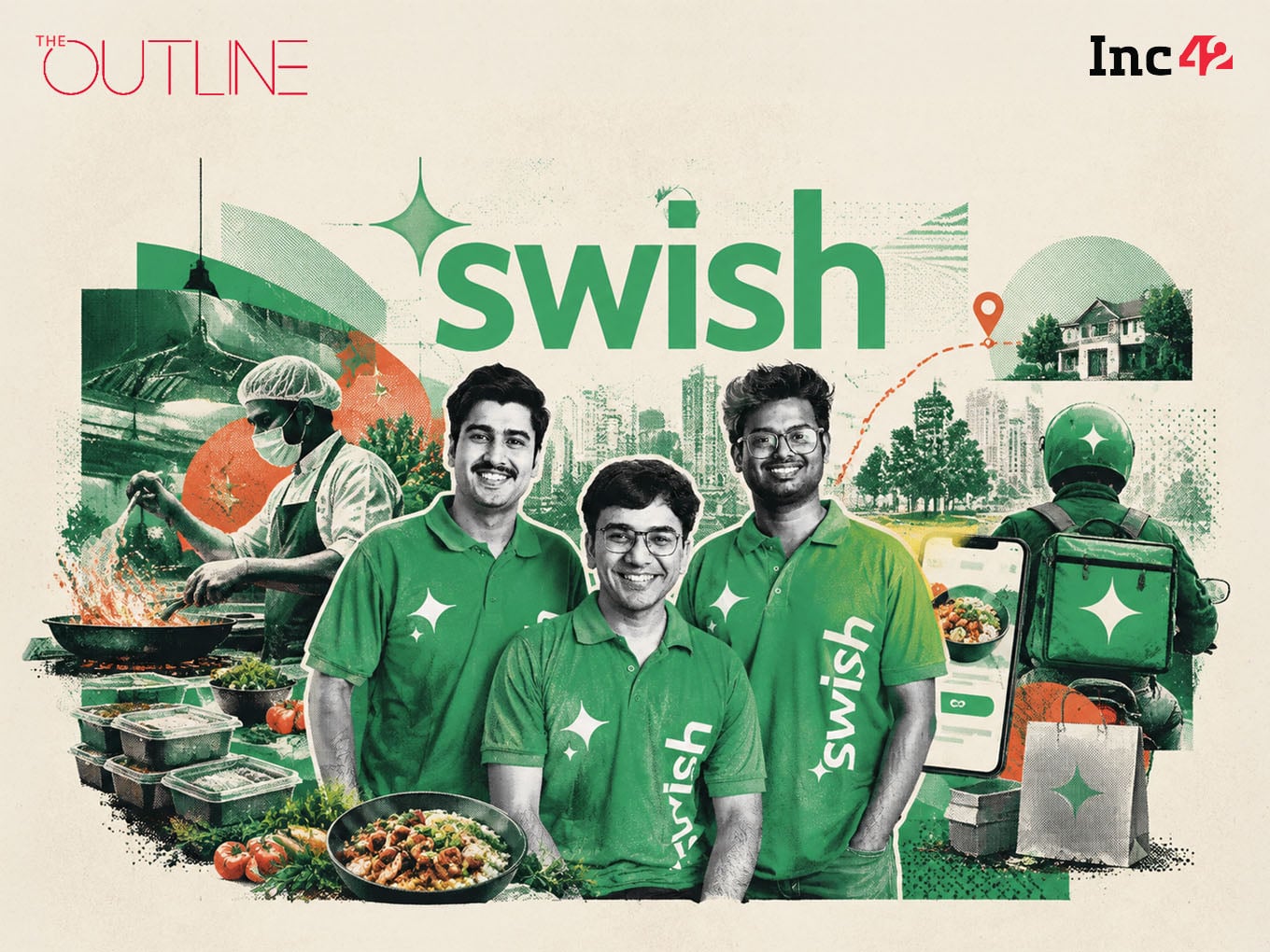
In August 2024, Inc42 pondered whether Swish could replicate Zomato's success in the quick food delivery market. However, two years later, the scenario has shifted dramatically. Not only has Zomato exited the scene, but also Swiggy, Rebel Foods, and Zing. Yet, Swish remains an active player and has just secured $24 Mn in funding, only six months after raising $38 Mn. This article delves into Swish's unique model, its growth, and the challenges it faces as it attempts to carve out a niche in the quick food delivery market.
Swish, founded in late 2024 by Aniket Shah, Ujjwal Sukheja, and Saran S, operates differently from traditional food delivery platforms such as Swiggy and Zomato. While those companies act as aggregators, Swish owns its kitchens, prepares the food, manages technology, and handles delivery. Its kitchens are strategically located within a 1 Km radius of customers, enabling Swish to control the time between ordering and delivery.
This setup has allowed Swish to develop a dense, highly localized network. In its latest funding announcement, Swish reported crossing 1 Mn monthly orders, with over 80% of orders delivered within 15 minutes and an average preparation time of under four minutes. The startup has also diversified its menu, moving beyond snack-heavy offerings to include meals, snacks, and beverages, with lunch and dinner orders now outpacing snacks.
Swish's strategy has proven successful, as more than 80% of its customers place repeat orders, indicating strong customer retention.
Despite this progress, Swish has yet to achieve its initial goal of expanding its kitchen network to 150 locations in Bengaluru by March 2025. Currently, the startup operates around 55 kitchens across Bengaluru and Delhi NCR. The substantial funding secured provides Swish with the necessary resources to further scale its operations.
However, expanding the physical kitchen network involves significant investments, and achieving the ambitious target of over 1,000 kitchens within five years will likely require continued large-scale funding rounds. The rapid growth in the quick food delivery sector presents both opportunities and challenges. While Swish has managed to maintain its presence and grow its customer base, several other startups and listed companies have either scaled back or exited the market.
Factors contributing to these exits include weak demand, profitability concerns, supply-chain issues, and failure to achieve unit economic viability. For Swish, maintaining its competitive edge requires careful management of unit economics, particularly as the market becomes increasingly crowded. Despite these challenges, Swish's unique model, which involves owning the entire supply chain from kitchen to delivery, positions it favorably.
Unlike its competitors, Swish does not rely on the extensive network of restaurants or the brand strength of larger players like Blinkit. This allows Swish to maintain stricter cost control and potentially offer more competitive pricing. As Swish continues to scale its operations, it faces the daunting task of replicating its success across a broader geographic footprint.
The path to achieving its goal of over 1,000 kitchens in five years will require strategic investments, operational excellence, and a keen understanding of the evolving market dynamics. While the road ahead is challenging, Swish's resilient approach and focus on innovation may yet solidify its position as a leader in the rapidly evolving quick food delivery landscape.
Written by urgent.news from Inc42's reporting — not their text. Machine-written — may contain errors; check the original before relying on it.