Swedish election in dead heat as blocs almost equal; in surprise, far right loses ground
Ruling and opposition blocs separated by only one seat, election authority says based on votes from 4,853 of 6,312 districts; final results may only come in on Wednesday The post Swedish election in dead heat as blocs almost equal; in surprise, far right loses ground appeared first on The Times of Israel .
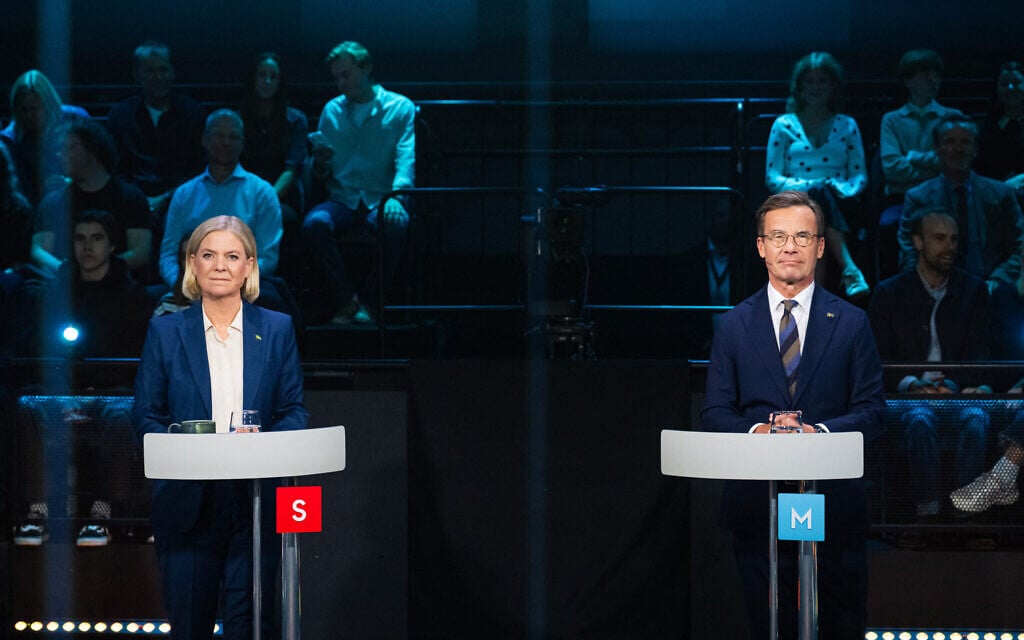
Sweden's national election results indicated a tight contest between the opposition centre-left bloc, led by Social Democrats' leader Magdalena Andersson, and the right-wing governing bloc under Prime Minister Ulf Kristersson. According to a partial count by the election authority, the opposition bloc appeared to hold a one-seat majority with 175 seats in the 349-seat parliament. However, ballot-counting was still ongoing.
The election outcome could determine whether Kristersson's push for a hard-right migration crackdown would continue or intensify. The race was so close that the winner might not be known for several days, after accounting for overseas ballots.
Adonay Endrias Kidane, a supporter of the Social Democrats, remarked that the Social Democrats had conducted an "election" but it remained unclear if they would secure enough seats for a majority.
Kristersson, in a pre-election pledge, had agreed to bring the far-right Sweden Democrats into the government, aiming to form a majority-right coalition. While some voters on the right perceived this as an endorsement of policies curbing gang violence and reducing immigration, others were uneasy about Kristersson's invitation to the far-right party.
Kristersson's critics, including civil liberties advocates, argued that his immigration policies penalizing migrants undermined civil liberties. The Prime Minister had trailed in opinion polls throughout his four years in office but had been catching up in recent weeks.
Kristersson expressed hope that he could still form a majority government, even if the preliminary results held. Andersson's bloc, however, was divided on issues such as migration, taxation, and nuclear energy, while her budgets might struggle to gain support from left-leaning parties.
The Sweden Democrats' electoral success would be welcomed by Europe's growing far-right parties, potentially gaining traction in upcoming elections across Europe. The party, founded partly by neo-Nazis and white supremacists, has acknowledged its past but claimed to have cleansed itself of such extremists and promised future policies to ban face coverings and defund integration projects.
Written by urgent.news from RTE News's reporting — not their text. Machine-written — may contain errors; check the original before relying on it.
This story
This is one outlet's version. Read the fullest account.