Sweden votes over immigration as right-wing bloc gains traction
Swedes were voting in a closely fought election on Sunday that will either bring a far-right party into government for the first time or shift the country back towards the liberalism that has long defined the northern European kingdom. Sweden’s centre-left opposition holds a narrow lead over the ruling right-wing bloc ahead of the September 13 election for parliament, several opinion polls have…
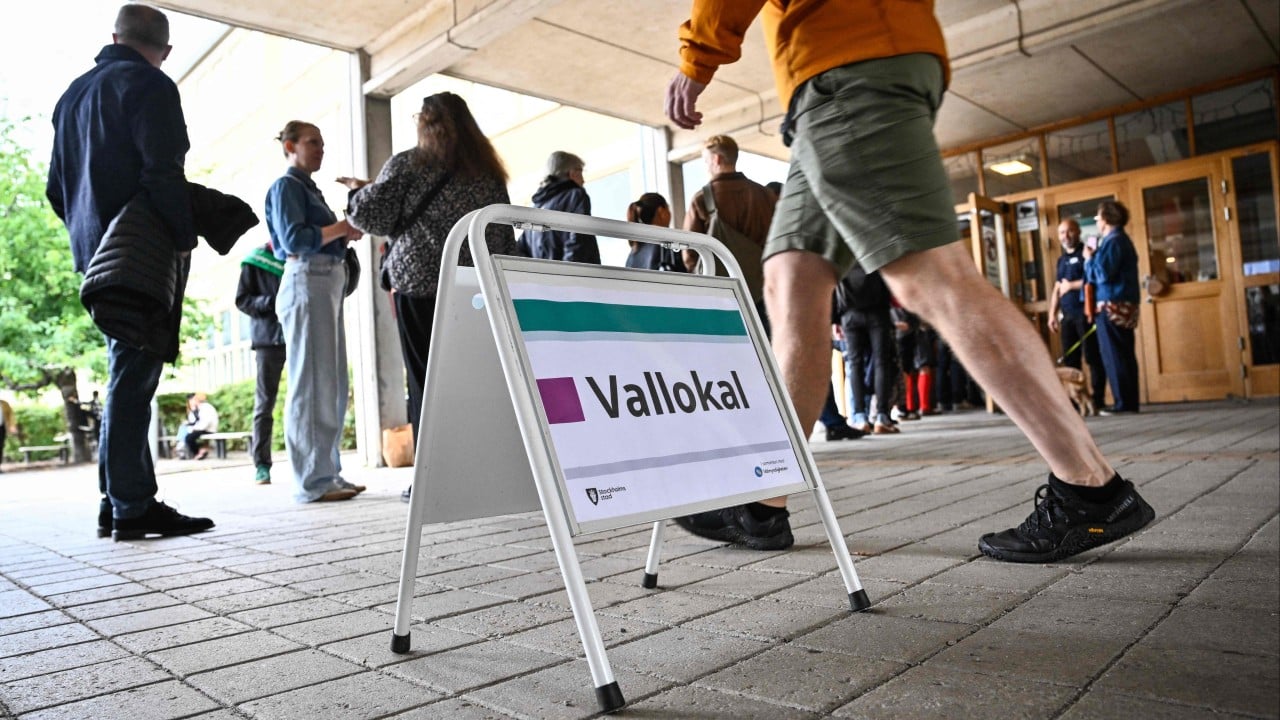
Swedes cast their votes on Sunday in a closely contested election that could either usher a far-right party into government for the first time or steer the nation back towards the liberalism that has traditionally defined Sweden. The centre-left opposition currently holds a narrow lead over the ruling right-wing bloc ahead of the September 13 parliamentary election, according to several opinion polls.
However, Prime Minister Ulf Kristersson, whose party has been trailing in polls throughout his four-year tenure, has been narrowing the gap in recent weeks. If his bloc secures victory, he intends to bring the far-right Sweden Democrats into the government, stating, "We can unify parties, voters, and issues into joint action. That's why we get things done."
Critics argue that his administration is eroding civil liberties while pressuring immigrants to align more closely with Swedish cultural norms or depart the country, facilitated by both incentives and penalties. "We've become a harsher society, a quieter society, but also a poorer society as we've had growth far below our potential and where households see their paychecks buy less and less," Magdalena Andersson, leader of the Social Democrats, remarked, adding that forging unity has made Sweden stronger.
Supporters of the right-wing coalition assert that their policies have curbed gang violence and significantly reduced immigration, and that a win would signify a public endorsement of that approach and similar measures in the future. The Sweden Democrats' electoral success is anticipated to be appreciated by Europe's resurging far-right parties, buoyed by a substantial victory in a German state election last month by the anti-immigrant Alternative for Germany (AfD).
As voting commenced in Sweden, a country of 10 million people and a member of Nato, exit polls were expected soon after polls closed at 8pm, with data providing preliminary insights into the result around 9pm. Residents of Rinkeby, a district flagged by police as highly socially deprived, expressed concerns about potential deterioration for them.
"They target Muslims; they single out Muslims and immigrants. But immigrants contribute to society," Kahin Ahmed, 57, a sociologist who migrated from Somalia as a refugee, remarked. "A quarter of those working in healthcare are immigrants. If immigrants stayed home for a single day, Sweden wouldn't function." Over the past four years, the ruling minority coalition, supported by the Sweden Democrats, has eliminated permanent residency for refugees, tightened welfare regulations, and increased expulsions of those without a right to stay.
During the election on Saturday in Rinkeby, Jimmie Åkesson, leader of the Sweden Democrats, remarked, "This suburb doesn't resemble Sweden." The far-right party has pledged to prohibit the niqab and burka if they attain power. Åkesson claimed that such attire "reflects values that I do not believe belong in Sweden." Forming a government, the right has already agreed to create a four-party coalition led by Kristersson if they win, while Andersson's path to power is less certain.
The election may ultimately hinge on whether the Liberals exceed the 4% threshold to secure seats in parliament, bolstering the right-wing coalition including Moderates, Christian Democrats, and, since being invited by Kristersson earlier this year, the nationalist and Eurosceptic Sweden Democrats. The Sweden Democrats have already served four years supporting Kristersson's minority government in parliament, bolstering credibility with the broader right-wing bloc.
Meanwhile, the rival factions have aligned on several voter concerns, such as backing Ukraine, military reinforcement, and relief for households impacted by the cost-of-living crisis. Despite these common goals, the opposition Social Democrats, Greens, Left Party, and Centre Party largely share a desire for enhanced welfare and public spending, but differences persist on various issues, including immigration, where Andersson's party favors a more restrictive stance compared to some of its potential partners.
They also clash on matters like a tax on billionaires and constructing new nuclear reactors, while the Centre Party refuses to support a government comprising the Left Party, complicating Andersson's efforts to assemble a cabinet.
Written by urgent.news from South China Morning Post's reporting — not their text. Machine-written — may contain errors; check the original before relying on it.