Pakistan calls for unified global framework for digital assets
ISLAMABAD: Pakistan has called for the immediate establishment of global regulatory and institutional frameworks to govern digital assets and shape the next generation of international finance. Speaking virtually at a United Nations briefing on Saturday, Minister of State and Pakistan Virtual Assets Regulatory Authority (PVARA) Chairman Bilal Bin Saqib urged member states to build the…
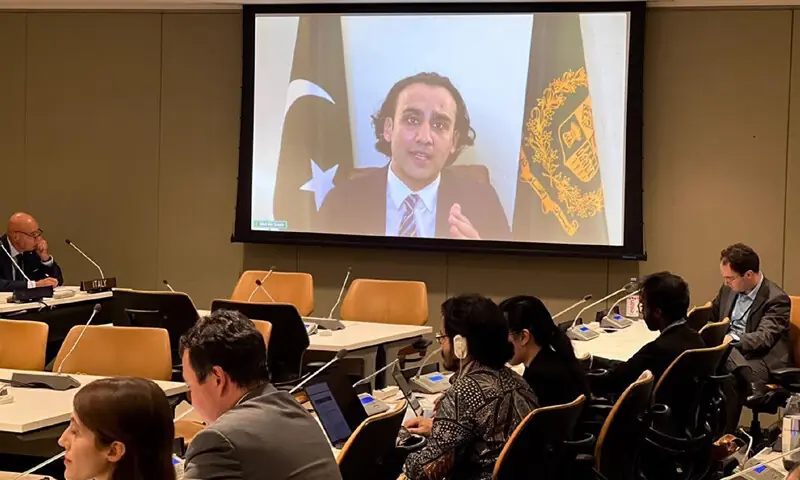
ISLAMABAD: Pakistan has urged the immediate creation of global regulatory and institutional frameworks to oversee digital assets and guide the future of international finance. Addressing a United Nations online meeting on Saturday, Bilal Bin Saqib, Minister of State and Chairman of the Pakistan Virtual Assets Regulatory Authority (PVARA), urged member states to develop the necessary structures to manage next-generation finance.
He emphasized that coordinated governance is crucial to ensure these financial innovations promote economic inclusion and efficiency. The session, titled "Digital Assets and Blockchain for Sustainable Development: Advancing Digital Finance through Innovation," was organized by Pakistan's Permanent Mission to the UN in cooperation with UNDP, UNCTAD, and the Office of the Secretary-General’s Envoy on Technology, with participation from governments, UN bodies, and private-sector representatives.
According to the PVARA chief, digital assets, tokenization, and distributed ledger technologies present emerging economies with the chance to rethink financial infrastructure focusing on inclusion, efficiency, and accessibility. He stressed that technologies like tokenization and distributed ledgers offer a vital opportunity to modernize the global financial system and enhance international cooperation.
"The question before this room is not whether these technologies will scale. They will. The question is: who will shape them, and in whose interest?" Mr. Saqib questioned. He highlighted the 1.4 billion adults globally who are excluded from the formal financial system and the billions more who engage in finance on unequal terms due to high remittance costs, delayed settlements, and limited credit access.
Mr. Saqib placed the onus on ensuring that the benefits of digital finance extend beyond mere payments. He argued that digital identity and verifiable financial histories could assist small businesses, farmers, and women entrepreneurs in demonstrating economic activity without solely relying on traditional collateral or documentation.
He also noted that tokenization could create new avenues for capital mobilization by fractionalizing assets such as infrastructure bonds and renewable energy projects, while distributed ledgers could enhance transparency in public spending and supply chains. While these priorities align with the briefing's broader focus on payments, remittances, financial inclusion, capital mobilization, digital identity, traceability, and responsible implementation, Mr. Saqib cautioned against viewing technology as a panacea.
He pointed out risks such as market volatility, illicit finance, and the concentration of power, as well as the growing disparity between countries with robust regulatory frameworks and those without. "The choice before every member state is not regulate or don’t regulate. It is simpler, and starker than that: to govern the future, or be governed by it," he stated.
He emphasized that regulation must keep pace with innovation, warning that delayed frameworks can harm consumers and markets, while fear-driven regulation might steer activities into less transparent areas. Mr. Saqib concluded that regulation should be viewed as a means to build markets rather than block them. "No nation rises alone, and no nation should be left to rise alone," he urged, urging member states to leverage the briefing as a foundation for deeper collaboration instead of treating it as an isolated discussion.
Written by urgent.news from Dawn's reporting — not their text. Machine-written — may contain errors; check the original before relying on it.