On this day in space! Sept. 13, 2007: Japan launches Kaguya spacecraft to the moon to map the lunar surface in HD
On Sept. 13, 2007, Japan launched the Kaguya spacecraft on a mission to the moon. Here's why it mattered.
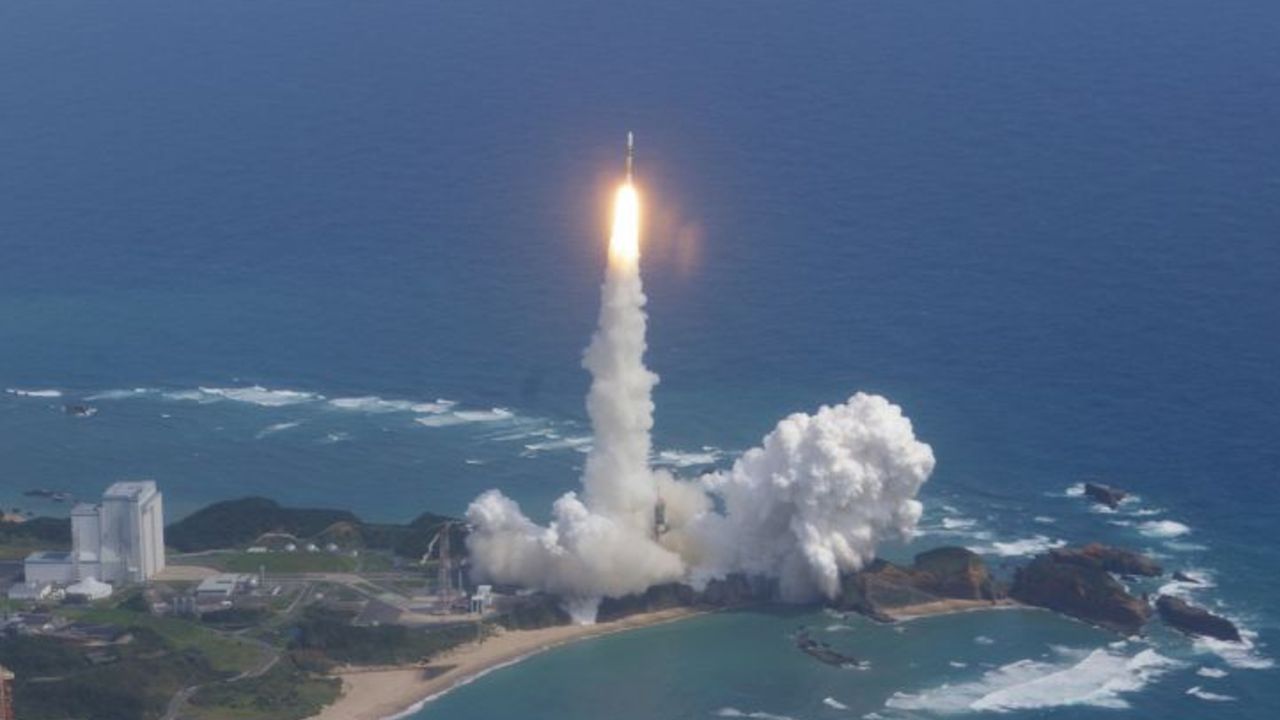
On September 13, 2007, Japan successfully launched the Kaguya spacecraft, also known as SELENE, on its mission to the moon. Kaguya, formally the SELenological and ENgineering Explorer, marked Japan's second lunar venture and first to orbit the moon. The Japanese H-IIA rocket carried the probe from Tanegashima Space Center. In orbit, Kaguya carried 14 science instruments and two microsatellites to map the lunar surface and study its gravitational field.
After a 20-day journey, the spacecraft arrived at the moon. The mission consisted of three spacecraft: the main orbiter, a communications satellite, and a third satellite to map the moon's gravitational field. Following around a year of lunar observations, the mission concluded with a planned crash landing on the lunar surface. The spacecraft was renamed after the moon princess Kaguya-hime from a Japanese folktale shortly after launch.
Kaguya's most notable achievement was capturing the first-ever high-definition videos and images of the moon, including Earthrise, a view not seen since NASA's Apollo missions. The probe also created a complete topographical map of the moon, detected gravity anomalies, and observed the permanently shadowed interior of Shackleton Crater near the moon's south pole.
Despite its mission extension intentions, a faulty reaction wheel forced mission planners to end the mission early, leading to Kaguya's crash landing on February 12, 2009.
Written by urgent.news from Space.com's reporting — not their text. Machine-written — may contain errors; check the original before relying on it.