Marco Rubio: Trumps „Viceroy“ stößt in Südamerika an seine Grenzen
Beim ersten Besuch von US-Außenminister Marco Rubio bei den neuen Verbündeten der USA in Südamerika zeigt sich: Kolumbien, Ecuador und Peru folgen Washington nicht auf ganzer Linie.
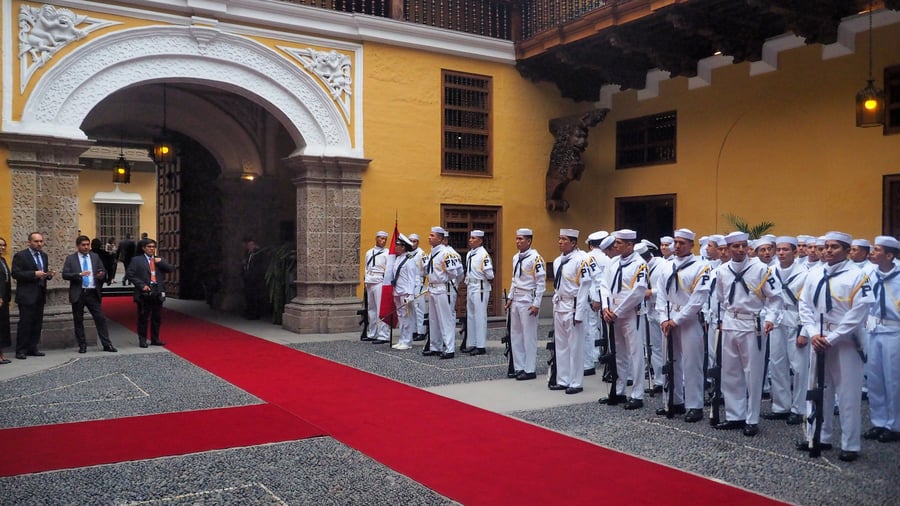
Marco Rubio, the U.S. Secretary of State, has visited Colombia, Ecuador, and Peru, aiming to demonstrate the closeness of Washington's relations with the conservative governments in the region. However, he was disappointed as the three heads of state did not follow Washington's orders as blindly as in Venezuela. This applies to both military cooperation and relations with China.
Before Rubio's departure, he had announced that the U.S. and its partners would join the "Shield of the Americas" alliance to combat drug cartels, organized crime, control migration flows, and limit the influence of China and Russia. However, during his visit, Rubio's expectations were not met.
In Colombia, Rubio stated that the Colombian government had never asked for American soldiers to fight against drug cartels and had only asked for assistance and training. Rubio highlighted areas of cooperation such as intelligence information, special equipment, and training.
In Peru, President Keiko Fujimori emphasized the need for Congress to grant special permission for the deployment of foreign troops, stating that Peru's sovereignty is inviolable. In Ecuador, President Daniel Noboa welcomed Rubio's announcement of an additional $45 million in security aid, although Congress still needs to approve it. He confirmed that U.S. and Ecuadorian elite units are already working together daily, calling Ecuador the "most aggressive" partner of the U.S. in combating transnational criminal groups.
However, when it comes to China, none of the three presidents agreed to limit Chinese investments or trade with the People's Republic. For Peru, in particular, Chinese state-owned companies are heavily present in mining, energy, and the major port of Chancay. China's influence on the country's politics and economy has long been a concern for the U.S. Rubio had previously criticized China for promising to undermine Peru's sovereignty and violate legal frameworks through opaque contracts, unsustainable debt, exploitation of workers, and environmental destruction.
Instead, he advocated for US investments as respectful of Peruvian property and the security interests of the hemisphere.
Ecuadorian President Daniel Noboa signaled to Rubio that the approach towards the U.S. would not undermine Peru's relationship with China. He emphasized that Peru would continue its trade relations with various countries in Asia, the Pacific, and Europe. Ecuador is also a member of the Asia-Pacific Economic Cooperation (APEC), which includes both China and the U.S.
Written by urgent.news from Handelsblatt's reporting — not their text. Machine-written — may contain errors; check the original before relying on it.