Lost in plain sight: Ipoh's vanishing karsts and caves
IPOH: Karst areas are one of the wonders of the landscape formed from the natural environment of limestone rocks, creating unique landscapes such as rocky hills, caves and underground drainage.
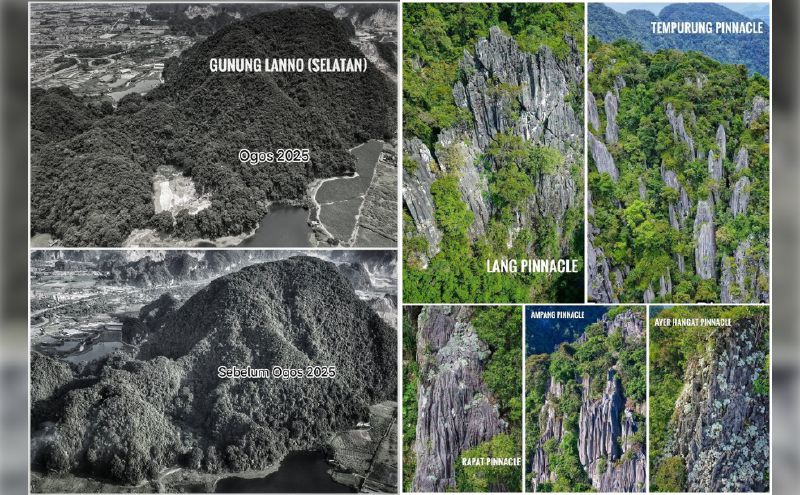
Ipoh, Malaysia is home to a vast limestone karst landscape encompassing the Kinta and Kampar districts, covering approximately 1,952 square kilometres. This unique natural environment features numerous caves, rocky hills, and underground drainage systems. The International Day of Caves and Karst was inaugurated recently, aiming to raise awareness about the importance of these areas, which provide clean water sources, habitats for endemic life, and act as carbon sinks.
Ching Boon Tat, an activist and Kinta Valley Watch member, emphasizes the significance of preserving the karst geography in the Kinta Valley, stating that any damage to the geological structure would destroy its historical value and natural biodiversity. The area's proximity to urban centers and easy accessibility make it particularly vulnerable.
Mohd Zairis Abdul Rani, a cave guide, highlights the critical role of cave preservation as it contains ancient fossils, historical paintings, and serves as a habitat for endemic flora and fauna. These limestone caves are not merely tourist attractions but also function as natural laboratories for scientific research. If not adequately protected, these treasures could become extinct, leaving future generations only with photographs of their existence.
Written by urgent.news from New Straits Times's reporting — not their text. Machine-written — may contain errors; check the original before relying on it.