‘It’s just straight bigotry’: Trump leads wave of Islamophobic rhetoric as midterms loom
As Muslims win historic victories, experts describe rise in anti-Islamic sentiment that rivals post-9/11 climate Within hours of Abdul El-Sayed’s victory in Michigan’s Democratic US Senate primary, Republican senator Tommy Tuberville of Alabama declared that the party had “just voted to send a TERRORIST” to Washington. El-Sayed – or “Abdulrahman Mohamed El-Sayed”, as Tuberville called him on X –…
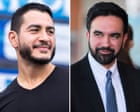
As Muslims secure historic political wins, experts warn of a surge in Islamophobic rhetoric that mirrors the post-9/11 climate. Shortly after Democratic US Senate primary victor Abdul El-Sayed, often referred to as "Radical Islamist" by Republican Tommy Tuberville, declared they would "do everything they can to destroy America."
This marked the start of what researchers call the most intense wave of Islamophobia in American electoral politics since 9/11, occurring at a time when Muslim candidates are winning office in record numbers.
Saher Selod, director of research at the non-partisan Institute for Social Policy and Understanding (ISPU), states that the current wave of Islamophobia is "probably the worst of what we've seen," with anti-Muslim advertisements being more prevalent than following the 9/11 attacks. ISPU's 2025 Islamophobia Index, a 100-point scale gauging common anti-Muslim stereotypes, increased from 25 in 2022 to 33 in 2025, with the biggest jumps among white and Hispanic Americans.
According to a Pew Research Center survey conducted this spring, 51% of US adults now believe Islam is more likely than other religions to promote violence, a significant rise from 25% six months after 9/11.
The Pew survey also found that 76% of Republicans and 29% of Democrats now view Islam as more likely to encourage violence, compared to 32% of Republicans and 23% of Democrats in 2022. Anti-Muslim hate crimes reported to the FBI have not returned to pre-2001 levels, with 481 incidents reported in 2001, compared to 28 in 2000. ISPU's research indicates that 63% of Muslims have experienced religious discrimination in the past year, the highest rate among any faith group they measure.
This backdrop of rising Islamophobia is accompanied by a significant wave of Muslim political success. Currently, there are four Muslim members of US Congress, with a fifth one expected. Notable achievements include Ghazala Hashmi becoming Virginia's first Muslim woman elected to statewide office as lieutenant governor, Zohran Mamdani being inaugurated as New York's first Muslim mayor in January 2025, and El-Sayed's campaign to potentially become the first Muslim US Senator.
Anti-Muslim rhetoric has been particularly intense following El-Sayed's victory, with the Center for the Study of Organized Hate documenting nearly 1,900% increase in Islamophobic posts naming El-Sayed over the week following his win. Donald Trump, who previously advocated for a "total and complete shutdown" of Muslims entering the US in 2015, called El-Sayed a "jihadist" from the Oval Office and claimed that "jihadists" are being elected to office widely.
Other Republican leaders, such as Vice-President JD Vance and Senator Ted Cruz, have also made anti-Muslim remarks, labeling El-Sayed "very, very evil" and alleging that Muslim candidates want to impose Sharia law, hate Jews, Christians, capitalism, and America.
The Republican party's reaction to this wave of Islamophobia has been largely absent, leaving the burden of addressing the issue on researchers and civil society groups like ISPU. Associate Director of Georgetown University’s Bridge Initiative, Mobashra Tazamal, describes the current climate as "almost as if the veil has been lifted," emphasizing the blatant bigotry and lack of boundaries in the rhetoric.
This wave of Islamophobia has spread beyond individual candidates into policy debates, with Governor Greg Abbott of Texas campaigning against what he perceives as the imposition of Islamic law, ordering a review of state grants to airports and referring to federal regulators over privately funded wudu stations.
Written by urgent.news from The Guardian US's reporting — not their text. Machine-written — may contain errors; check the original before relying on it.