Irland-Besuch: Wiedervereinigung und Golf – Trumps kontroverse Irland-Reise
Nebenbei wirft US-Präsident Donald Trump während seiner Irland-Reise die Frage nach einer Wiedervereinigung der irischen Insel auf. Die Reaktionen sind scharf.
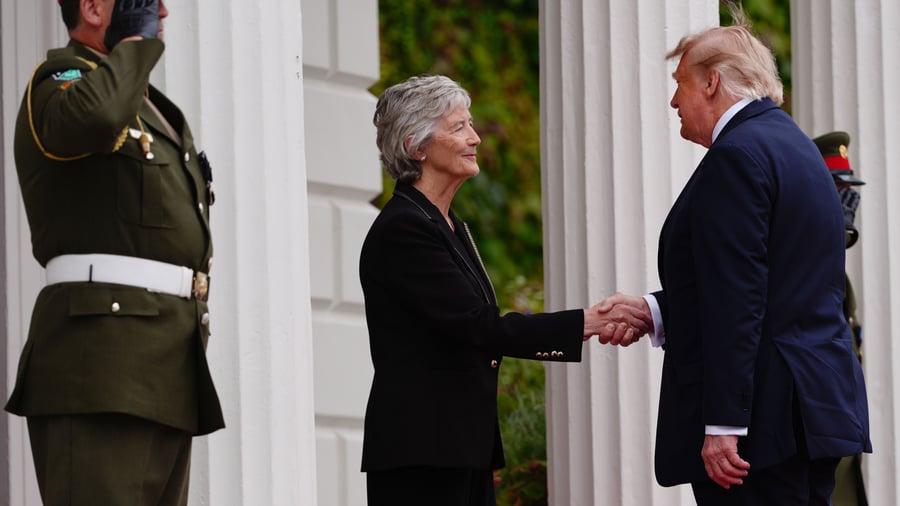
Donald Trump's brief visit to Ireland, which caused political unrest with just a few sentences, concluded at a golf course. As the US President hosted guests at his luxury resort in Doonbeg on the west coast, Britons and Irish continued to discuss the consequences of Trump's blunt statements about the reunification of the Irish island.
"I would very much like to see it united," Trump had said during a meeting with Irish Prime Minister Micheál Martin in Dublin on Saturday. Eventually, such a thing would happen anyway, he added. A little later, he confirmed that a reunification would be "pretty cool." However, this "cool thing" is a highly charged political, religious, and societal issue in Ireland and the United Kingdom.
"Donald Trump is Donald Trump, and the President says what he thinks, and expresses his opinion as he sees things," British Housing Minister Angela Rayner said on Sunday morning on Sky News. The British government, however, takes the so-called Good Friday Agreement very seriously. The 1998 agreement that ended the bloody and decade-long Northern Ireland conflict and the Northern Ireland Act based on it provide that the British Northern Ireland Minister is obliged to initiate a referendum on the issue of belonging if there is a likely chance that a majority of the population would vote for the reunification of Ireland.
The population of the Republic of Ireland would also have to vote for it for a constitutional change to take place. When asked about Trump's statements, current Northern Ireland Minister Chris Bryant posted images of the agreement on the platform X. "If anyone needs a quick refresher on the constitutional issues in Northern Ireland," he wrote.
"I hope that helps." The border on the island of Ireland was established in 1921 with the implementation of the "Government of Ireland Act". While the south of the island gradually broke away and became the Republic of Ireland in 1949, Northern Ireland remained part of the United Kingdom. The future of Northern Ireland will be decided by its population and not "through comments in London, Dublin, or Washington", said Gavin Robinson, head of the pro-British Democratic Unionist Party (DUP) in Northern Ireland.
"As Unionists, we have no interest in destroying our country through a union with the Republic of Ireland." Mary Lou McDonald, head of the party Sinn Féin, which advocates reunification in Ireland and Northern Ireland, said Trump's statements were "timely." The complicated relationship between London and Washington has recently been explained by British Prime Minister Andrea Burnham, who made significant efforts to establish a good relationship with Trump after his predecessor Keir Starmer had publicly criticized him multiple times.
The British-American relationship has since been strained. When asked about the Irish border, Trump said he had given a nice answer, and that people would read about it tomorrow, even before he returned to the golf course on Sunday.
Written by urgent.news from Handelsblatt's reporting — not their text. Machine-written — may contain errors; check the original before relying on it.