How to Protect Democracy
The emergence of Germany’s far right as a political force represents an old dilemma.
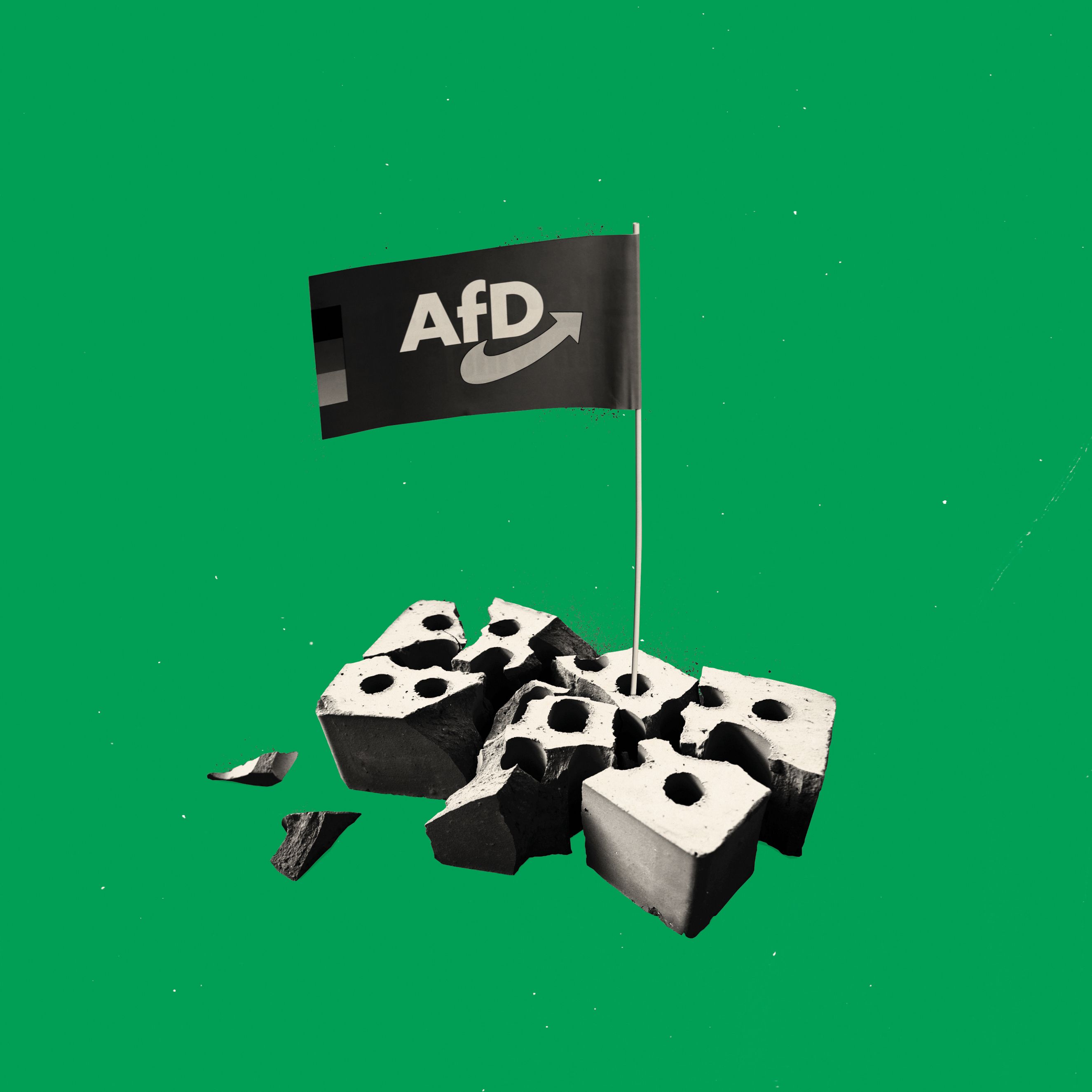
The Brandmauer, a barrier erected to protect democracy, may be facing collapse as the far-right Alternative for Germany (AfD) party gains ground in Germany. In Saxony-Anhalt, a state in eastern Germany, the AfD won nearly forty-four percent of the vote, more than double its support five years prior. This marks the first time in postwar German history that a far-right party has come this close to governing a state.
The AfD's rise represents one of democracy's oldest dilemmas: how to respond to anti-democratic movements that have a democratic base of support. In the past, conservative politicians in the Weimar Republic appointed Adolf Hitler as Chancellor and gave other Nazi figures ministerial posts, believing they could control them by absorbing them into the governing apparatus.
This ultimately led to the disastrous outcome of World War II. In 1949, the Basic Law, Germany's modern constitution, was enacted to prevent such a disaster from ever occurring again by enshrining principles known as wehrhafte Demokratie, or militant democracy.
The Brandmauer is an informal compact, but it embodies the spirit of militant democracy. The AfD's anti-democratic policies and rhetoric, such as dismissing the Holocaust as a "speck of bird shit" and advocating for "remigration," have raised concerns about the party's intentions. Unlike other European right-wing populist parties and leaders, the AfD has remained resolutely illiberal.
The AfD's success is particularly pronounced in the former East Germany, where deindustrialization and demographic decline have left voters feeling alienated and excluded. Jana Hensel, a journalist born in East Germany, argues that the Brandmauer allowed the AfD to enjoy the image of the disruptive outsider without the responsibility of addressing the voters' concerns.
The Brandmauer has not effectively slowed the AfD's electoral momentum, as established German parties have attempted to placate voters by adopting some of the AfD's policies, such as stricter immigration rules. However, studies show that when mainstream parties adopt the insurgent right's policies, they lose more votes to the AfD. Some C.D.U. members have suggested legalizing a ban on the AfD, but these measures have not proven effective.
With upcoming elections in two other German states and a federal election scheduled for 2029, the AfD's influence is spreading beyond eastern Germany. The party's co-chair, Alice Weidel, has struggled to explain how German car producers can compete with Chinese electric vehicles, highlighting the challenges facing a society undergoing economic and cultural changes.
The Brandmauer once allowed the AfD to operate outside the system, but competence in institutional defense alone is insufficient without an affirmative vision of governance. Other European democracies must also find ways to address the desire for radical solutions among their populations.
Written by urgent.news from The New Yorker's reporting — not their text. Machine-written — may contain errors; check the original before relying on it.