El Wall Street post Lehman Brothers entra en la mayoría de edad
El sector financiero de EEUU cuenta con la mitad de entidades y el doble de activos que en 2008, una regulación más férrea y nuevos retos en el horizonte mientras la Bolsa vive la fiebre de la IA. Leer
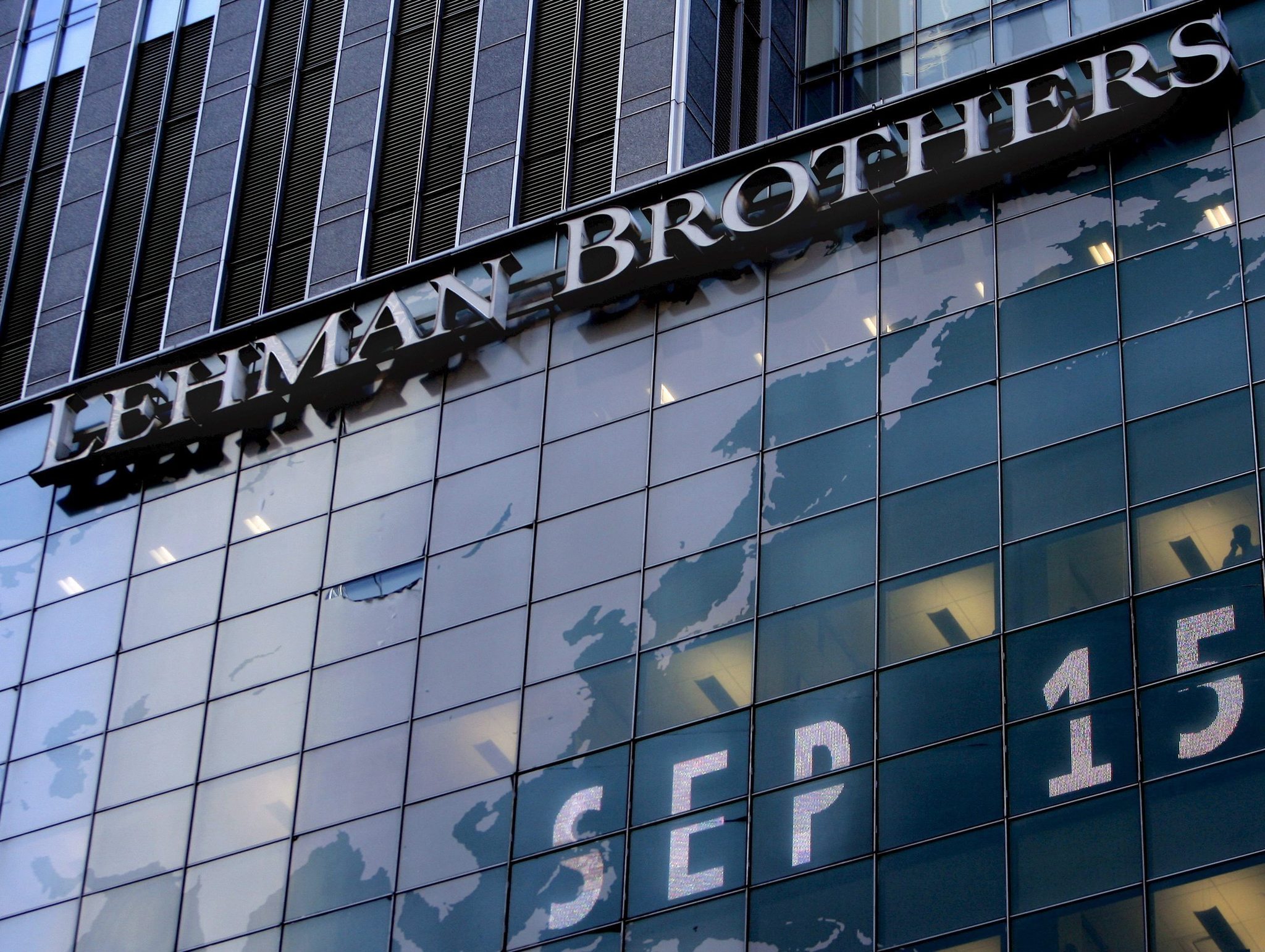
The U.S. financial sector now comprises half the number of entities and double the assets compared to 2008, amid stricter regulation and new challenges, as Wall Street experiences a wave of artificial intelligence fever. It has been 18 years since Lehman Brothers employees and executives emerged disoriented from the street, carrying their belongings in cardboard boxes, marking the start of the Great Recession, which was just a prelude to the global disarray that followed the simultaneous collapse of banks, exchanges, companies, national, and domestic economies.
Today, the financial sector is the same age, with half the entities and twice the assets as in 2008, with more controls and new risks on the horizon, including the artificial intelligence frenzy sweeping Wall Street. Lehman Brothers was merely the first card to fall from a house of cards, the subprime mortgage debacle that dragged much of the global financial sector along with it.
Although it became clear over time that calls for re-founding capitalism would not go as far as initially thought, the crisis served as the catalyst for unprecedented banking consolidation, accompanied by a wave of regulation designed to prevent a similar collapse in the future. Lehman Brothers and the 2008 crisis altered the geographic landscape of banking considerably, explains Alberto Ades, who has deep knowledge of Wall Street, having worked at Goldman Sachs since 1994 after earning an Economics degree from Harvard University and later working at Citi or Bank of America Merrill Lynch.
The subsequent regulation, which required more capital, liquidity, stress tests, restrictions on proprietary trading (bank-owned capital), and much stricter risk controls, made the large institutions much safer. For this Argentine economist, managing director of the hedge fund NWI Management LP, the regulatory response was necessary but also marked a profound change in the industry.
Banks began to take much less risk on their own account. The balance became a more costly and controlled resource, he notes, warning, however, that risk, of course, did not disappear. Along with it, professional opportunities mutated. On the buying side, comprising hedge funds, asset managers, private equity, and more recently, private credit, gained significant importance.
The transformation of the U.S. financial landscape in these 18 years is striking at first glance. According to official data, the number of bank entities covered by the Federal Deposit Insurance Corporation (FDIC) - the U.S. government agency equivalent to Spain's Deposit Guarantee Fund - fell from 8,300 at the end of 2008 to just 4,200 in 2026.
Despite the number of firms decreasing by half, asset volume has doubled, rising from $13.8 trillion to $26.5 trillion. In this sense, it is worth remembering that, as a result of the financial crisis, JPMorgan Chase alone absorbed Bear Stearns, Bank of America took over Countrywide and Merrill Lynch, Wells Fargo absorbed Wachovia, and Barclays ended up with much of Lehman Brothers' remnants.
The regulatory front's critical juncture was the Dodd-Frank Wall Street Reform and Consumer Protection Act, promoted by Barack Obama in 2010 to prevent future global financial crises, abolish the "too big to fail" doctrine, ending government bailouts; increase transparency controls and consumer protection. From there, requirements for minimum capital increased internationally, and central banks began periodically subjecting large entities to stress tests to gauge their response to adverse scenarios.
Meanwhile, the so-called Volcker Rule prohibited commercial banks from engaging in speculative trading with their own balance. For now, the framework kept the system intact after the collapse of Silicon Valley Bank and Signature Bank in 2023. Beyond the banking sector, the financial crisis also brought about a massive transformation in the operational landscape of the stock exchange.
Wall Street's mechanics changed radically, trading became electronic and algorithmic, ETFs and passive management grew, commissions fell, and information traveled almost instantaneously, Ades notes, who considers the system safer, more efficient, and likely more professional today, but also less entrepreneurial. In the past two decades, asset management has become a significantly broader and more professionalized industry, contributing to channeling savings into diversified, long-term investments, agrees Pablo Bernal, who heads Vanguard's office in Spain, the firm that created the first index fund.
According to Boston Consulting Group (BGC) data, global assets under management have grown from $38 trillion to $147 trillion in the past two decades. The increasing use of digital platforms, portfolio solutions, and professional advice has expanded investment access, Bernal adds, describing the technological evolution as the hallmark of the times, both in updating banks and investment firms' operations and in their relationship with customers, as well as in the emergence of new competitors.
Written by urgent.news from Expansion ES's reporting — not their text. Machine-written — may contain errors; check the original before relying on it.