Don't miss Venus shine beside the crescent moon at sunset tonight
Venus will shine close to the waxing crescent moon at sunset on Sept. 13.
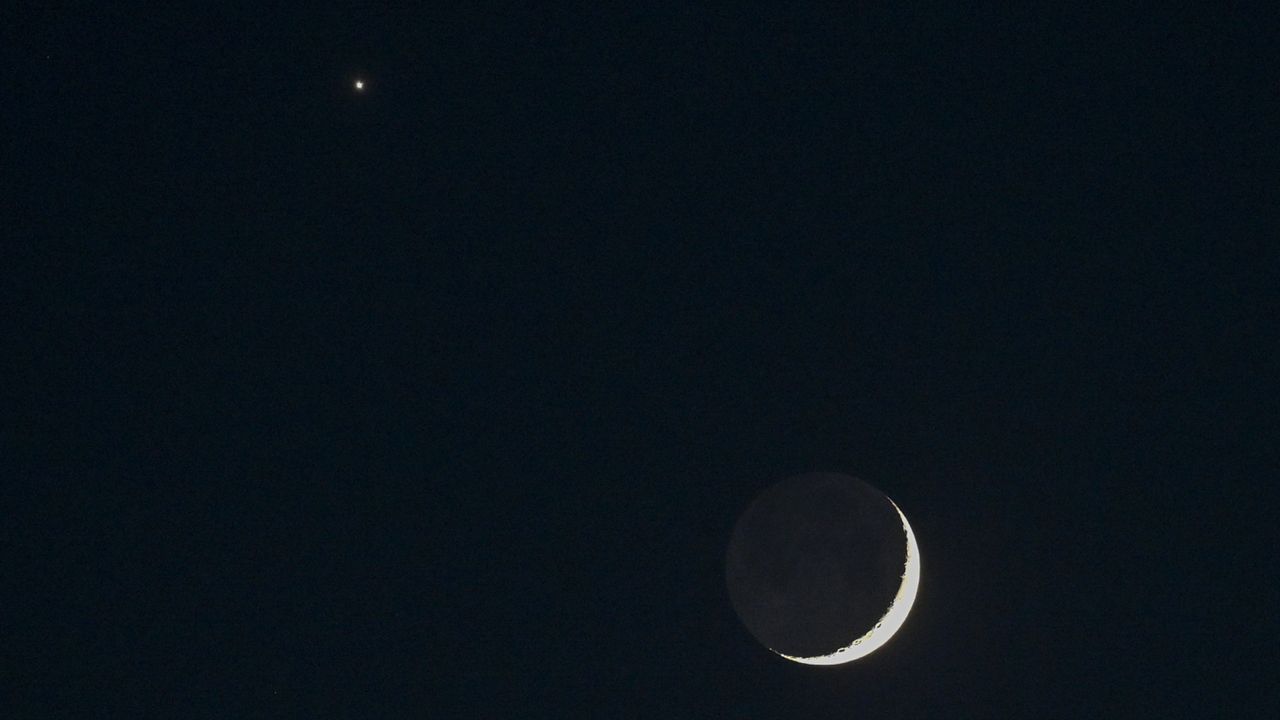
Tonight, on September 13, keep your gaze towards the setting sun to witness Venus and the slender crescent moon in the sky. This celestial pairing offers a glimpse of the Earth's twin, Venus, a radiant point of light just 5 degrees away from the 9% illuminated waxing moon, roughly the width of your three middle fingers when extended at arm's length.
As the sun sets, find a location with a clear view to the west for the best opportunity to spot this planetary alignment before it disappears behind the sun an hour following sunset. The moon and Venus will remain less than 10 degrees above the horizon at dusk, so ensure a clear view to the west to maximize your chances of observing this solar system spectacle.
To enhance your view, consider using beginner binoculars, such as the Celestron UpClose G2 10x50, which provide a closer look at the lunar surface without the risk of excessive shakes during handheld observation. While millions of stargazers across Europe, North Africa, the Middle East, and southern India will witness the moon passing directly in front of Venus during the daytime on September 14, observers in the U.S. will not be able to see the occultation, as the moon and Venus will be below the horizon at that time.
The waxing crescent moon is expected to shift to the left of Venus as it approaches its peak brightness on September 18. For those interested in capturing the crescent moon near Venus, refer to our guide on photographing the lunar surface with a DSLR or mirrorless camera and explore our selections of the best lenses and camera bodies for astrophotography.
Written by urgent.news from Space.com's reporting — not their text. Machine-written — may contain errors; check the original before relying on it.