Coway Airmega Halo Review: Is Your Air Really Clean?
Coway’s new Airmega Halo runs quietly and clears visible smoke quickly, but its air-quality readings weren’t always reassuring.
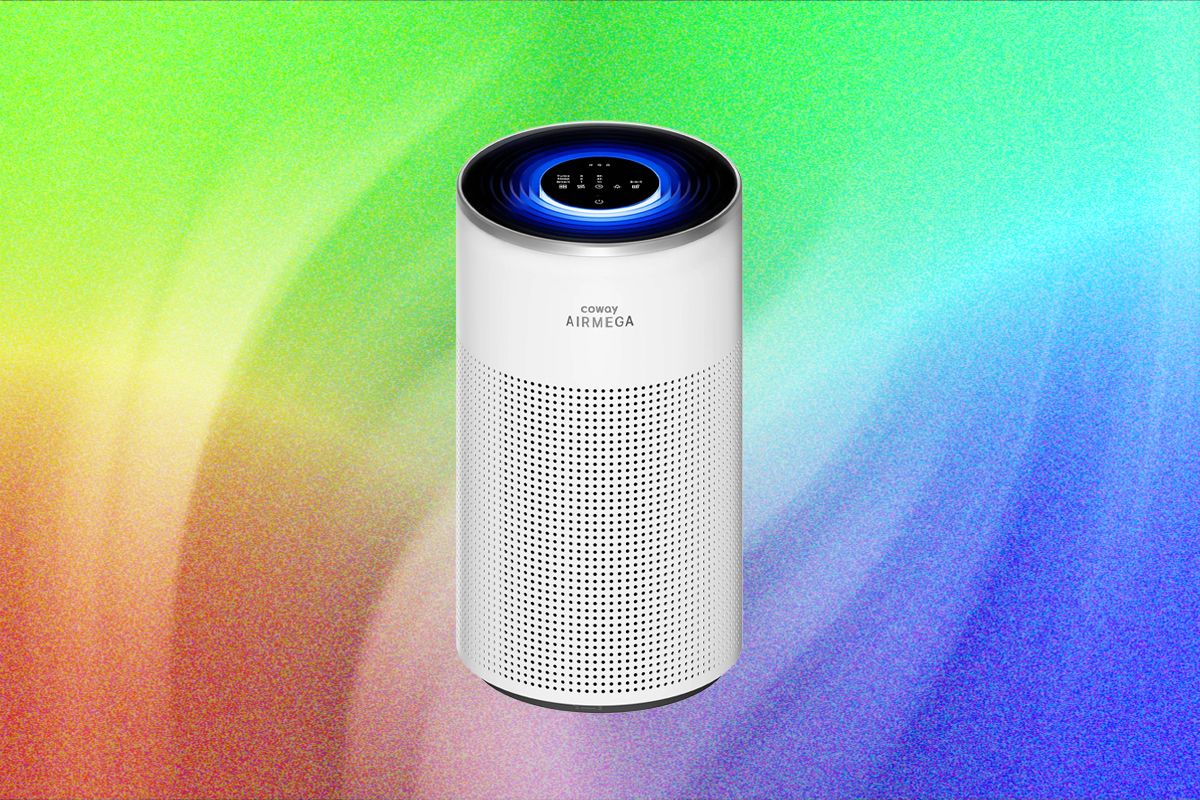
In the world of air purifiers, the Coway Airmega Halo stands out as a mid-size option that aims to provide whole-room purification at an affordable price point. The Halo, released in late August, targets medium to large rooms and offers smart sleep features and quiet noise levels when in sleep mode. While it generally delivers on its promises, I encountered some issues during testing that made me question its sensor and wish for more transparency regarding pollutant levels.
Weighing in at just 9.7 pounds, the Halo is lightweight and portable, although it lacks accessibility features like a top handle or wheels, making it awkward to move for those with upper-limb disabilities. Despite its cylindrical design, which allows for better air intake from various directions, the Halo's inability to provide detailed pollutant information through a connected remote or app was a drawback.
The purifier relies on colored lights to indicate air quality levels, which can be confusing compared to the US AQI standards.
The Halo uses Coway's HyperVortex filtration system, featuring aerodynamic fan and duct design inspired by eagle wings and golf ball dimples. It employs a HEPA three-stage filter that claims to capture 99.97 percent of nano-sized particles down to 0.3 microns, including harmful pollutants like wildfire smoke, pollen, unventilated gas stoves, pet allergens, and even litter box odors. The MegaScan Particle Sensor continuously monitors the air in real-time, detecting smoke, fine dust, and allergens down to PM2.5.
During testing, the Halo demonstrated its quiet performance in sleep mode, with decibel levels well below perceptible noise. However, it hovered around 75 decibels on the highest turbo setting, comparable to running a dishwasher or vacuum. The machine has four lights indicating air quality levels, with blue for good and red for very unhealthy.
While the color-coding system differs from US AQI standards, it provides a visual cue for air quality. The Halo performed well in various unhealthy air quality scenarios, including cooking, exposure to exhaust fumes, and proximity to a cat's litter box, confirming its effectiveness in purifying the air.
Written by urgent.news from Wired's reporting — not their text. Machine-written — may contain errors; check the original before relying on it.