Can international campaign get Cristina Fernández de Kirchner back on the ballot?
Kirchnerism is pursuing an international campaign to overturn Cristina Fernández de Kirchner's ban on running for office, while keeping rivals within Peronism at bay. Leer más
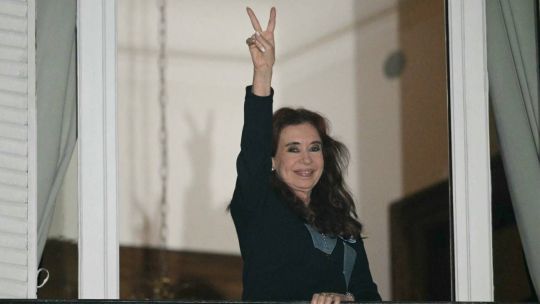
Former Argentine president Cristina Fernández de Kirchner is attempting to overturn her corruption conviction, known as the 'Vialidad' case, and secure a spot on the 2027 ballot. This effort is being spearheaded by the 'Cristina Libre' committee, a Kirchnerist faction that has been campaigning internationally to garner support for the cause.
The committee's efforts have taken them to several countries, including Brazil, Mexico, Colombia, Paraguay, Uruguay, Italy, France, and Belgium, where they have denounced what they claim is an attempt to prevent her from running for office.
Central to the committee's strategy is the replication of the successful 'Lula Libre' campaign in Brazil, which used international tribunals to challenge the lifetime ban placed on former President Luiz Inácio Lula da Silva. The Cristina Libre committee has enlisted legal experts from Brazil and Europe, such as Brazilian lawyer Rafael Valim and former European Court judge Javier Borrego, to bring the case before the UN Human Rights Committee in Geneva.
Their goal is to argue that the ban violates the guarantees under the Pact of San José, Costa Rica, the American Convention on Human Rights.
While the legal battle in Geneva could take a year or two, the committee is also pursuing an injunction to lift the suspension that prevents Fernández de Kirchner from running as a candidate. This injunction is expected to be resolved between October and March of next year. Kirchnerism is seeking international backing before the deadline to register candidate lists, hoping that a favorable ruling from Geneva will provide a legal and political windfall for the former president's campaign.
The committee's approach is not without its challenges, however. They face opposition from Argentina's political rivals, led by Mauricio Macri and Javier Milei. Both leaders are reportedly worried about Fernández de Kirchner's potential victory, believing that she could defeat them both. The committee's strategy focuses on polarizing the electorate, targeting middle-income groups frustrated with the current economic situation and hoping that voters will turn to them in opposition to Milei's administration.
Written by urgent.news from Buenos Aires Times's reporting — not their text. Machine-written — may contain errors; check the original before relying on it.