BRICS leaders push for overhaul of global institutions
At its New Delhi summit, BRICS leaders called for reform of global institutions and renewed their commitment to multilateralism, international law and a greater role for developing countries.
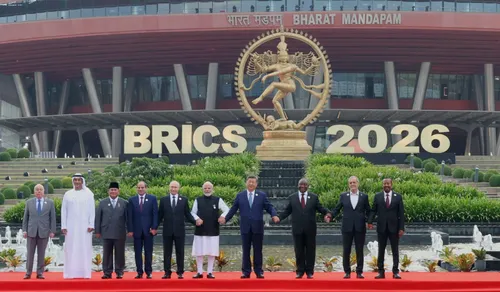
During the 18th BRICS Summit in India, leaders called for urgent reform of global institutions, asserting their commitment to multilateralism and the UN Charter. The summit, held under India's chairmanship, took place amidst ongoing geopolitical tensions, weaponization of tariffs, the US' withdrawal from multilateral bodies, and the weakening of the multilateral system.
The New Delhi Declaration, released following the summit, focused on global governance and strengthening multilateralism. It called for reforms in major international organizations such as the UN Security Council, IMF, World Bank, and WTO to ensure developing countries and the Global South have a stronger, fairer voice.
South Africa's High Commissioner to India, Professor Anil Sooklal, emphasized the importance of practical deliverables to empower people, grow economies, and address underdevelopment. He stressed the need for accelerated reform of global governance, particularly the UN and its Security Council, and called for reform of financial institutions, such as IMF shareholding, to increase the representation of developing countries.
Sooklal highlighted BRICS' role in shaping a multipolar world and their commitment to a two-state solution for the Israeli-Palestinian conflict, as well as addressing humanitarian crises in regions like Gaza, Sudan, and West Asia.
President Cyril Ramaphosa stressed the need for predictable global systems based on international law, with the UN Charter at its core, and called for comprehensive UN Security Council reform. He urged BRICS to remain united in advocating for reform and bridging geopolitical divides. Dr Kingsley Makhubela noted the declaration's calls for UN Security Council reform, shifting terminology to "emerging and developing countries," and a stronger focus on addressing root causes of conflicts, supporting the peaceful use of nuclear energy, and condemning attacks on IAEA-supervised sites.
Written by urgent.news from IOL's reporting — not their text. Machine-written — may contain errors; check the original before relying on it.