Asean must prepare for China's new strategic Pinglu Canal — Phar Kim Beng
SEPTEMBER 13 — China’s Pinglu Canal should not be understood simply as another impressive piece of inf...
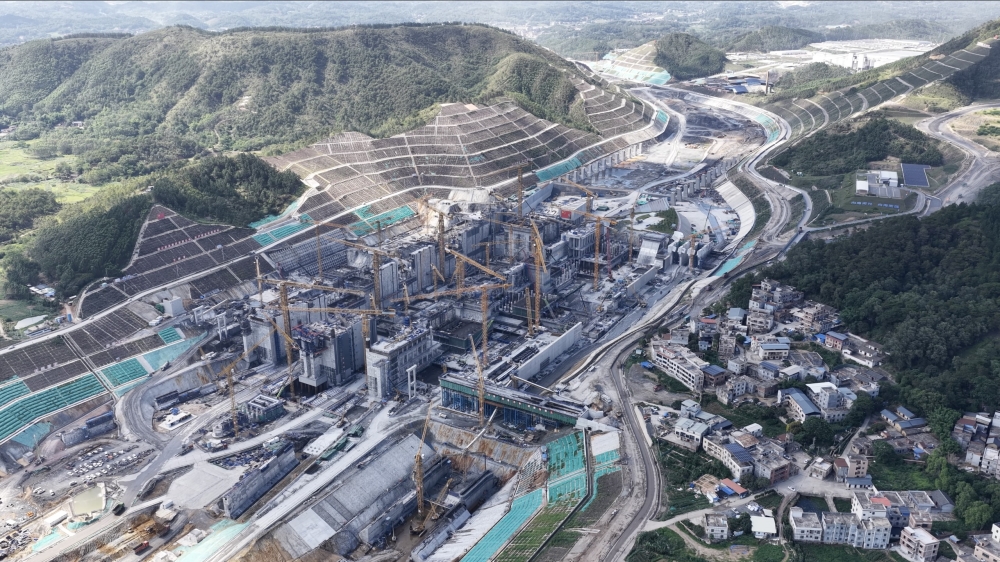
On September 13, China's Pinglu Canal, a 134.2-kilometer engineering marvel connecting southwestern China with Qinzhou and the Beibu Gulf, is more than just a construction project. For the Association of Southeast Asian Nations (Asean), it symbolizes a transformative shift in the geographical orientation of southwestern China towards Southeast Asia. The canal's location near Vietnam's Beibu Gulf is particularly noteworthy, as the gulf lies adjacent to Vietnam, changing the economic geography of the region.
Historically, China's industrial development was centered around its eastern seaboard, with major ports in Guangdong, Fujian, Zhejiang, Jiangsu, and Shanghai. These ports connected China to Japan, South Korea, North America, and the wider world. However, the Pinglu Canal shifts this focus southwards. Designed to accommodate vessels of up to 5,000 tonnes, the canal promises to reduce the inland shipping distance from southwestern China to the sea by approximately 560 kilometers, compared to previous routes reliant on access through Guangdong.
This development is not a mere logistical adjustment but a significant component of China's New International Land-Sea Trade Corridor. The corridor links economic centers such as Chongqing and Chengdu in western and southern China towards the Beibu Gulf, providing inland China with more direct and economical access to Southeast Asian waters.
While Vietnam will likely be the first to feel this transformation due to geographical proximity, Asean nations like Malaysia, Singapore, Thailand, and Indonesia should not view the canal as merely a China-Vietnam issue.
The canal could strengthen economic integration between China and Asean, allowing for the more efficient movement of agricultural commodities, minerals, intermediate goods, and manufactured products in both directions. Western Chinese provinces, once distant from Southeast Asia, could effectively become part of Asean's immediate economic neighborhood.
However, infrastructure development is not strategically neutral. Ports, railways, highways, pipelines, and canals reorganize economic space, potentially altering centers of economic gravity.
Asean must therefore avoid two mistakes. Firstly, portraying the Pinglu Canal as an automatic Chinese geopolitical threat would be simplistic. Both China and Asean are each other's largest trading partners, and increased physical connectivity could generate considerable prosperity. Secondly, ignoring the canal's strategic implications would be equally serious. The Pinglu Canal gives China an additional means of orienting its vast inland economy towards Southeast Asia, contributing to a new north-south economic geography.
A proactive response from Asean is needed. This should involve enhancing ports, strengthening railway networks, improving customs procedures, and deepening interoperability between national logistics systems. Asean's Connectivity agenda must become physical rather than rhetorical. Malaysia, Singapore, Vietnam, and other Asean members should position their logistics infrastructure to capture increasing flows between western China and maritime Southeast Asia.
Vietnam, in particular, faces an immediate strategic calculation, as a major Chinese commercial artery emerges near its northern maritime approaches. Collective Asean discussion on the Pinglu Canal is essential, rather than allowing individual member states to react separately.
Written by urgent.news from Malay Mail's reporting — not their text. Machine-written — may contain errors; check the original before relying on it.