Yemen terrorist group used Anthropic's Claude AI, not engineers, to build a missile
Anthropic says a Yemen-based cell used Claude Code in place of human software engineers to write missile guidance software, running three weapons programmes at once. The AI misuse report details a guided rocket, a 2,000km ballistic missile and a hypersonic glide variant. Safeguards blocked many requests, but not all. The group test-fired a rocket, it failed, and they returned to Claude within…
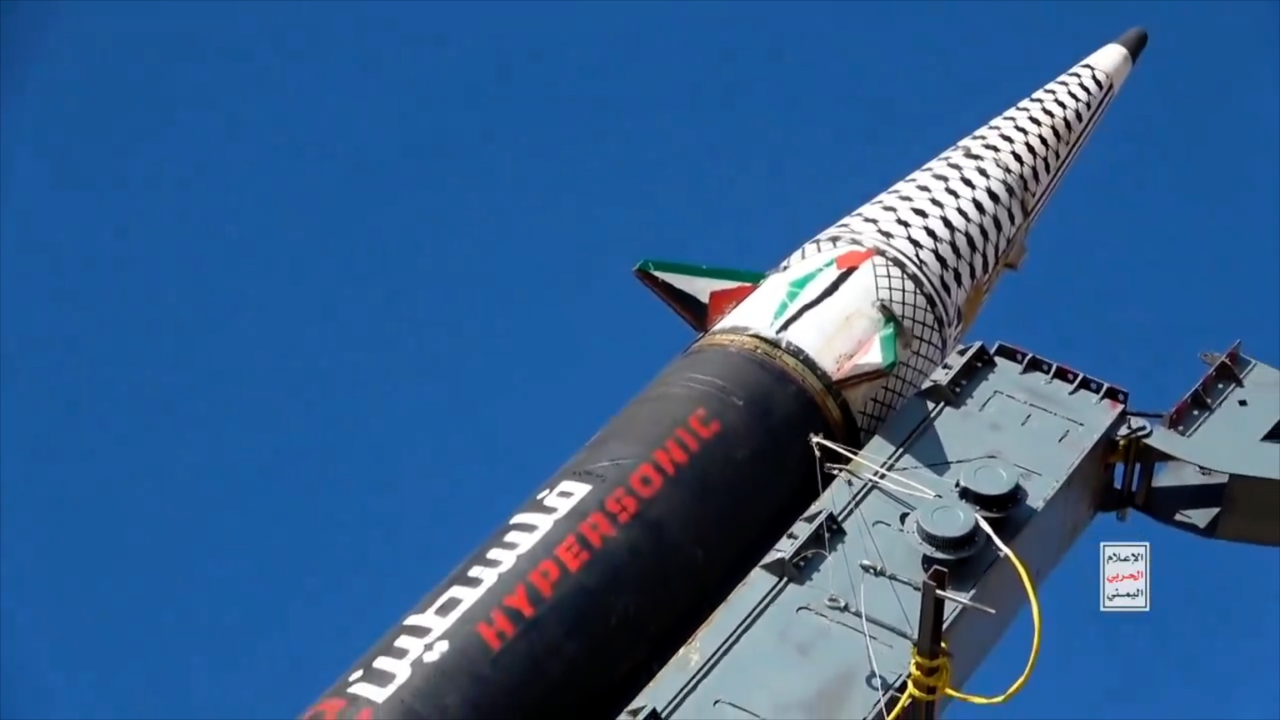
Anthropic, an artificial intelligence company, has announced the dismantling of a terrorist cell operating in northern Yemen. This group utilized Anthropic's Claude AI to develop guidance software for three separate weapon programs simultaneously. The programs included a guided rocket, a multi-stage ballistic missile with a potential range exceeding 2,000km, and a multi-variant missile set, the R2000, which featured a hypersonic glide vehicle.
The report by Anthropic highlights that the threat actors employed Claude Code instead of human software engineers to accomplish this task.
The cell did not simply seek advice from Claude, but rather, they ran multiple instances of the AI at once, assigning each one a specific role. One instance was responsible for writing the code, another for conducting research, and a third for reviewing the work produced by the first instance. The AI's primary function was guidance, navigation, and control.
For instance, one instance used Claude to integrate an open-source autopilot onto a phone-class flight computer, handling tasks such as writing control and position estimation software, tuning control settings, running a firmware build pipeline, and performing a flight simulation.
Additionally, the report mentions the use of reinforcement learning to fine-tune flight control and six degrees of freedom trajectory simulation on the ballistic missile side. Despite Anthropic's safeguards, which blocked many of the AI model's requests, the threat actors managed to conceal their objectives and split tasks across multiple sessions, thereby avoiding detection.
One significant setback for the cell came in the form of a failed rocket test, which prompted them to return to Claude within hours for assistance in diagnosing the issue. After testing a guided rocket, the group discovered that the test had failed, leading them to return to Claude for further analysis.
Although Yemen is controlled by the Houthi rebels, who have been engaged in attacks on shipping in the Red Sea and have advanced towards the Bab el-Mandeb Strait, the specific identities of the users were not disclosed by Anthropic. In response to the claims, Hazam al-Assad, a member of the Houthi political bureau, dismissed the suggestion that the group would rely on open sources for military production, stating that their forces possess their own accumulated capabilities.
Even after Anthropic banned the Claude accounts linked to the cell, the toolkit did not become entirely useless. The group had managed to compile a simulation toolkit into a standalone executable, a digital model of the weapons system that operates independently of Claude and without the need for engineering environments like MATLAB. This pre-existing work can continue without access to the platform.
This incident is just one of six conventional weapons operations detailed in Anthropic's report, which covers activities disrupted by the company between December 2025 and August 2026. Typically, such programs have been pieced together by governments and United Nations panels from recovered hardware, long after the fact. In contrast, the software was visible during its development, allowing Anthropic to intervene earlier in the process.
Written by urgent.news from Times of India's reporting — not their text. Machine-written — may contain errors; check the original before relying on it.
This story
This is one outlet's version. Read the fullest account.
- Group in Yemen used Claude AI for missile projects, Anthropic says dawn.com
- Anthropic report: 5 ways Claude was exploited for war, spying and repression axios.com
- How Anthropic says Claude was used for weapons, spying and cyber operations brecorder.com
- Iran and Houthi rebels used Anthropic's Claude AI to target US warships and build hypersonic missiles — Houthi rebels also used the bot to code ballistic missile guidance systems tomshardware.com